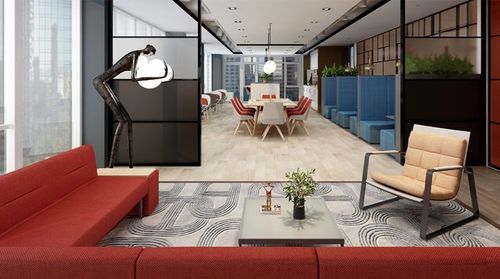
Against Traditional Solid Wood: Five Advantages of Modern Wood Furniture
Solid wood has been part of daily life since ancient times, used in everything from buildings and furniture to small vessels and ornaments. With rapid urbanization, we increasingly hope to encounter solid-wood office furniture in steel-and-concrete office spaces, because it carries an irreplaceable natural warmth and artistic value.
As office spaces become more multi-scenario and the workforce gets younger, modern solid-wood office furniture in China has embarked on a path of disruptive innovation. Compared with traditional solid-wood office furniture, the modern kind has not only renewed its colors, styles, and looks — winning over the post-80s and post-90s generations — but also conveys Chinese aesthetics and culture in a more contemporary way.
01. Modern meets retro, showcasing cultural charm
Because wood grows in different spaces, over different lengths of time, and in different climates, even a single branch or knot displays a unique tone and texture. And since wood is highly malleable, different lines and corners can produce different structures and forms. All of this gives designers of solid-wood office furniture a constant stream of creative inspiration.
Some solid-wood office furniture reaches consumers through cross-industry collaborations that evoke retro memories. Others highlight nail-free, glue-free mortise-and-tenon joinery as a design signature, conveying the "craftsmanship" quality of thousands of years of Chinese furniture-making — and winning fans fast through emotional resonance.
02. East meets West, keeping up with the times
When it comes to solid-wood office furniture, Chinese or neo-Chinese style is what usually comes to mind. But with the arrival of a globalized economy, the "inclusiveness and creativity" of Chinese culture is gradually being seen by the world.
Building on a foundation of classic Chinese charm while absorbing trendy elements, the fusion of East and West is another advantage of modern solid-wood office furniture worth celebrating. Yihang's Aolundi office desk distills the essence of Italian minimalism: rich in cultural flavor yet beautiful in design, it bridges old and new, uniting art, technology, and aesthetics in one piece.
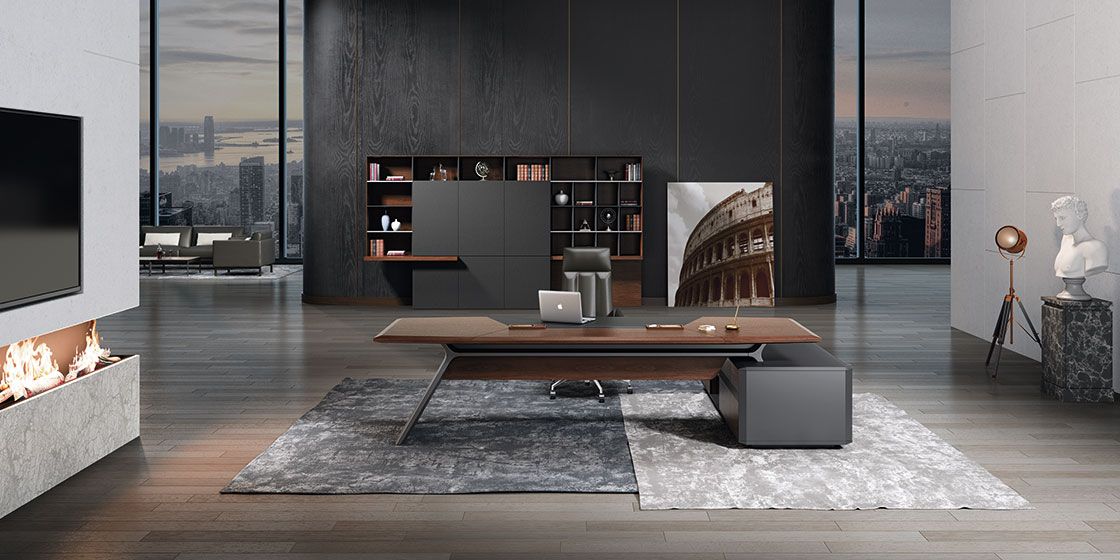
03. Modular design, highly adaptable to space
The pandemic accelerated the instability of office space. Beyond the most common fixed type — where solid-wood furniture stays in one position for a long time without being moved or recombined — other increasingly popular types have emerged: 1. rolling, 2. wall-hung, and 3. mobile.
Take mobility as an example: incorporating modular design into solid-wood office furniture makes one piece serve many purposes, ready to be disassembled, reassembled, and moved at any time to fit agile office scenarios. Wall-hung solid-wood furniture has a simple structure with many interchangeable parts — similar to a solid-wood pegboard — that is very easy to take apart and reassemble, and when hung on the wall it doubles as a piece of abstract art.
04. New materials and processes elevate texture
As society advances, material innovation for solid-wood office furniture has also set its sights on new materials — glass, steel, fiber fabrics, resin… giving solid-wood furniture a warmer touch and more practical functions.
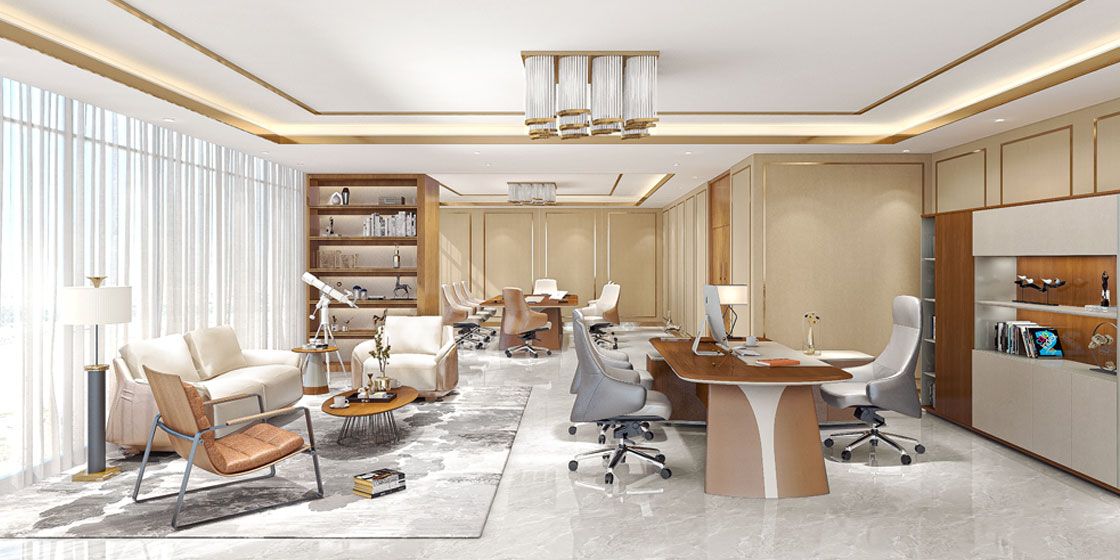
Material partnerships open up a fresh way for modern solid-wood furniture to win over today's young market. Yihang's Tianyuan desk is a typical example: its microfiber-leather-and-walnut splicing technique creates a simple, elegant office environment.
05. Smart office for healthier work
Digital applications are now the norm in the global economy — and a core engine of economic and social development. Emerging technology is reshaping daily life and revolutionizing how we work, so the reinvention of solid-wood office furniture is a natural response. Many modern solid-wood office furniture pieces on the market today graft emerging technology onto handcraft, which not only saves companies operating costs but also creates convenient, comfortable, and efficient office spaces for workers.
For example, embedding a wireless charging module into solid-wood furniture eliminates the visual clutter of traditional desktop cabling, while zero-distance touchscreen controls for desk height adjustment enable a sit-stand healthy office mode.
Summary: The rise of modern solid-wood office furniture shows the office furniture industry that people's expectations no longer stop at eco-friendly materials, fine craftsmanship, and long service life. Yihang believes that the office of the future will permeate daily life, and for office furniture to compete in the market, the only way forward is to keep pace with the times.
You may also like
European Designer Interview: Uncovering the Fun of Office Furniture
Read More
Inclusive Office Design: Optimizing Furniture for Happiness
Read More
Office Furniture Trends: Creating Dynamic Learning and Training Spaces
Read More