How to Choose Panel Office Furniture: Five Guides for Beginners
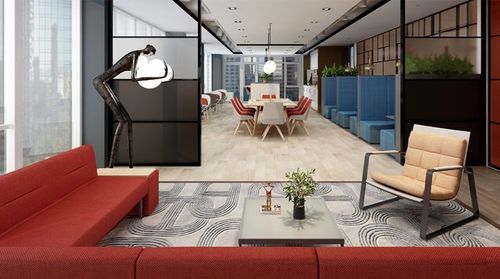
As society progresses and public taste rises, office spaces have evolved from cookie-cutter uniformity to diverse personalities, and panel office furniture — rich in styles and varied in looks — has become many companies' first choice. What is panel office furniture? It refers to furniture that uses engineered board as its core material, with surfaces finished in artificial leather, thin wood veneer, and the like. Earlier, Yihang walked you through how to choose the core material for panel office furniture; today we share other key points for buying it — all very simple and practical.
1. Examine the panel furniture's veneer
To protect the core board from moisture while keeping things beautiful, veneering is an essential step in panel furniture production. Common veneers include melamine, solid wood, cat-eye paper, and fireproof board. Melamine resists scratches; solid wood veneer offers the widest choices; cat-eye paper, usually PVC-based, is the most budget-friendly; fireproof board withstands high heat and cleans easily. Since each has pros and cons, before buying you should first get clear on the overall plan of your office space — its style and the function of each area — so you can weigh material properties and make a well-rounded choice.
2. Feel the panel furniture's edge banding
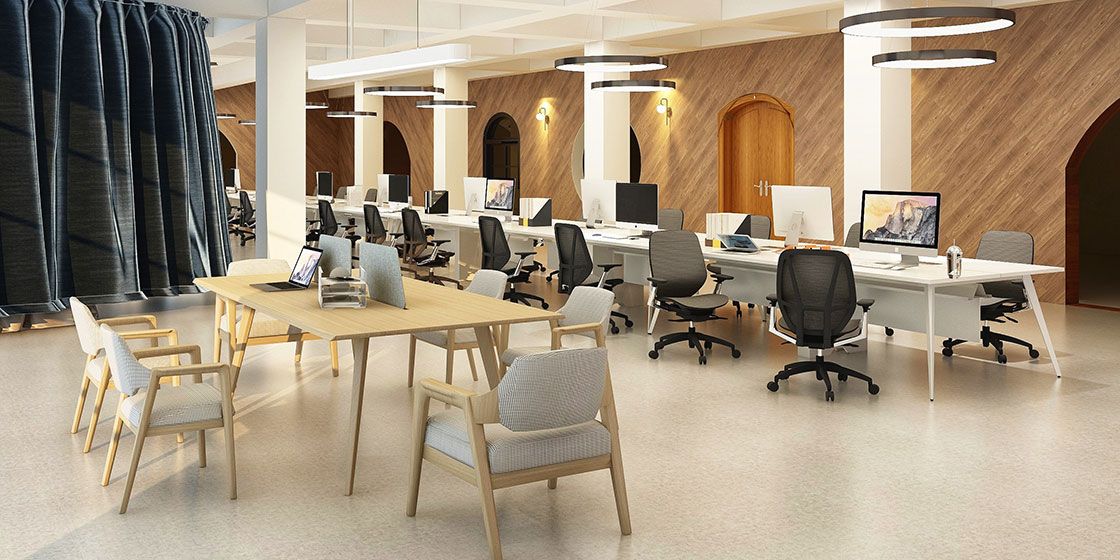
Edge banding wraps the cut edges of the core board in another material. Done well, it not only stops formaldehyde from escaping but also extends the furniture's service life.
How do you judge the quality of edge banding? The most direct way is to feel it — check whether it is smooth, flat, and free of lifted edges. If you want zero worries during later use, choose panel furniture made with laser edge-banding. The smart factory of Yihang has introduced German Homag edge banders for seamless, high-strength, highly stable banding — even in the humid south, there's no need to worry about the edges cracking.
3. Smell the panel furniture's paint
As public health awareness grows, standards for paint on panel furniture keep rising. Good paint smells mild; poor paint has a heavy, pungent odor, feels rough rather than silky, and may even feel gritty. We suggest considering water-based paint: because it contains no benzene, xylene, or other organic solvents, it is not only more attractive, non-yellowing, and more durable, but also more eco-friendly. One strong reminder for buyers: always ask the manufacturer for the water-based paint's test report, to avoid being cheated by dishonest vendors.
4. Inspect the panel furniture's hardware
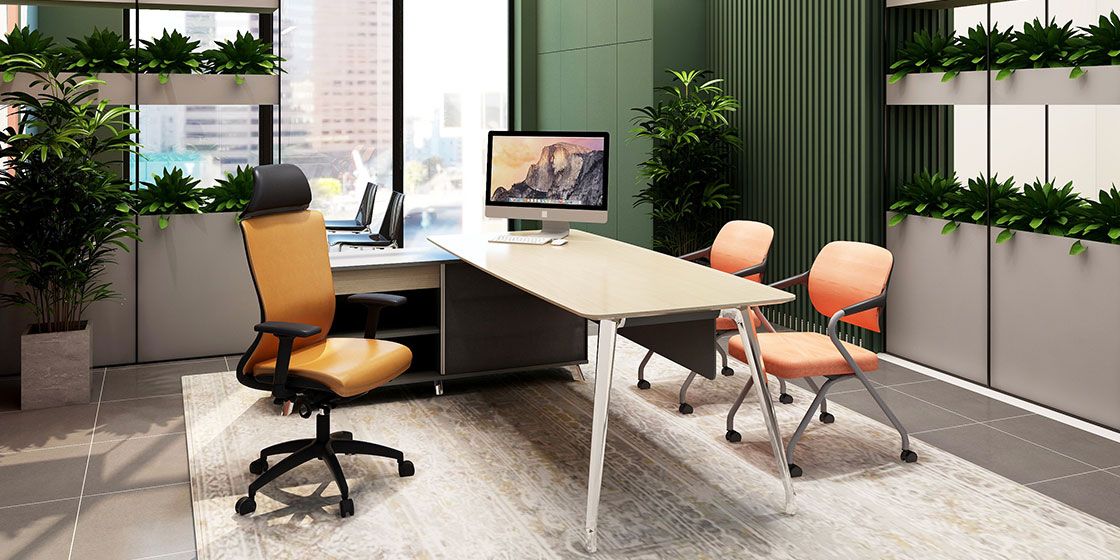
Easy disassembly and flexible combination are the strengths of panel furniture, and hardware plays a decisive role in use — if its quality falls short, the furniture simply cannot be freely combined or taken apart. When shopping, check the hardware for coating loss, rust, looseness, burrs, or deformation, and choose materials to match your office conditions: steel offers good corrosion resistance and antibacterial performance; aluminum is lower in strength but ductile and lighter; stainless steel resists corrosion and heat but costs more.
5. Confirm the panel furniture's dimensions
Since some panel furniture involves customization, be sure to confirm all dimensions and specifications: any deviation can mean rework, delaying the renovation and causing additional financial loss. Desk height matters especially — the wrong size inconveniences employees and deepens their work fatigue, dragging down overall efficiency.
In short, quality panel furniture creates a good working environment where employees work more comfortably and efficiently. So when buying, be sure to visit multiple panel furniture manufacturers and try pieces in person — that is how you find the panel furniture that best fits your company.
You may also like
A Fresh Office for a Complex Era
Read MoreChampioning Formaldehyde-Free Offices: Yihang's Healthy Work Mission Upgraded
Read More
Inclusive Office Design: Optimizing Furniture for Happiness
Read More