Yihang on Design: A Practical, Human-Centered Campus
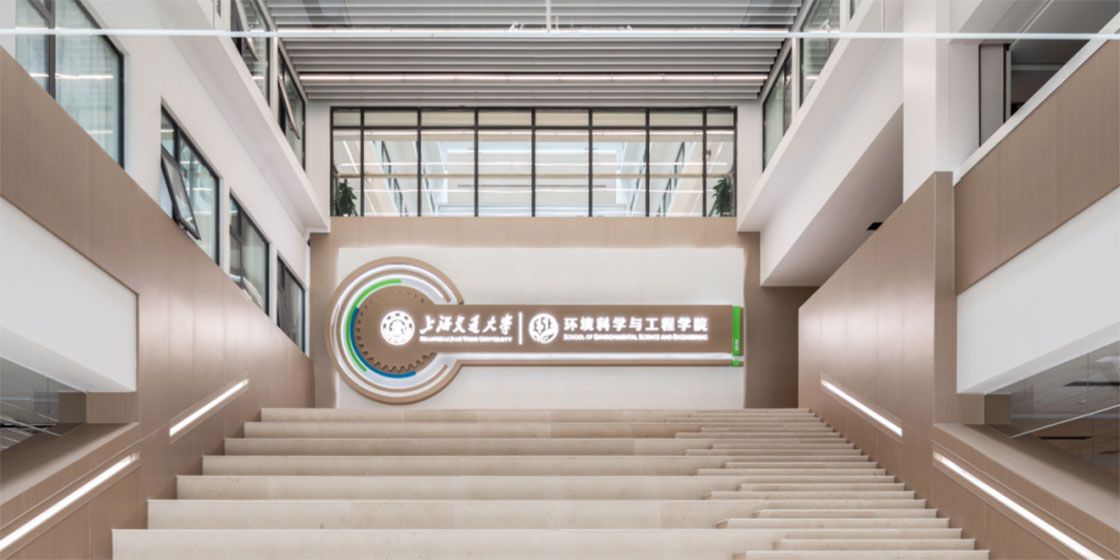
The School of Environmental Science and Engineering at Shanghai Jiao Tong University traces its origins to the municipal engineering discipline established at Jiao Tong University in 1928. The school's educational philosophy has always centered on students' healthy, well-rounded development, cultivating both academic curiosity and a sense of purpose. Based on its new teaching model and the school's identity, Yihang incorporated a great deal of emotional design to create a modern, pragmatic style that appeals to young people, forming a learning environment that is simple, practical, fresh, and natural. This article takes the School of Environmental Science and Engineering at Shanghai Jiao Tong University as a case study.
1. Using low-saturation colors to create a fresh, understated atmosphere
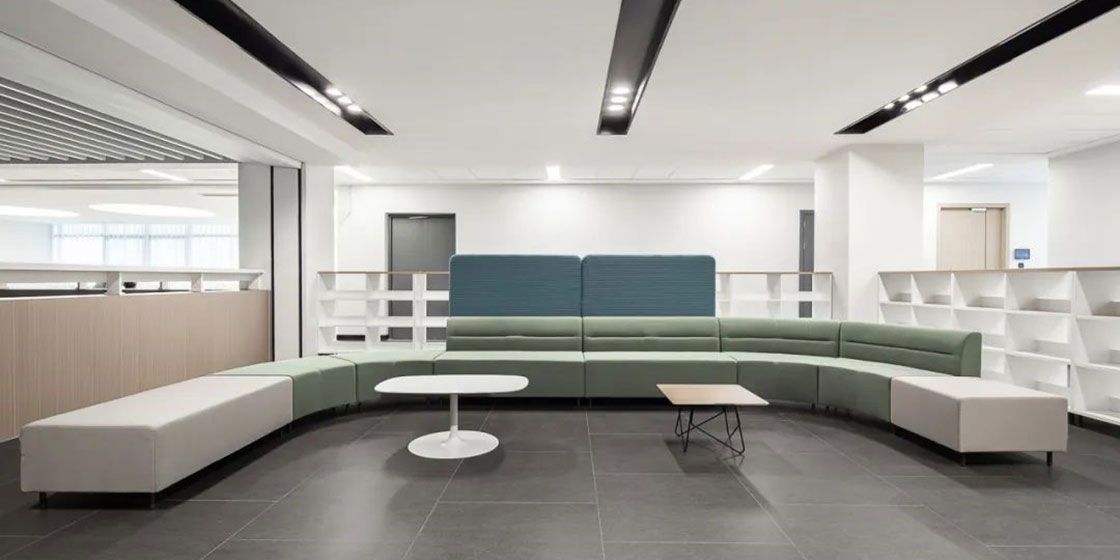
Office furniture in low-saturation colors creates a stronger sense of visual unity and reduces the influence of color on mood, giving people a calm, soothing feeling and lending the space a naturally fresh, understated atmosphere. In addition, the choice of a low-saturation blue—representing the water element—echoes the university motto "When you drink water, think of its source" while matching the school's research focus on sustainable development.
2. Emotional design creates a caring, human-centered educational environment

To give faculty a warm, comfortable place to work and rest, the space is equipped with desks, chairs, sofas, wardrobes, and other furniture to improve space utilization, transforming a break room that previously only allowed for brief rests into a comprehensive space for seminars, lesson preparation, and rest all in one.
The sofa serves not only for meeting and talking with guests—it also unfolds into a simple bed, giving faculty a comfortable place to work and live.
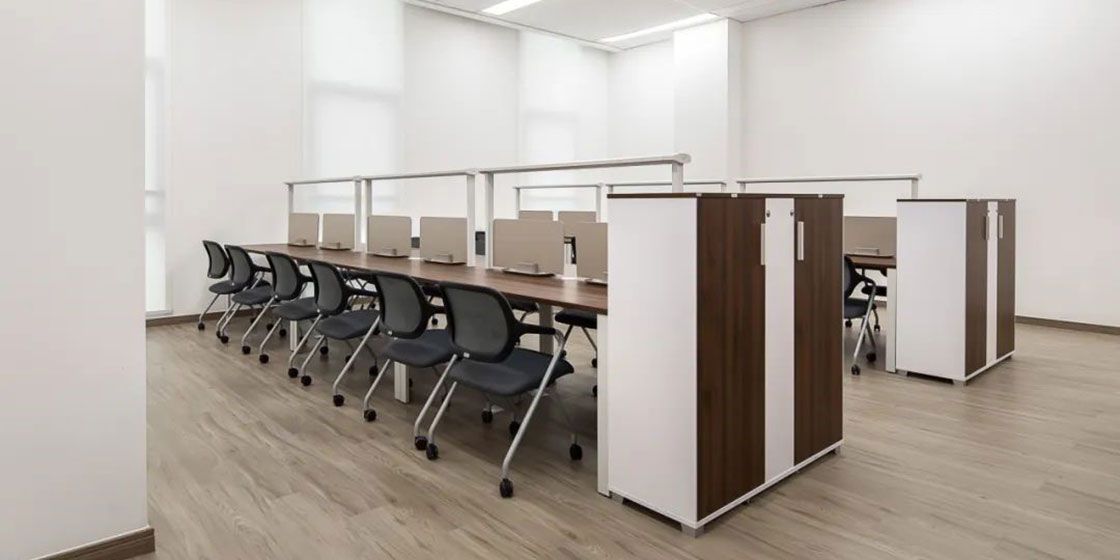
In the reading area, movable desktop screens and touch-controlled desk lamps let students adjust the light to a comfortable, eye-friendly level depending on the ambient brightness. With independent adjustment on both sides, students studying across the table do not disturb one another, providing a thoughtful environment for focused reading. In addition, cabinets on one side meet storage needs; the sensible layout is designed to create a reading zone that improves learning efficiency.
3. Building diverse settings for different modes of exchange
The design of the training and exchange spaces closely reflects teachers' most fundamental duty—teaching. Creating different exchange scenarios helps instructors sharpen their teaching skills through discussion and exchange, while also improving teaching outcomes.
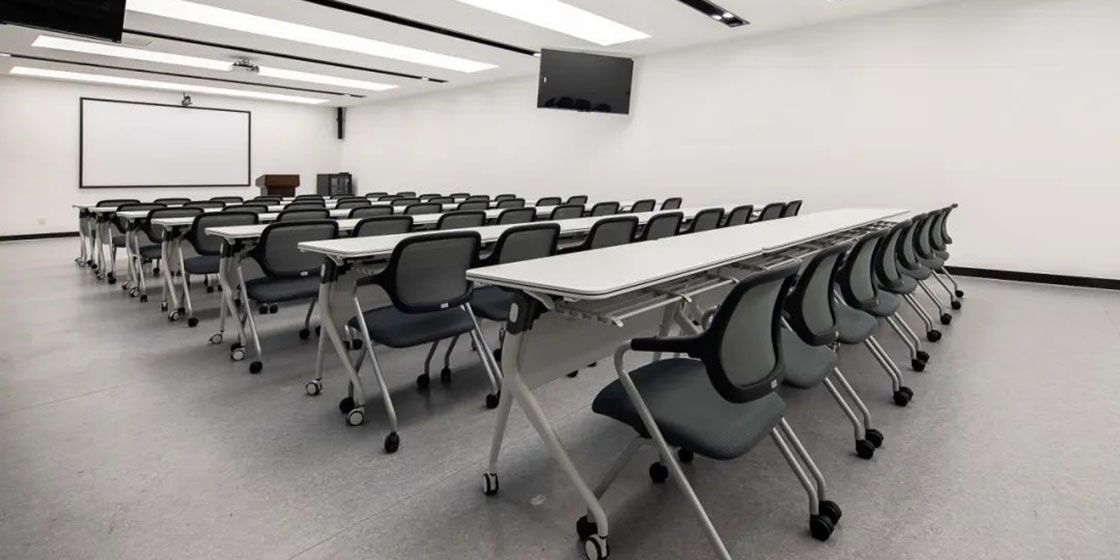
Academic exchange
A public training space for large-scale training sessions and instructor exchanges, seating up to 72 people, fitted with folding training tables and chairs that can be moved with ease.
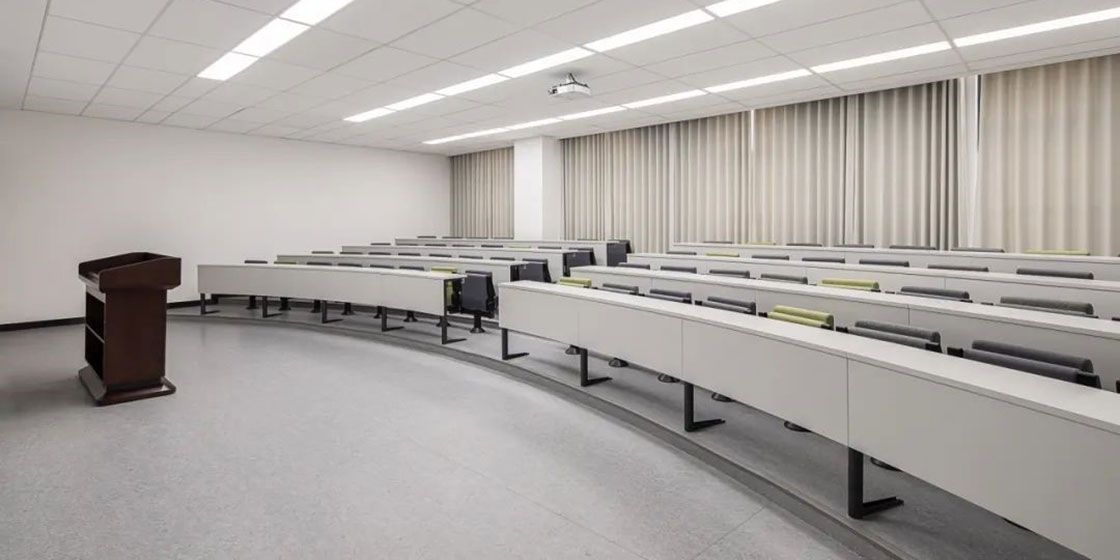
Teaching and training
A public classroom where instructors teach and train students, seating up to 62 people. Its curved layout makes it easy for teachers and students to interact, maximizing training effectiveness.
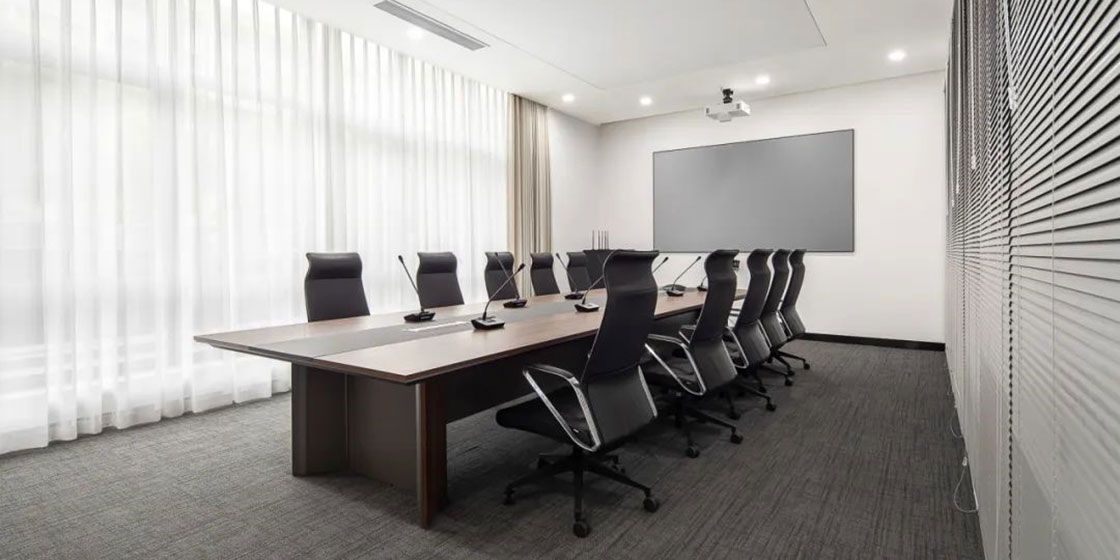
Formal meetings
A formal meeting space for school leaders and teaching staff to hold discussions, equipped with multimedia devices for online meetings and electronic information sharing, seating 10 people.
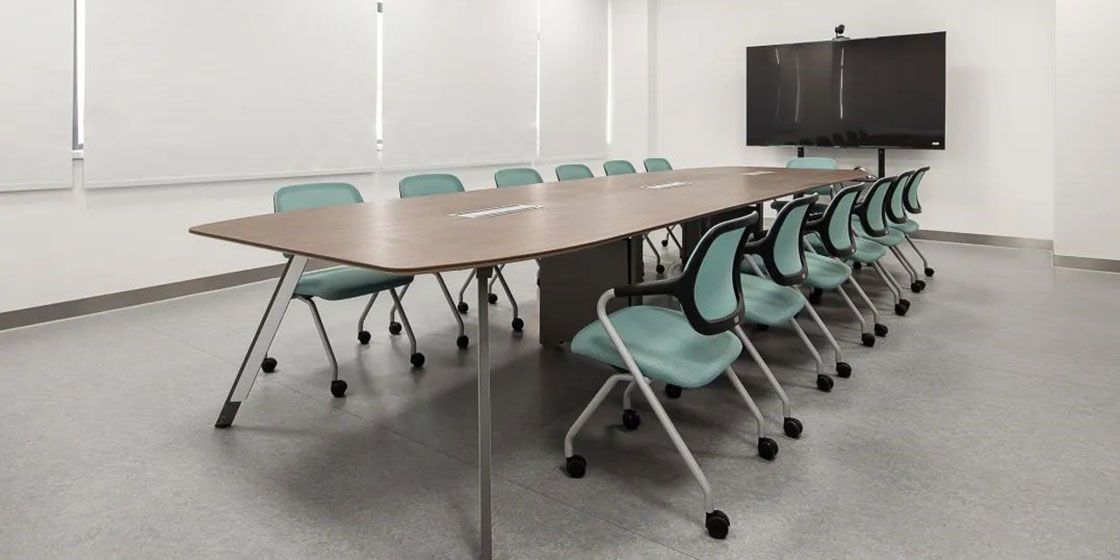
Group collaboration
Used mainly for project discussions within small groups, its lightweight meeting table and movable chairs help teams make smoother progress on their projects. This space seats 12 people.
Beyond the enclosed training rooms, there are also micro exchange spaces scattered through the open areas, furnished with casual sofas, coffee tables, and bookshelves. Many teachers use them as the perfect place to relax after class, or as a spot to chat with students and friends.
Yihang has created a human-centered spatial environment for Shanghai Jiao Tong University that carries on the campus's distinctive atmosphere, fully expresses the school's character, and highlights the important role of the environment in education, making the campus a place where students can devote themselves to their studies.
You may also like
Championing Formaldehyde-Free Offices: Yihang's Healthy Work Mission Upgraded
Read More
Healing Office Workers' Obsession with Symmetry in Design
Read More
Inclusive Office Design: Optimizing Furniture for Happiness
Read More