What Are the Categories of Office Furniture and Their Differences?
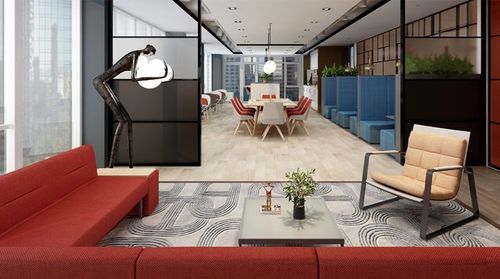
In the post-pandemic era, we've seen remote work, working from home, hybrid work… In the future, work will clearly permeate daily life more like a state of being, which is why we hope the office furniture of tomorrow will embrace "multi-scenario" thinking, with office spaces that integrate many functions in one. As items we interact with constantly at work, office furniture empowers work through its function and form — while its touch, materials, colors, and style directly shape the emotional tone with which staff perceive their roles and the company culture.
So with so many categories of office furniture, how do you choose? Below, Yihang classifies office furniture in detail by function, visual style, and material, revealing how furniture and space can complement each other.
1. Categories by basic function:
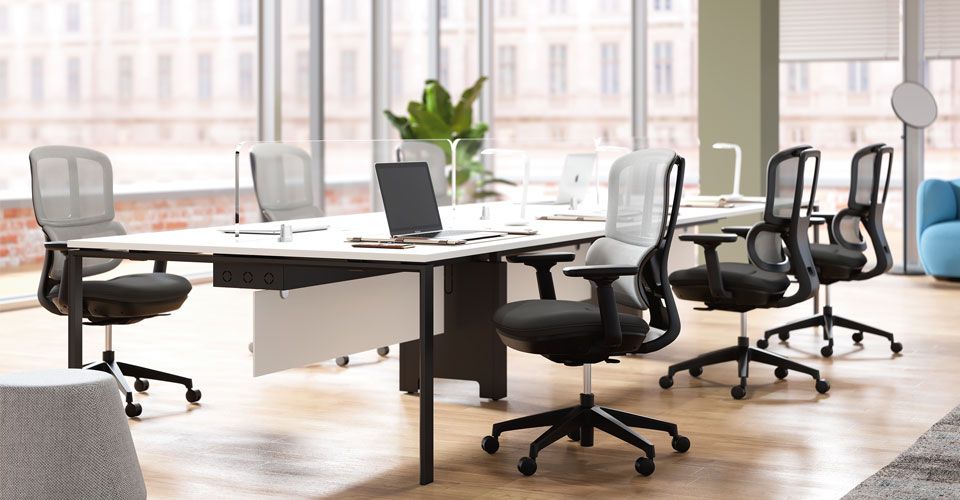
Judging by the functions furniture performs in a space, the list generally includes office desks, office chairs, office cabinets, and other system pieces such as screens, shelving racks, and pegboards. Of course, as consumer needs upgrade, multi-functional office furniture is now commonplace: storage cabinets that hold folding beds, desks with detachable screens, even chairs that let you work out and work at the same time. In such cases, while you can't generalize about what category a piece belongs to, the essentials never change — once you confirm what function the furniture needs to serve, you can buy with confidence, without agonizing over the wildly varied names on the market.
2. Categories by style:
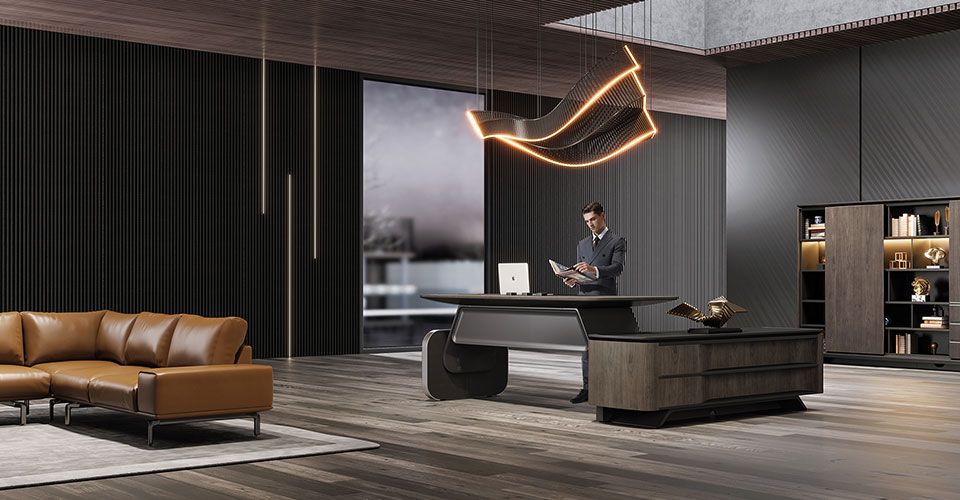
Modern style: Led by panel furniture and solid-wood furniture, its clean, crisp visual feel makes it the most common corporate space style today.
Neo-Chinese style: Compared with the energetic vibe of modern style, some companies prefer a calmer, steadier look — neo-Chinese style with "Oriental elements" can be the choice for you.
Avant-garde style: Bold color schemes, novel materials, and inventive use of space, expressing freedom and individuality.
European and American styles: With economic globalization, office space styles are increasingly diverse. Italian minimalist furniture is highly representative in office decor — full of aesthetics and taste, it suits all kinds of high-end office spaces. European retro flavor, with intricate carving or romantic ornamentation, remains more common in residential furniture.
3. Categories by material:
Glass office furniture: Usually made of high-strength tempered glass with metal frames. Common in public spaces because its transparency brings a fresh, bright feel, and it's easy to clean.
Solid-wood office furniture: Furniture made of solid wood. By wood type, high-end pieces commonly use walnut, wenge, sandalwood, ash, teak, and so on; other common woods include beech, maple, oak, Chinese toon, Manchurian ash, elm, poplar, and pine. With natural grain and a warm touch, solid wood already claims "half the kingdom" of office furniture fashion.
Panel furniture: Made from engineered boards with rich styling options and good dimensional stability. Because it's easy to process and transport, startups and mobile workers often choose it — both beautiful and practical.
Upholstered office furniture: Mainly furniture with sponge/foam and fabric as the core, such as sofas. Thanks to being comfortable, attractive, and durable, it's a must-have on corporate purchasing lists.
Metal office furniture: Mainly steel or metal furniture; steel pieces are popular for their excellent fire resistance, stability, and eco-friendliness. Steel office furniture is usually formed from cold-rolled steel plate and finished with electrostatic powder coating, so unlike wrought-iron furniture it rarely suffers peeling paint or surface dents. It's widely used for steel filing cabinets, lockers, desk legs and frames, storage cabinets, and more.
Rattan office furniture: Furniture with rattan as the main material, with three hallmarks — strong resilience, warm in winter and cool in summer, light and graceful. It's well suited to meeting areas and rest rooms, but take special care against insects and moths, so avoid placing it anywhere too damp and dark.
Marble office furniture: Every slab of marble has a one-of-a-kind natural pattern; varieties abound, the texture is cool to the touch, and it resists stains and heat — a common sight at reception areas.
Inflatable office furniture: The main component is an air bladder made of rubberized fabric or plastic film. Easy to carry, it's common in travel-style furniture such as sofa chairs and float beds, though its height is limited by stability requirements.
Felt office furniture: Made from biodegradable polyester fiber, it absorbs sound and reduces noise, and its rich colors and forms make the office warmer.
Other materials: Ceramics, inorganic minerals, fiber fabrics, resin, and more.
Summary:
As consumer needs become more personalized and multi-dimensional, office furniture of a single material or style clearly cannot satisfy the office spaces of the future. Yihang excels at breaking spatial boundaries and infusing "multi-scenario thinking," offering you a flexible, convenient one-stop experience that empowers your workplace.
You may also like
European Designer Interview: Uncovering the Fun of Office Furniture
Read More
Office Furniture Trends: Creating Dynamic Learning and Training Spaces
Read More
Smart Offices That Understand What You Need
Read More