
Three-Adjustable Office Chair
A "three-adjustable office chair" typically refers to an office chair with adjustable functions in three core areas: seat height, lumbar support, and armrests. Some products may extend to more adjustment dimensions to enhance comfort.
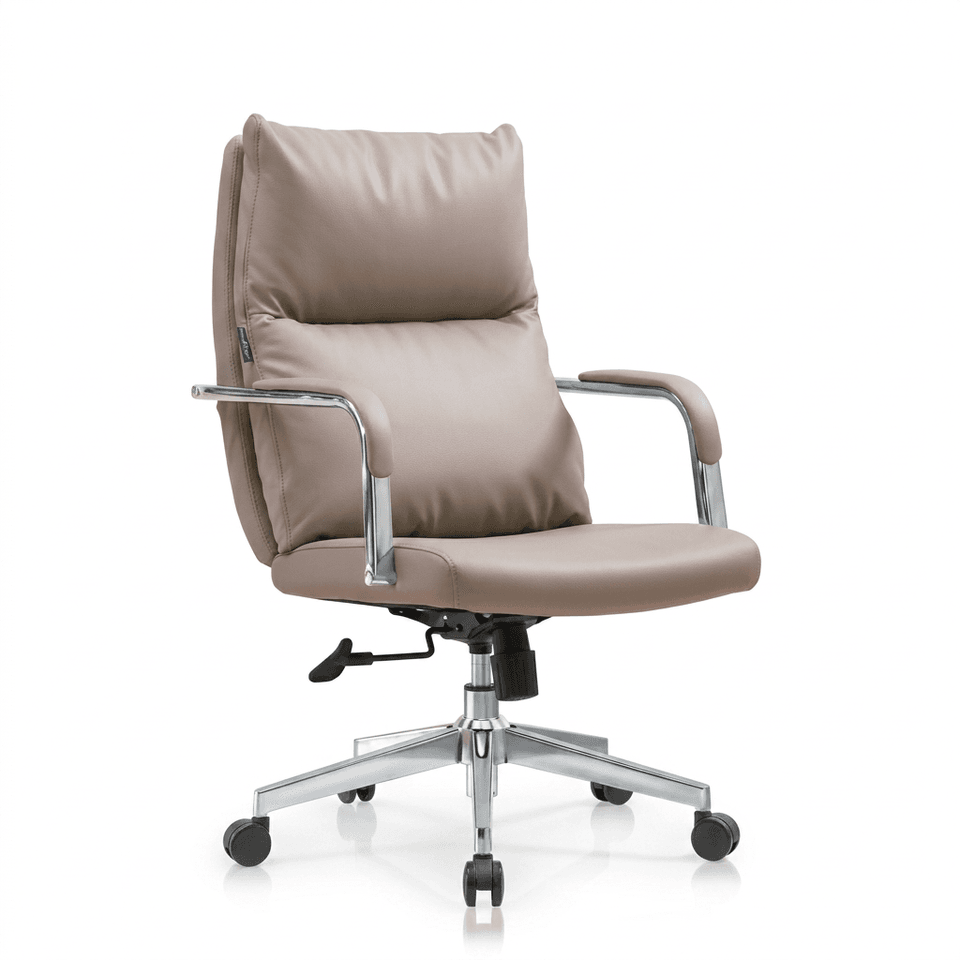
1. Seat Height Adjustment: Fitting Different Heights and Desk Heights
Seat height adjustment is a fundamental function of office chairs, achieved through a gas lift or mechanical structure to move the seat up and down. The proper height should allow both feet to rest flat on the ground, with thighs parallel to the ground and knees bent at a 90° angle, avoiding leg suspension or pressure. For example, the support rods of Qingxian OC1Pro and Sihoo H300Pro can move up and down, adjusting the height of the support point to meet the needs of users of different heights. If the seat is too high, it can impede blood circulation in the legs; if too low, it may cause excessive forward leaning of the waist, increasing lumbar pressure.
2. Lumbar Support Adjustment: Supporting the Lumbar Spine and Relieving Prolonged Sitting Fatigue
Lumbar support adjustment is a core design feature of ergonomic chairs, aiming to fit the natural curvature of the lumbar spine and reduce pressure on the lower back during prolonged sitting. High-quality lumbar supports should offer both height and depth adjustment functions: height adjustment can accommodate different users' lumbar spine positions (such as the L4-L5 segments), while depth adjustment controls the fit between the lumbar support and the back, avoiding excessive pressure or insufficient support. For example, the Sihoo H300Pro uses a manual lever to move the lumbar support forward and backward, allowing users to dynamically adjust the support intensity based on their sitting posture. Long-term use of chairs without lumbar support or with improper support can easily lead to lumbar disc herniation or muscle strain.
3. Armrest Adjustment: Distributing Shoulder Pressure and Optimizing Arm Support
Armrest adjustment functions include height, angle, and forward-backward movement, aiming to keep the arms naturally hanging with elbows bent at a 90° angle, reducing the burden on the shoulders, neck, and wrists. Height adjustment can match the desk height to avoid arm suspension; angle adjustment adapts to different operational scenarios (such as typing or reading); forward-backward adjustment coordinates with seat depth adjustment to ensure continuous arm support. Some high-end chairs (such as ergonomic chairs) also support left-right movement of the armrests to accommodate multi-user sharing or special sitting postures. If the armrests are fixed and at an improper height, it may trigger shoulder periarthritis or mouse hand.
Extended Functions: Seat Depth and Recline Adjustment (Not Part of "Three Adjustments" but Common)
Some office chairs further extend adjustment dimensions, such as seat depth adjustment (moving the seat cushion forward and backward via a slide rail to accommodate different leg lengths) and recline adjustment (locking the backrest tilt angle to provide lunch break or relaxation functions). Although these functions are not standard configurations of "three adjustments," they can significantly enhance the user experience, especially for users who need to work or rest for extended periods.
Summary: Three-adjustable office chairs can adapt to different body types and usage scenarios through precise adjustments of seat height, lumbar support, and armrests, effectively reducing health risks associated with prolonged sitting. When purchasing, it is recommended to prioritize testing the smoothness of adjustments and the fit of support to ensure the functions meet personal needs.


