
Office Workers Face Growing Neck Strain: Choosing the Right Furniture Matters
As modern urban lifestyles change, cervical spine problems are appearing at increasingly younger ages. According to a survey by the Bone Disease Prevention and Treatment Committee of the China Medical Health Care International Exchange Promotion Association, spinal disorders are rising rapidly among young and middle-aged adults: among people aged 30–40, fully 59.1% suffer from cervical or lumbar spine disease. Office workers are among the hardest hit, and since office furniture is something they touch for 8+ hours every day, choosing it correctly is especially important.
Before learning how to choose office furniture, first understand why office workers are prone to neck problems.
Age: as we age, wear on the cervical spine accumulates, making neck disorders more likely.
Job content: office workers do clerical and copywriting work that requires long hours at the computer and at the desk, which increases the incidence of cervical spine disease.
Chronic strain: long hours looking down at a phone while studying or working, or craning the neck at a computer screen — especially when desk and chair heights ignore ergonomic requirements — make neck problems far more likely.
Bad habits: certain everyday postures can also make neck problems worse. For example, during lunch breaks many workers sleep face-down on their desks. This posture tilts the neck forward against the spine's natural curve, so over time it can lead to cervical spine disease.
Given these causes, choosing office furniture can start from three aspects:
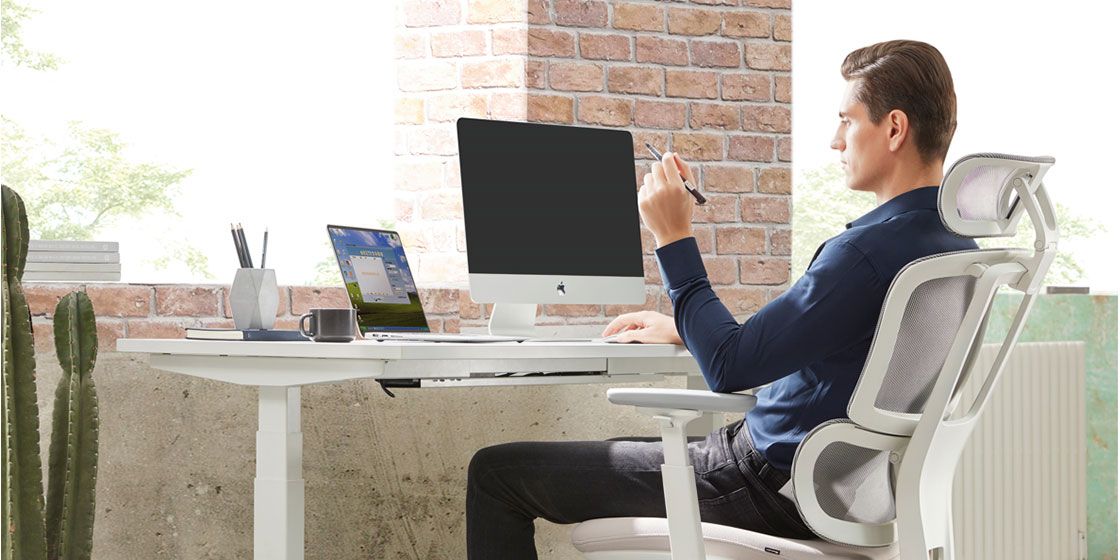
- Furniture that supports full posture adjustment. If workers don't maintain correct posture, the head and neck unconsciously bend too far forward or lean back too much, and over time the surrounding tissues are damaged — so suitable desk and chair heights matter enormously. An office chair with fully adjustable headrest, armrests, lumbar support, and height helps office workers stay relaxed while working, without letting muscles grow overly tense.
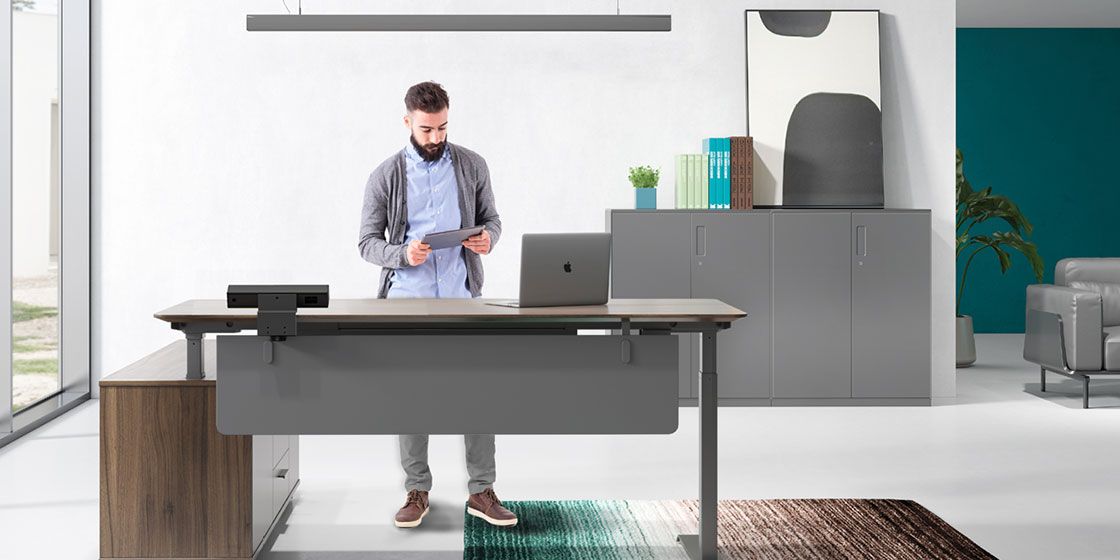
- Furniture that frees you from prolonged sitting. Surveys show that sitting for long stretches increases the burden on the cervical spine and is a direct trigger of cervical degeneration, so reducing continuous sitting during the workday is the most fundamental fix. Yihang height-adjustable desks help employees alternate between sitting and standing, stretching and relaxing the neck muscles.
- Furniture that offers rest functions. As mentioned earlier, napping face-down on the desk is a major reason neck problems are so common. As furniture design diversifies, furniture built to carry the lunchtime nap is emerging in office spaces: pieces that combine bed and cabinet let office workers pull out a nap bed right at their spot with a single press. Where office space is limited, choose furniture with a recline function — at nap time, open the footrest, lean back, and enjoy a proper rest.

In short: as the idea of healthy working takes hold, expectations for office furniture no longer stop at supporting work — they extend to helping working people pursue their dreams in a healthier posture. We believe more human-centered office furniture designs will come into view in the future. Let's look forward to them together!
You may also like

European Designer Interview: Uncovering the Fun of Office Furniture
Read More
The Primacy Effect: First Impressions Apply to Office Furniture Too
Read More
Healing Office Workers' Obsession with Symmetry in Design
Read More