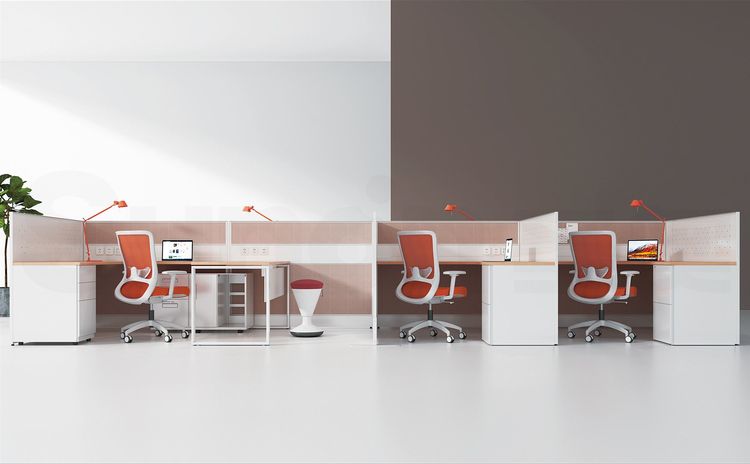
Workplace Research: Sitting Positions Explained for Maximum Comfort
In today's fast-paced life, many of us spend the entire day working at a desk, and prolonged sitting seems unavoidable. Survey data show that 84% of people will experience lower back pain at some point in their lives, 25% will experience knee pain, and these pain symptoms are appearing at younger and younger ages. While pain is related to many factors—viral infections, for example—the physical risks posed by poor posture are clear.
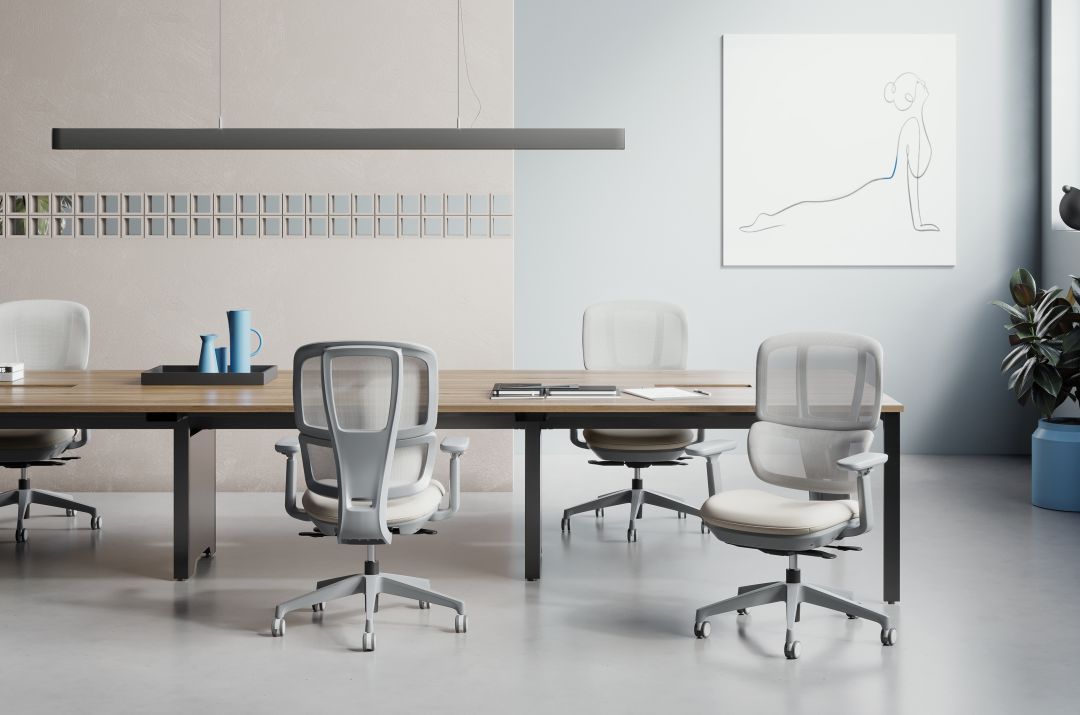
So how exactly should you sit for the greatest comfort? What is the correct sitting posture in the office?
To answer this, the Yihang-Nanjing Forestry University Healthy Office Research Center carried out further experimental research.
First: what are the sitting postures commonly seen at workstations?
The office sitting postures observed in field research were classified according to the relationship between the body and the furniture (chair, desk), excluding postures such as leaning sideways or twisting. The result:
Six common sitting postures
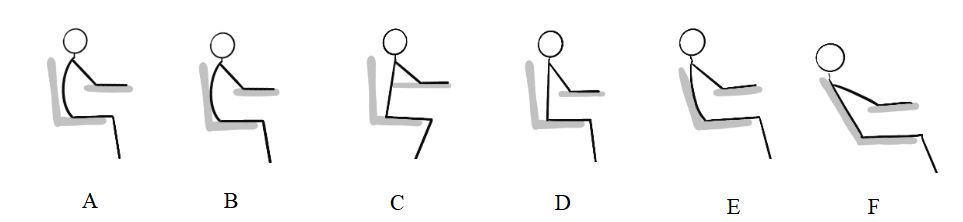
A - Forward-leaning posture, no lumbar support.
B - Forward-leaning posture, lumbar region supported by the backrest.
C - Upright posture, sitting toward the front of the seat, no lumbar support.
D - Upright posture, sitting centered, no lumbar support. E - Reclined posture, lumbar region supported by the backrest. F - Semi-reclined posture, lumbar region supported by the backrest.
Among the employees surveyed, the proportions of working behaviors at the workstation (including getting up and moving around, standing, etc.) in which forward-leaning, upright, and reclined postures were applied are as follows:
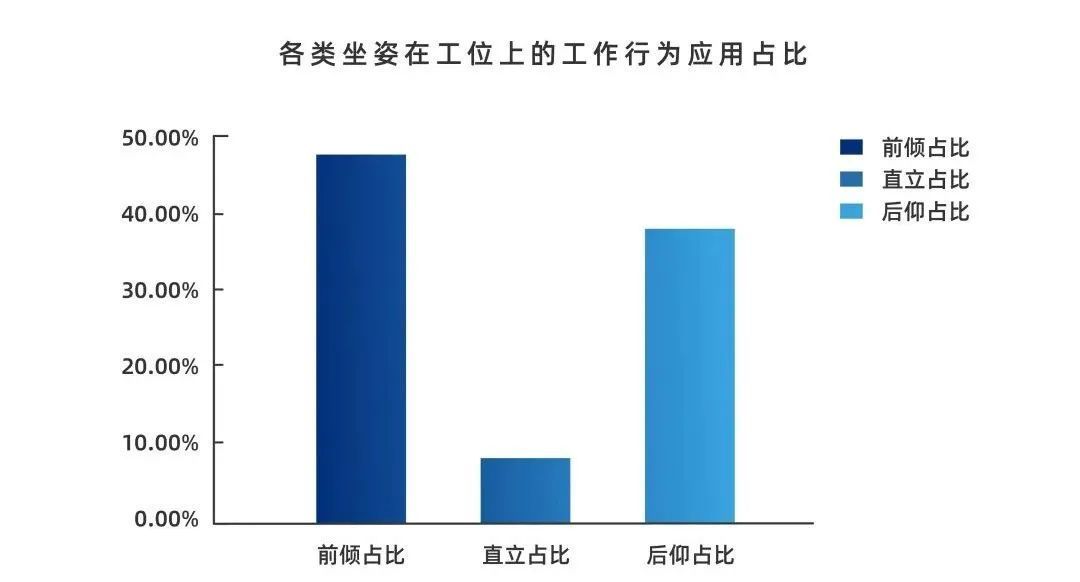
Influenced by user preference, forward-leaning postures were used more often overall, but the survey also revealed some people who use reclined postures over the long term.
So, is there a posture among these that is less likely to cause fatigue?
It turns out that sitting perfectly upright is not the “most correct” posture!
The “slightly reclined” posture is the most comfortable.
The moment you hear “sit up straight!” your first instinct is probably to shuffle forward on the seat and stiffen your back.
“Keep your back straight” sounds like the simplest and most correct posture cue. But have you noticed how hard it is to maintain—and how the longer you sit, the more tired you feel?
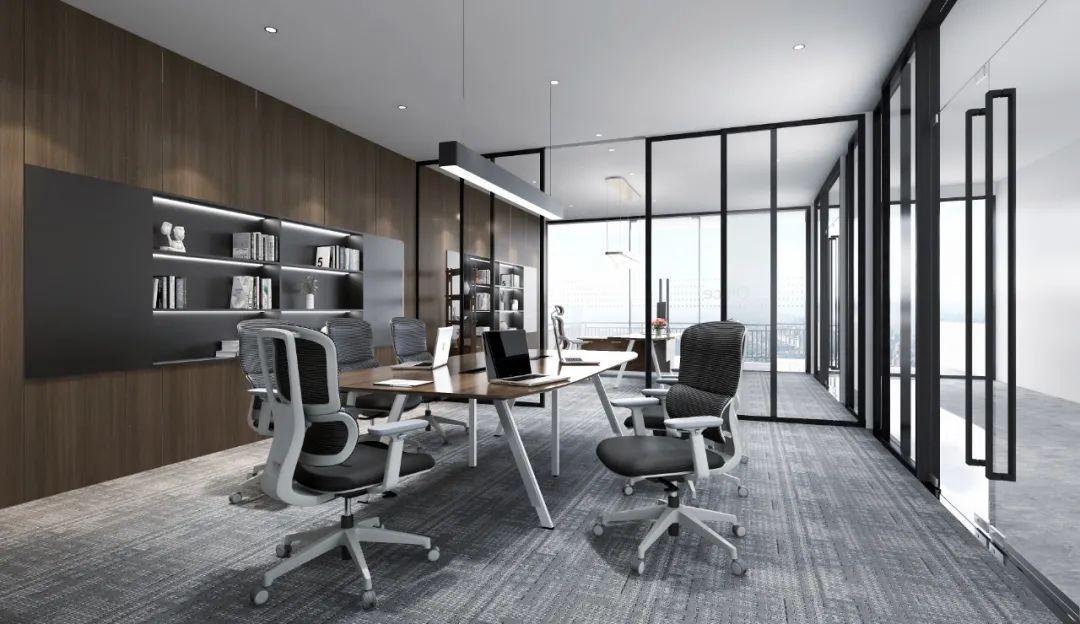
By measuring how long subjects could remain in a given posture, or the time until discomfort set in, and combining this with muscle fatigue and dynamic body pressure research, the study identified the posture least likely to cause fatigue.
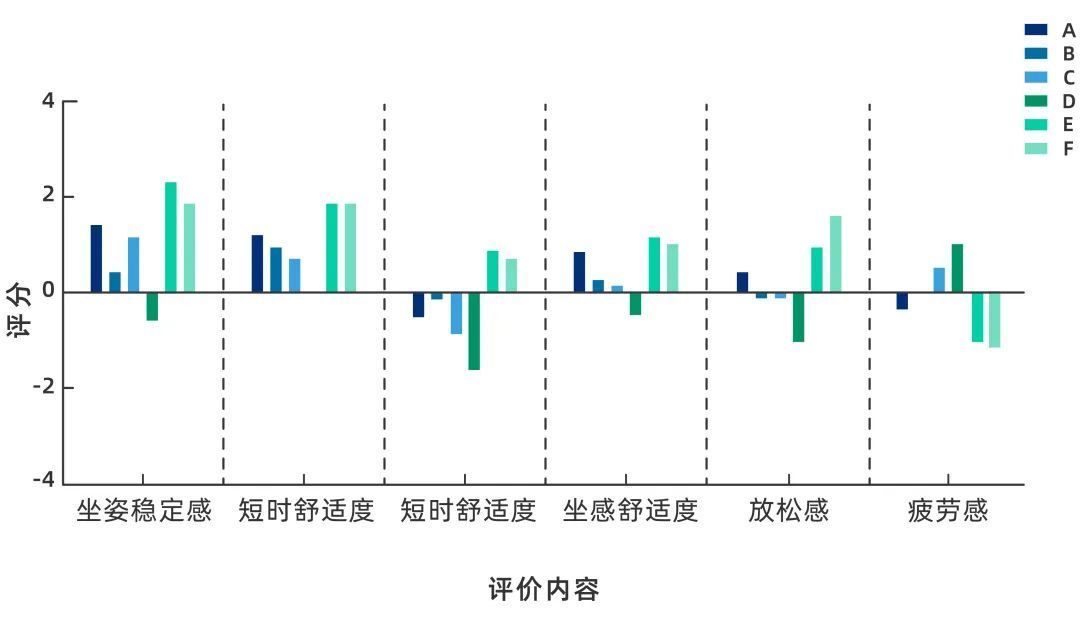
- Subjective ratings of overall sitting comfort
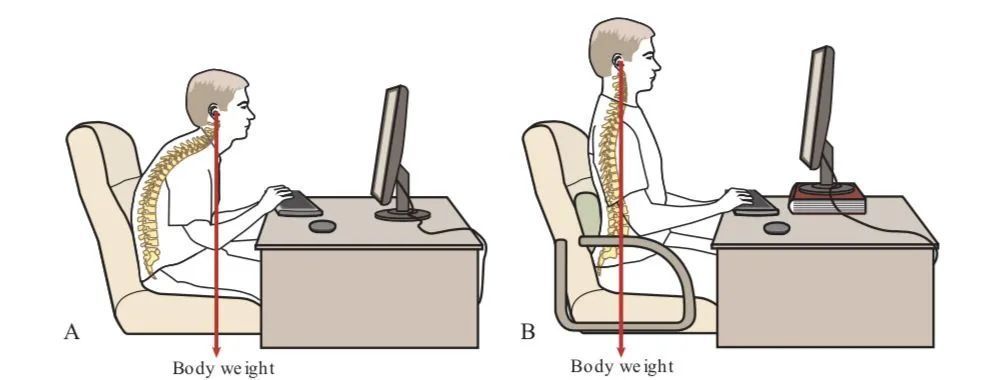
From the above, the following comparisons can be drawn:
Seating comfort: E>F>A>B>C>D; sense of relaxation: F>E>A>B=C>D; sense of fatigue: D>C>B>A>E>F.
- Instrumented muscle fatigue research
Using a body pressure distribution measurement system, surface electromyography, and other instruments, the study measured the impact of different office postures on muscle fatigue. Based on the results of these two objective measurement methods, the following conclusion can be drawn:
Reclined postures beat forward-leaning postures, which in turn beat upright postures. Supported postures remain comfortable for far longer than unsupported ones and are less prone to fatigue.
When working, keeping your back perfectly straight really cannot be sustained—and it is not the best posture anyway. Prolonged sitting itself runs against human nature; the better posture is always a dynamic one, not a static one.
From an ergonomic standpoint, we recommend choosing an adjustable ergonomic chair. The backrest and lumbar support not only help keep the torso and spine stable, but also assist a slight backward tilt that keeps the lower back in a neutral position with a natural lumbar curve. That is the posture that is truly relaxed and suited to human nature.