
Back to blog
Article
Work Office Chair Production
Admin October 12, 2026
The production process of work office chairs is mainly divided into three stages: frame production, exterior part production, and component assembly.
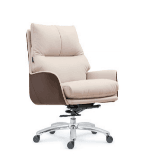
Frame Production
- Bottom Cushion Frame Formation: Workers first place square steel tubes into a hydraulic press, bending them into square bottom cushion frames with rounded corners at each corner. Then, they weld the support steel plates to the frame openings to ensure the frame's stability.
- Bottom Cushion Internal Structure Construction: S-shaped springs are hooked onto the frame, and three support steel bars are connected to the springs in opposite directions to complete the internal structure of the bottom cushion, providing elastic support for the seat.
- Welding of Other Component Frames: The armrest interfaces and backrests of the chairs are welded and polished in a similar manner to ensure the flatness and smoothness of each component frame. For swivel office chairs, a sturdy base is welded, with steel springs installed from the front and support frames placed between the springs. After completing the seat frame, the backrest frame of the chair is welded.
Exterior Part Production
- Leather Cutting: Plastic templates for parts such as the headrest and armrests are placed on top of the leather, and a utility knife is used to cut out pieces of black leather according to the template patterns, serving as the surface material to wrap around the parts. For swivel office chairs, workers flatten the leather on a cutting table and cut out pieces of leather according to the templates.
- Foam Pad Processing: After all the leather is cut, it is glued to a harder foam cushion, and a slightly larger foam pad is cut along the size of the leather for making the seat cushion and backrest of the office chair. To ensure comfort, a softer, fluffy foam pad is used, first cut into a larger square, then cut into connected, non-separated rectangles along measured intervals. Afterward, marks are made on the leather at the same intervals as the foam pad, and the leather is pleated and sewn to form the basic shape of the seat backrest's leather surface. When cutting foam blocks for swivel office chairs, the foam densities on the chairs vary, with soft foam used for cushioning and hard foam used for shaping the chair's twists.
- Sewing of Leather and Foam Pads: The leather of the seat cushion and decorations are sewn together to increase the seat's comfort and aesthetics. For swivel office chairs, the leather is divided according to size and sewn together with the foam.
Component Assembly
- Frame Wrapping and Decoration: The surface of the metal frame is wrapped with foam pads, and then the sewn leather cover is placed on top for decoration. The cover plate and frame are fixed with screws.
- Assembly of Height-Adjustable and Other Components: Height-adjustable armrests, hydraulic rods, pneumatic rods, and the bottom support rods of the seat are assembled together with the metal base to ensure that the office chair can be freely adjusted in height. For swivel office chairs, the base, support rods, and support plate are installed, and the hydraulic rod for the lifting valve seat is mounted. It can not only control the chair's height adjustment but also enable 360-degree rotation of the chair.
- Final Installation: The wheels of the seat are installed at the bottom, and the headrest and armrests are inserted into specific positions, completing the production of a comfortable office chair. For swivel office chairs, an aluminum base and casters are finally installed, and the headrest and armrest parts are attached.


