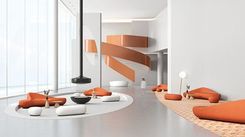
Why Private Space Matters in the Modern Office
We run into distraction after distraction at work every single day. People routinely arrive early, leave late, or hunt for a quiet area. With information overload and hyper-connectivity, employees may need more time to think and solve problems. Because of the near-constant interruptions we experience at work, we often lose our capacity for creativity and originality — which is bad for business. That is why, given the popularity of open-plan office layouts, private space ranks among the top five workplace amenities. According to experts, the number of smaller private spaces in office design will expand at the most significant rate in the near future.
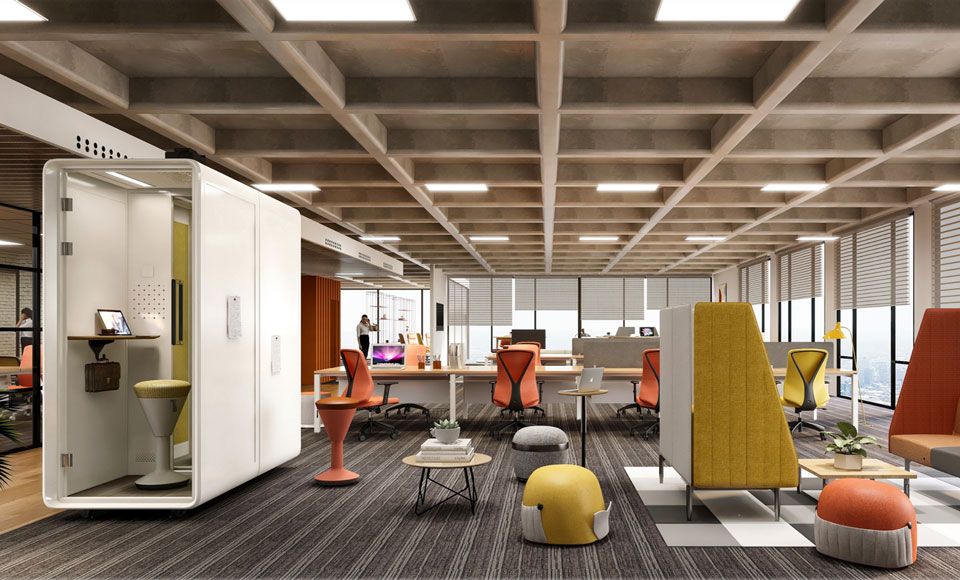
Private space provides a place where employees can settle in and relax, or work in a more secluded atmosphere. Private meeting rooms give employees a spot for confidential video conversations — and it is well known that the number of video calls we make throughout the workday has increased dramatically. Private space takes many forms in modern office design. How can an office be designed to promote highly focused, productive deep work without compromising the benefits of an open office environment? In this article, we examine the importance of private territory in the office — and why it matters.
Finding the Right Balance
Finding practical ways to let employees freely change their environment, so they can dedicate specific areas to specific work, is the constant goal of an optimal workplace.
Collaboration is great, but an effective workplace cannot be built around first-rate cafes and luxurious coworking facilities. According to research, effective collaboration involves both teamwork and individual focus. To maintain this balance and boost office productivity, workspaces should be built to support both ways of working. That is why incorporating dedicated private space is crucial.
Deep focused work is the ability to engage continuously for four hours or more each day with a particular task or project. Innovative solutions cannot be created, designed, or produced until the necessary mental space is available. Some people can handle certain individual tasks, such as answering email, in public or common areas. But most employees need access to somewhere more private than an open workstation to complete professional tasks requiring deep concentration — writing, coding, or analysis. Traditional focus-work environments emphasize controlling external visual and auditory distractions. How do such areas encourage both focus and collaboration? Through a comprehensive design strategy.
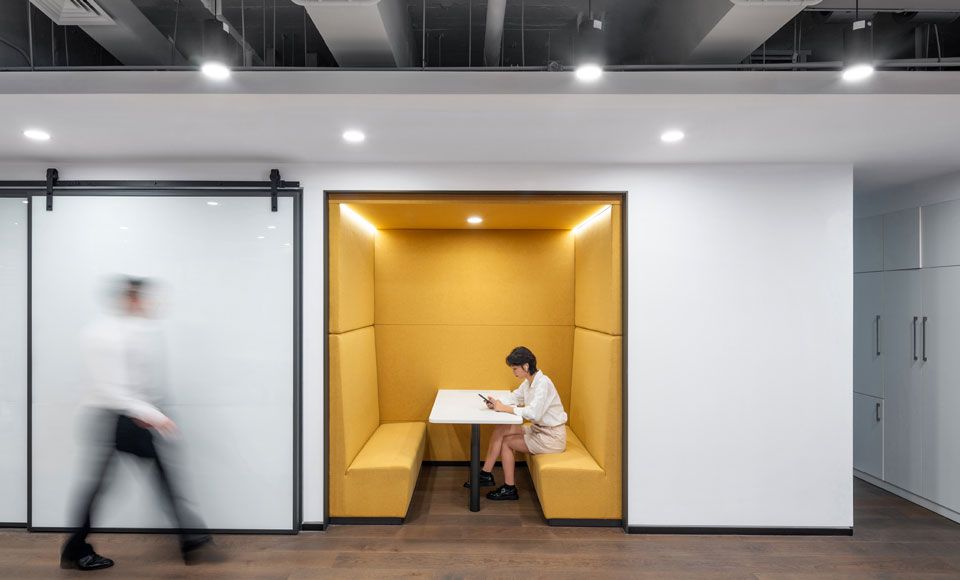
Creating Space for Focused Work
How can an office be designed to promote highly focused, productive deep work without compromising the benefits of an open office environment? In our view, three effective design approaches hold productivity potential.
Acoustic Pods or Phone Booths
For sound privacy, the idea of acoustically designed phone booths has become extremely popular. Employees can use these quiet areas for client calls, replying to email, holding video conferences, or simply discussing project ideas. These areas are ideal for concentration. The two- or three-person booths can also double as collaboration or meeting spaces, where a small team can focus on a specific task.
Alternative Workspaces for Concentrated Work
Most people who need to concentrate prefer solitude. Giving people a choice of where in the workplace they work promotes a more efficient workspace, a better work environment, and higher individual performance. One strategy that provides acoustic isolation and signals to others not to disturb is to offer ample on-demand private space.
The Library as a Quiet Zone
Given their size, libraries approach private space more as a quiet zone than as an enclosed room. Everyone knows the "rules" of the library: keep your voice down and respect others' right to read, study, or work. Office libraries are usually less furnished than employee lounges — a communal table and lounge seating, for instance. An excellent way to send the visual message that focused, individual work matters to organizational effectiveness just as much as collaboration does is to dedicate an entire space to focus and focus-based work.

Conclusion
Everyone has different preferred forms of private space. Employees need choice, so they can pick the workspace that suits their work preferences and allows them to focus and concentrate independently. Designers must focus (deeply) on what truly matters: how their work will affect people and processes. We must therefore look beyond open versus closed to understand the essential core of organizational identity, fundamental values, and employees' preferences and habits.
You may also like
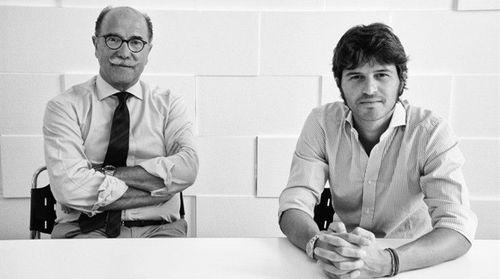
European Designer Interview: Uncovering the Fun of Office Furniture
Read More
Office Furniture Trends: Creating Dynamic Learning and Training Spaces
Read More
The Evolution of Office Spaces Driven by Data
Read More