Why Is Deep Focus at Work Getting Harder? The Answer May Not Be You
You sit down ready for deep work, yet your attention keeps getting scattered without warning. The office feels lively and well connected, but holding a continuous thread of thought grows harder and harder. Work gets done in fragments; flow stays out of reach; by day’s end you’re mentally exhausted without much solid, deep progress to show.

*Image generated by Doubao AI
Many people blame their own lack of focus, but the deeper cause often lies in the structural design of the office itself. More often than not, it isn’t just colleagues talking — it’s the spatial layout that makes distraction constant and hard to escape.
The hidden truth of lost focus: structural interference from the space
In an open, shared office, furniture arrangement and spatial layout directly determine how people move and how often they interact. In many offices, workstation zones, circulation routes, and collaboration areas sit too close together, with no clear separation between focused work and passing traffic. Movement isn’t confined to defined paths — it disperses across the entire office.
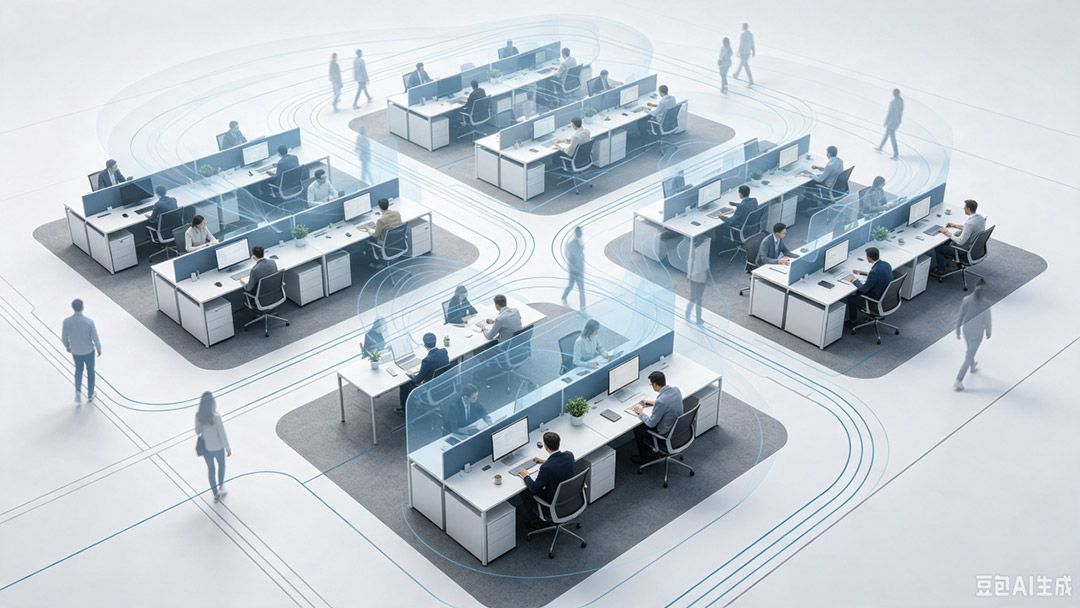
*Image generated by Doubao AI
Everyday passing by, brief chats, people entering and leaving meeting rooms — all become a constant stream of passive interruptions. Such an office doesn’t look chaotic, yet the surrounding activity and moving figures keep tugging at your attention, silently.
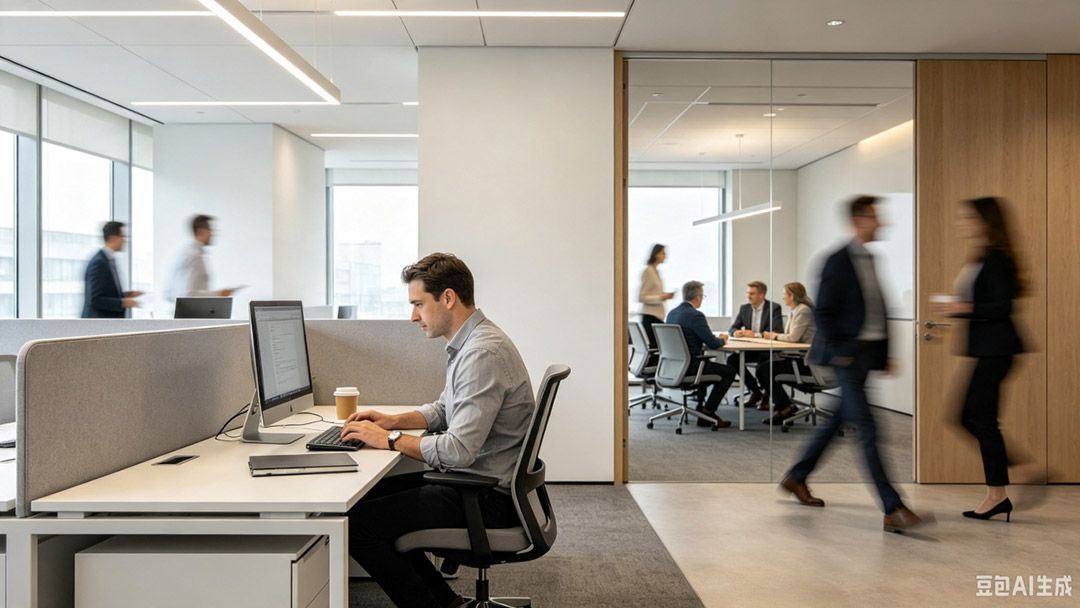
*Image generated by Doubao AI
Every distraction quietly adds up to cognitive fatigue
Over time, the overlap between circulation and work zones makes sustained focus increasingly difficult. After each interruption, the brain must retrace its thoughts and reset its state. It isn’t that the task itself is so complex — it’s that the environment provides no support for uninterrupted attention.
Fatigue accumulates unnoticed until it shows up as cloudier thinking and the inability to stay engaged for long. Seen this way, focus is never just an individual cognitive skill — it is a spatial condition, shaped by distances, circulation design, and sightlines in the office.
Reclaiming deep focus takes space design, not willpower
The solution isn’t to abolish interaction and seal the office shut, but to use sound spatial structure to reduce unnecessary overlap between different working behaviors. The core optimization: clearly separate focus zones, collaboration and discussion areas, and circulation routes, so each area carries the level of interaction appropriate to it.
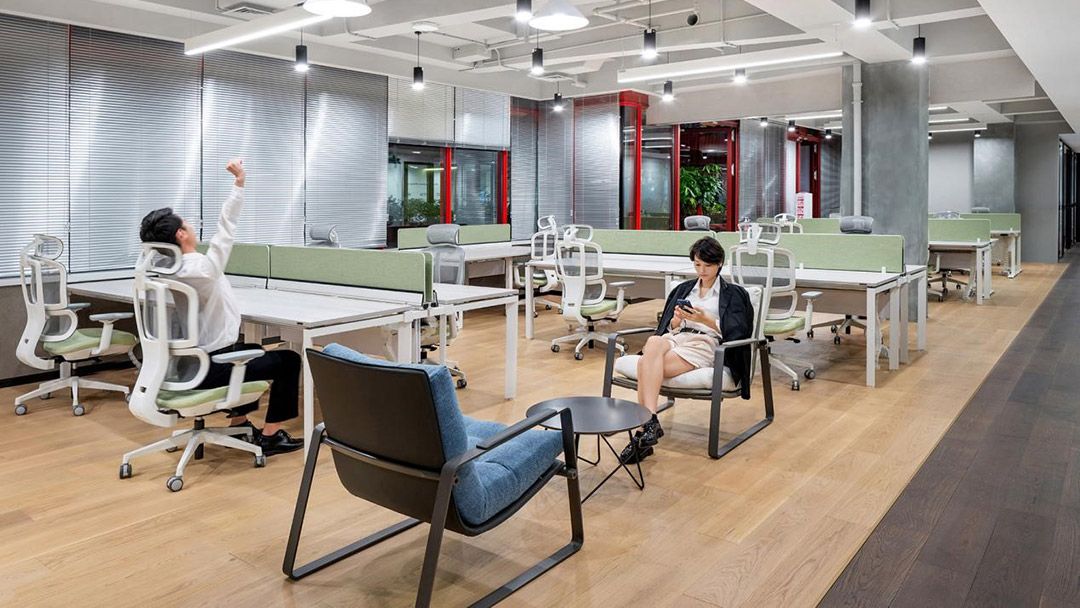
On that foundation, modular furniture systems can sketch soft yet clear boundaries within an open environment: flexibly reconfigurable workstation layouts, lightweight screens and partitions, and storage cabinets that both guide foot traffic and weaken the visual and physical interference between focus zones and passageways — building a buffer for concentration without sacrificing openness.
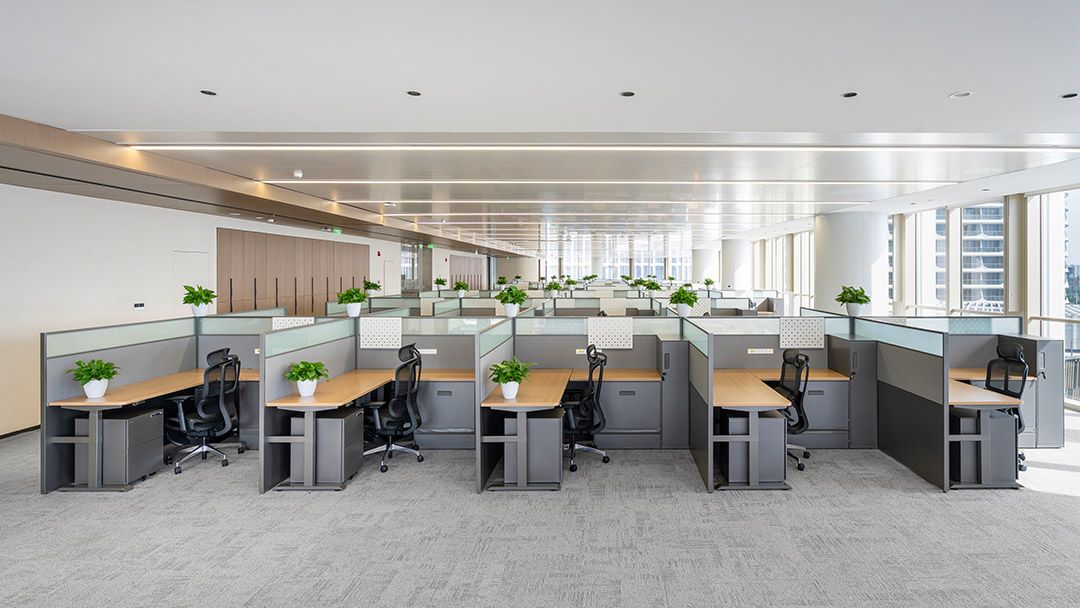
Yihang’s screen products stand out here by balancing openness with defined boundaries. Through modular combinations, flexible sizing, and a range of materials, the screen system forms semi-open, semi-private workstation interfaces for different office scenarios — never sealing the space into something oppressive, while effectively reducing visual distraction and sound transmission, so employees can hold a relatively stable state of focus even in an open environment.
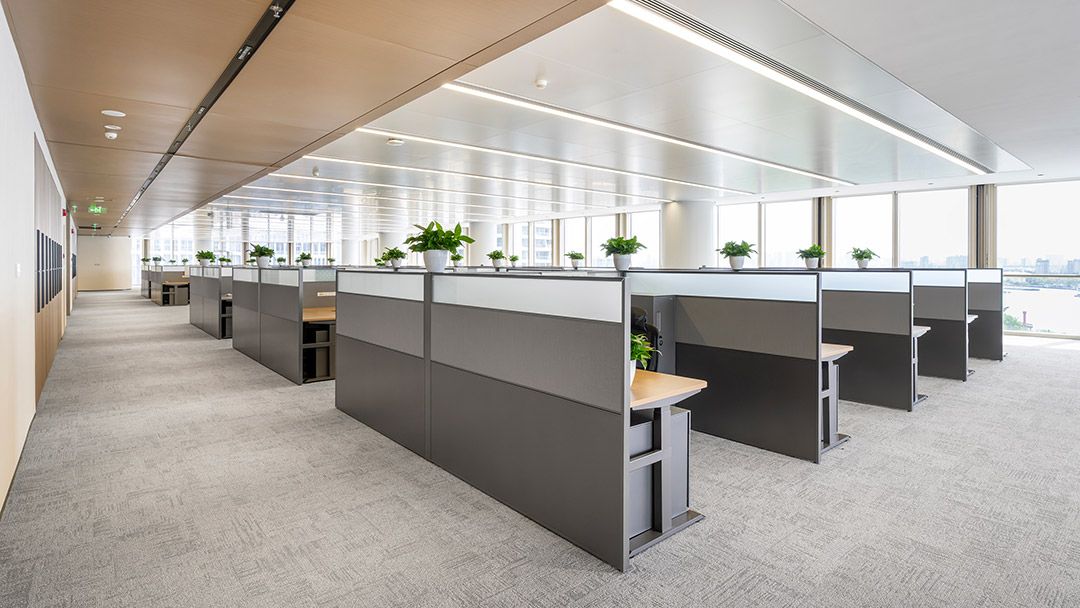
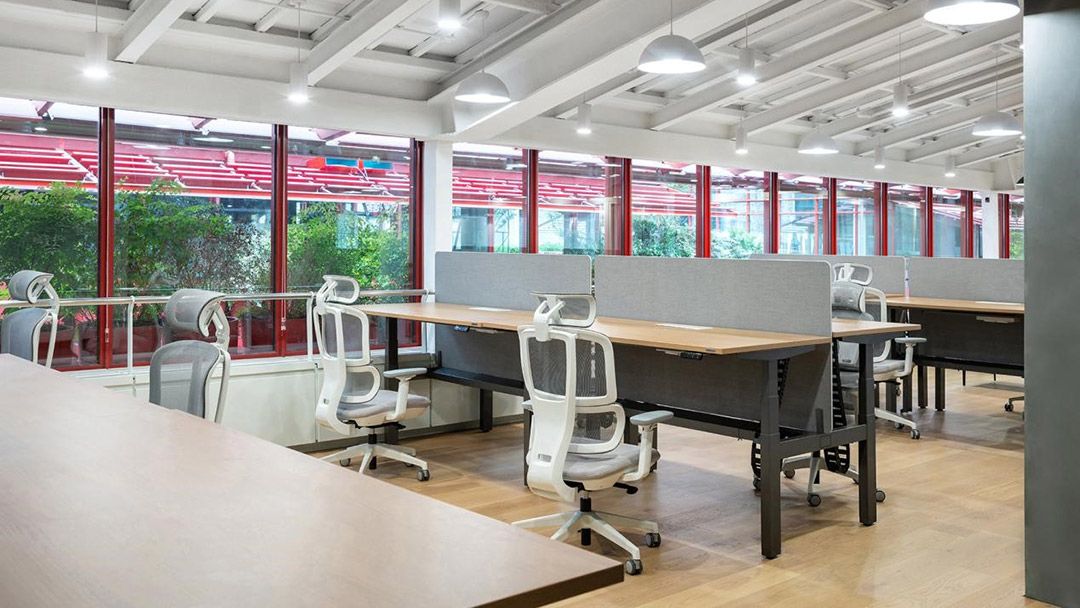
When the whole spatial system follows this logic, deep focus stops depending on individual willpower — it becomes a working state the environment naturally supports.
You may also like
Championing Formaldehyde-Free Offices: Yihang's Healthy Work Mission Upgraded
Read More
Freedom Without Excess: Where Creative Teams Should Work
Read More
Rethinking Work After the Pandemic: 11 Lessons from Remote Work
Read More