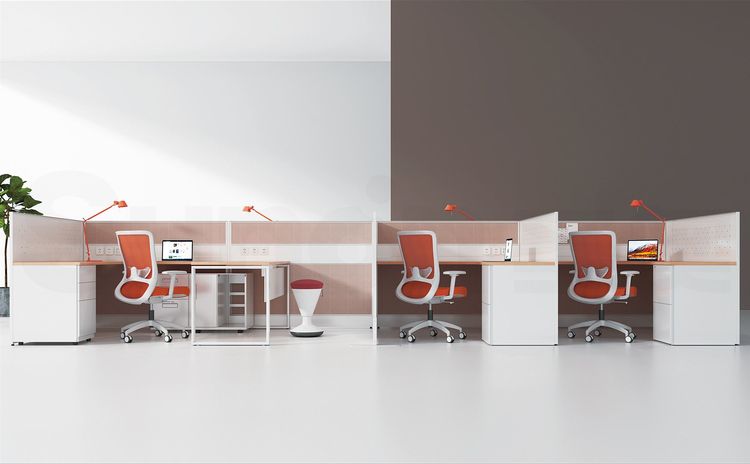
What Should Companies Consider in the Planning Stage of Custom Furniture?
Nowadays, more and more companies choose custom office furniture when fitting out their offices. It not only perfectly matches the office environment and showcases corporate culture so that visitors and applicants remember at a glance, but also fits the future trend of flexible work. Planning and design, as the first step of custom office furniture, directly determines the final presentation of the office and the convenience and comfort of its users. Once the plan is confirmed, all later steps — ordering, production, shipping, installation… — will be implemented according to the design draft. If the design is not well thought out, changes will come at a high cost, so office design planning is especially important. Let's take a look at what companies should avoid during the design stage.

First: Unclear planning requirements for the office space
The rise of new work models makes companies want spaces with diversified functions, which often leads to wavering in space planning and an inability to give the furniture supplier clear requirements — then “customization” exists in name only.
For example, every functional area needs chairs: public reception areas need more stain-resistant fabrics; lounge areas need modular furniture that is easy to recombine; shared work areas need chairs that help with noise reduction. Clearly, if the space planning is unclear, the resulting custom furniture neither improves space utilization nor matches employees' working needs.
Second: Paying too much attention to furniture renderings
Many companies, when customizing office furniture, often focus too much on the renderings and overlook other issues. Take dimensions: office corridors should generally be no less than 0.9m wide so two people can pass each other face to face or side by side; for sofas, the seat depth measured from left to right, excluding the armrests, should ideally exceed 48 centimeters, otherwise sitting is uncomfortable.
These feelings are simply not intuitive in a rendering, so many companies fall into the “rework from the picture” trap. Yihang has anticipated this: we set up a showroom of over 10,000 square meters so companies can visit and experience first, then decide which office space effect to choose. Through scenario-based experience, effective communication is achieved, and with the design and planning of a professional solutions team, companies get exactly what they see.
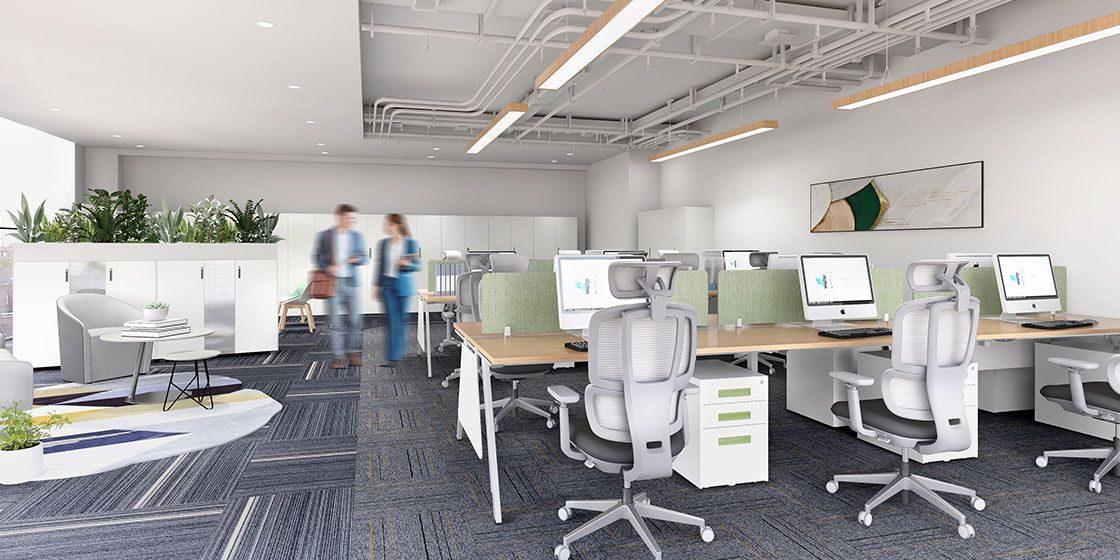
Third: Handing decision-making authority to the space designer
Of course, some companies mistakenly believe that once the basic information is settled — the number of desks and chairs, the sofa's color, the cabinet's dimensions — their job as the client is done at the design stage. In fact, all subsequent steps still require continuous follow-up.
For example, a company needs a green sofa, but in reality, under different lighting and surroundings, the same green presents different shades — which green to choose is a matter of personal aesthetics. Or consider how filing cabinet doors open: sliding or pull-out. A seemingly small detail, it is actually determined by many factors such as the cabinet's function, where it will be placed, and users' habits. So at this stage, for any design change regarding the furniture, the company must give a clear answer or a directional decision, rather than letting the designer or the furniture supplier “figure it out.”
Fourth: Assuming “unified” = “identical”
When customizing office furniture, we often talk about the concept of stylistic unity to achieve the harmony of the overall space. In fact, many companies misunderstand it as “all furniture categories should be the same.” For example, planning furniture of the same color family, material, and lines all into one space actually makes it too monotonous and lacking in layers, and can even create a dull, oppressive visual effect.
To avoid the above, companies should work with an office furniture brand that can provide overall space solutions. This way, when adjusting the plan, companies can look at problems from a broader perspective and get professional advice to avoid this pitfall.
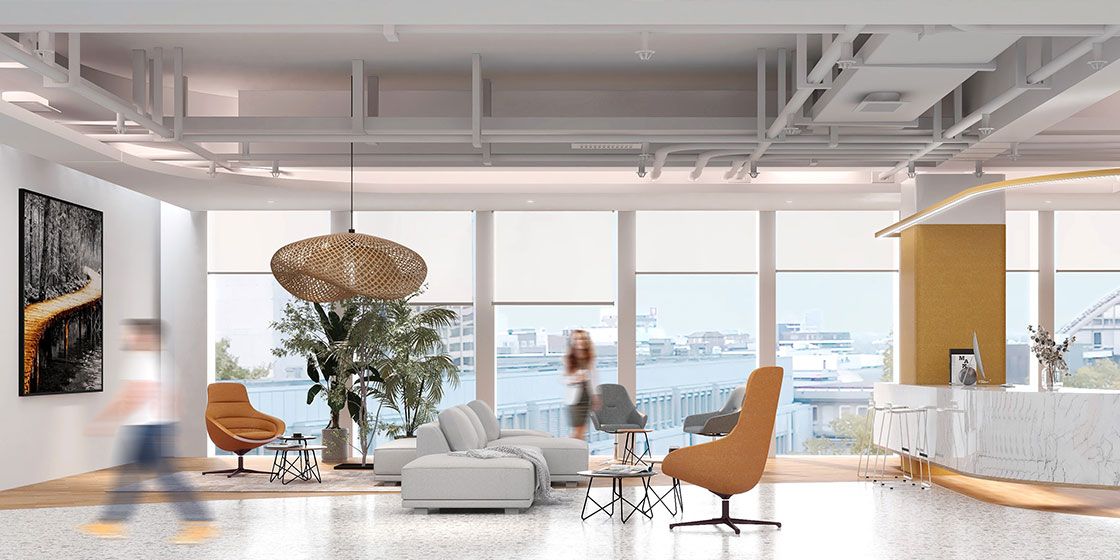
Companies' constant pursuit of individuality and innovation has ushered in the trend of custom office furniture. We hope readers of these tips gain some inspiration about furniture customization to build an office space that better fits their brand positioning. One more reminder: be sure to choose a furniture brand offering one-stop space customization services, so you avoid pitfalls again and again.
You may also like

European Designer Interview: Uncovering the Fun of Office Furniture
Read More
How Can Companies Strengthen Their Immunity in a Pandemic?
Read More