
Office Furniture Panels Explained: From Eco Standards to Healthy Workspaces
When buying office furniture, many people run into similar frustrations: cabinet doors that no longer open and close smoothly after a while, shelves that sag slightly once fully loaded, or office spaces that carry a faint lingering odor that becomes uncomfortable over a long day.
These seemingly small problems not only hurt daily efficiency but may later demand repairs—or even partial replacement. Tracing them back, the cause is often neglected core quality: the wrong panel choice or unclear eco standards. This article walks you through the material selection logic and environmental essentials for office furniture, so you can pick products that are genuinely low-maintenance, durable, and healthy.
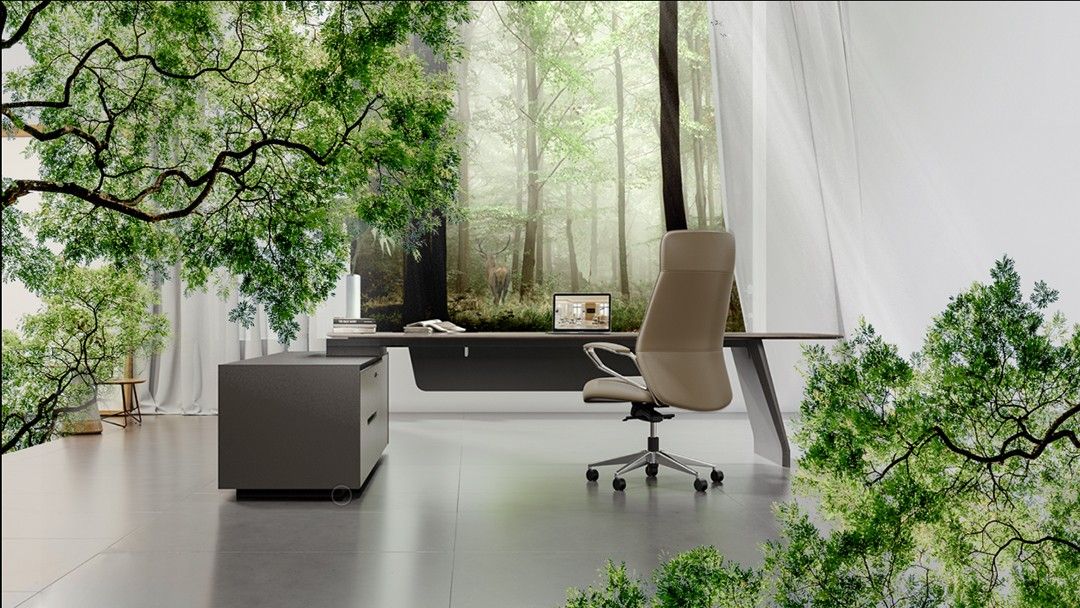
1. Choosing the Right Material: 2 Main Categories + 3 Core Substrates
Don't get lost in the maze of fancy names. Focus on the two big categories—solid wood and engineered panel—plus the characteristics of the three core substrates within engineered panels, and the choice becomes clear. The key is choosing “right”: letting each material deliver value where it fits best.
(1) Engineered Panels: The “Value Workhorse” of Office Scenarios
Mainly including particleboard, fiberboard (MDF), and plywood, these panels are widely used in office environments thanks to their stable performance and friendly prices.
Core advantages: cost-effective, wear- and scratch-resistant, easy to clean, uniform sizes—covering the needs of most office scenarios.
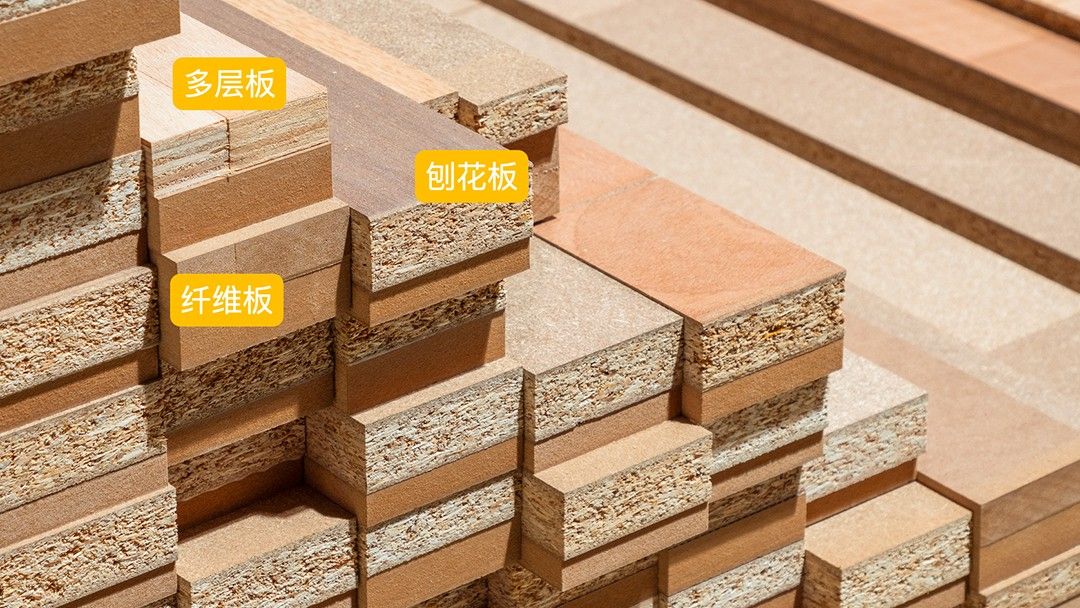
1. Particleboard: the dependable “logistics chief”
Suited to basic furniture such as file cabinets and storage cupboards. Its structure is stable with good load-bearing capacity; its relative weakness is that it is hard to mill into shapes.
Buying tip: choose products made with multi-layer mat-forming and a high content of large particles—they hold screws better and resist deformation.
2. Fiberboard (MDF): the aesthetics-driven “design director”
Ideal for shaped door panels, curved desktops, and other parts requiring fine machining. Its surface is smooth and refined, highly moldable, and easy to shape into complex forms—though its screw-holding power and eco performance are comparatively weaker.
Buying tip: check that milled edges are smooth and free of burrs.
3. Plywood: the load-bearing “structural engineer”
Used for heavily loaded bookshelves, desk frames, and other load-bearing parts. It offers good toughness and high strength, holding up under long-term loads without bending—but it uses more adhesive and is comparatively less eco-friendly.
Buying tip: pay close attention to the eco rating, and choose boards with more veneer layers and an even core thickness.
(2) Solid Wood: The “Image Ambassador” That Shapes Texture
Natural wood grain carries a built-in sense of quality, but it costs more and needs careful care to avoid drying cracks and knocks from hard objects. It suits reception desks, executive offices, high-end meeting rooms, and similar settings.
Panel quality starts with raw materials. When purchasing, it never hurts to ask one more question: “Which suppliers do the panels come from?” For example, some quality-focused furniture brands deliberately partner with well-known panel manufacturers, keeping an eye on substrate reliability right from the source.

2. Don't Rely on Verbal Promises on Eco Performance—Look for Core Certifications
Employee health and productivity depend on good indoor air. Amid all kinds of green marketing, understanding certifications is key—and formaldehyde is one of the most closely watched indicators.
(1) Formaldehyde Emission Standards
Panel eco certification currently centers on formaldehyde emission grades. The Chinese national standards (GB/T 39600-2021) are as follows:

E1 grade (≤0.124 mg/m³): the national mandatory eco threshold—the baseline that must be met.
E0 grade (≤0.050 mg/m³): a stricter grade that satisfies everyday office health needs.
ENF grade (≤0.025 mg/m³): under the national standard, its formaldehyde emission limit is among the strictest in China today and is regarded as the benchmark for top-tier eco ratings in the industry.
Among these, panels bonded with MDI adhesive achieve “zero formaldehyde added” at the source, and their formaldehyde emissions easily meet the national ENF grade. Also note: beyond Chinese standards, if products are destined for overseas markets, make sure they comply with local formaldehyde emission requirements.
Buying reference:
Ample budget: give first priority to the national ENF grade.
Best value for office space: the national E0 grade meets most needs.
Absolute baseline: choose at least E1—the national mandatory standard.
(2) Beyond Formaldehyde: A Fuller Picture of Eco Performance
True sustainability goes beyond formaldehyde. Authoritative certification systems also cover broader dimensions:
Indoor air quality (IAQ): such as GREENGUARD certification, which strictly limits total volatile organic compound (VOC) emissions from panels to ensure excellent indoor air quality.
Sustainability and social responsibility: such as FSC certification, which ensures wood comes from responsibly, sustainably managed forests and reflects a company's green commitment.
Comprehensive eco labels: such as the China Environmental Labeling (Ten Ring certification), which sets integrated requirements across a product's entire life cycle.
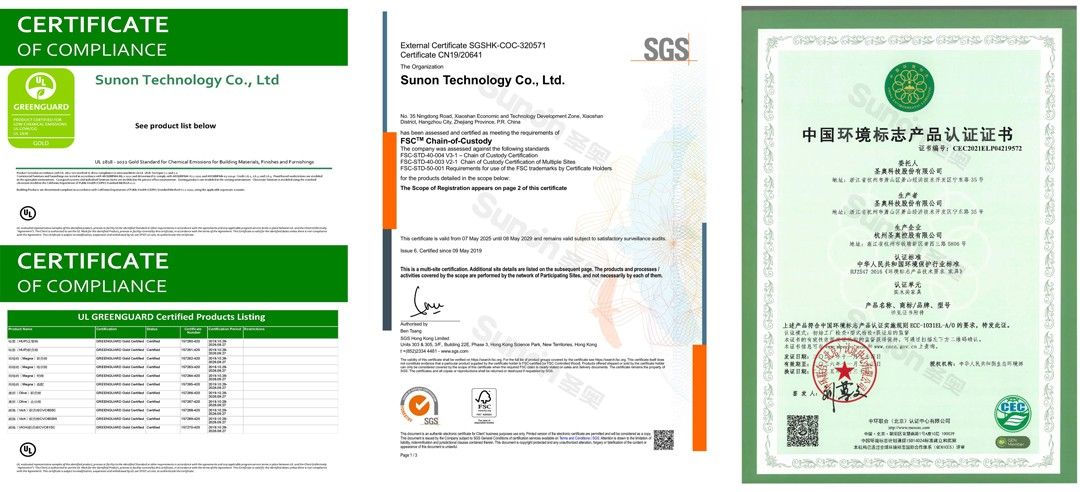
When purchasing, simply ask suppliers whether they hold these certifications.
Conclusion: Choosing Materials Isn't “Saving Pennies”—It's “Avoiding Big Headaches”
Choosing office furniture panels is, at its core, an investment in employee health and the work environment. Build a clear logic—“pick the substrate by use case → check certifications for health”—and vet both physical performance and chemical safety. Only then can you avoid trouble down the road and turn every dollar of budget into lasting, healthy value.
You may also like

The Primacy Effect: First Impressions Apply to Office Furniture Too
Read MoreChampioning Formaldehyde-Free Offices: Yihang's Healthy Work Mission Upgraded
Read More
European Designer Interview: Uncovering the Fun of Office Furniture
Read More