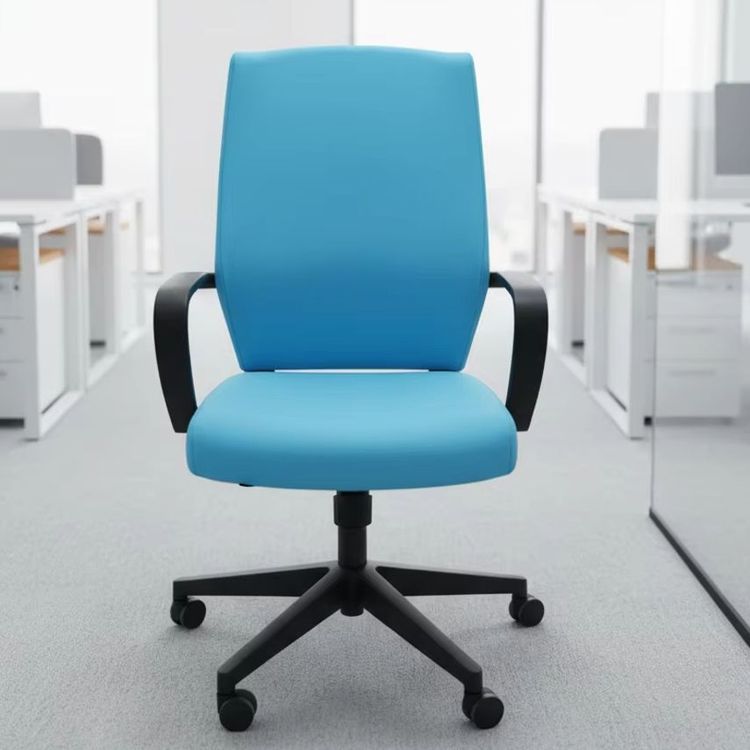
Office Chair Plastic Cost Breakdown: Key Factors
The cost of plastic structural components in office chairs is primarily composed of material costs, modification processes, supplier selection, and work condition adaptability, with modified plastic formulation technology being the core key factor.

1. Material Cost Proportion and Component Composition
The cost of plastic structural components in office chairs accounts for approximately 70% of the total cost of the entire chair, covering more than twenty components such as five-star bases, backrest frames, seat chassis, armrests, and backrest connectors. These components need to meet requirements for mechanical support, ergonomic fit, and long-term use, so material selection directly affects the cost structure. For example, five-star bases require high impact resistance to prevent breakage, backrest frames need to balance toughness and dimensional stability, and armrests need to be resistant to sweat corrosion and scratching. The performance requirements of different components lead to significant differences in material costs.
2. The Core Role and Technical Barriers of Modified Plastics
Virgin resins (such as PP, PA, PC) often lack sufficient strength, toughness, or aging resistance, necessitating modification by adding components like glass fibers, toughening agents, and weathering agents. The modification process is a key variable in cost:
- Performance Enhancement: Increasing the glass fiber content by 10% can double the material's rigidity, but excessive amounts can increase brittleness, requiring experimental optimization of the formulation ratio.
- Synergistic and Antagonistic Effects: Additives may produce performance conflicts (such as toughening agents reducing rigidity), requiring formulation engineers to balance the synergistic effects of multiple components, posing a high technical threshold.
- Scaled Production: Over 70% of structural components in the industry use modified plastics. Modification plants reduce costs for manufacturers through centralized production, while building in-house laboratories requires high investment and long cycles, making small and medium-sized enterprises more reliant on external suppliers.
3. Supplier Selection and Cost Differences
- International Giants (such as BASF, Covestro): Offer standardized grades with complete certifications but at high prices and slow customization response, suitable for high-end markets or scenarios with extremely high requirements for performance consistency.
- Local Modification Plants: Can customize formulations according to work conditions, with lower costs and greater flexibility. They can quickly adjust formulations to meet the needs of different components (such as high-rigidity formulations for five-star bases or corrosion-resistant formulations for armrests), becoming the mainstream choice.
4. Work Condition Adaptability and Quality Risks
Different components require targeted modification:
- Five-star bases: High impact resistance and rigidity to withstand dynamic loads;
- Backrest frames: Toughness + dimensional stability to prevent long-term deformation;
- Armrests: Resistance to sweat corrosion + scratching to enhance durability.
Defects in modification formulations or processes can lead to issues such as backrest breakage and bolt failure (as seen in recall events in multiple countries from 2023 to 2025), indirectly increasing quality costs.
5. The Impact of Industry Trends on Costs
The global office chair market has a compound annual growth rate of 5.1%, with China accounting for 65% of global exports. Scaled production further reduces the cost of plastic components. However, quality risks persist, and companies need to seek a balance between cost control and performance reliability to avoid recall losses due to material or process defects.