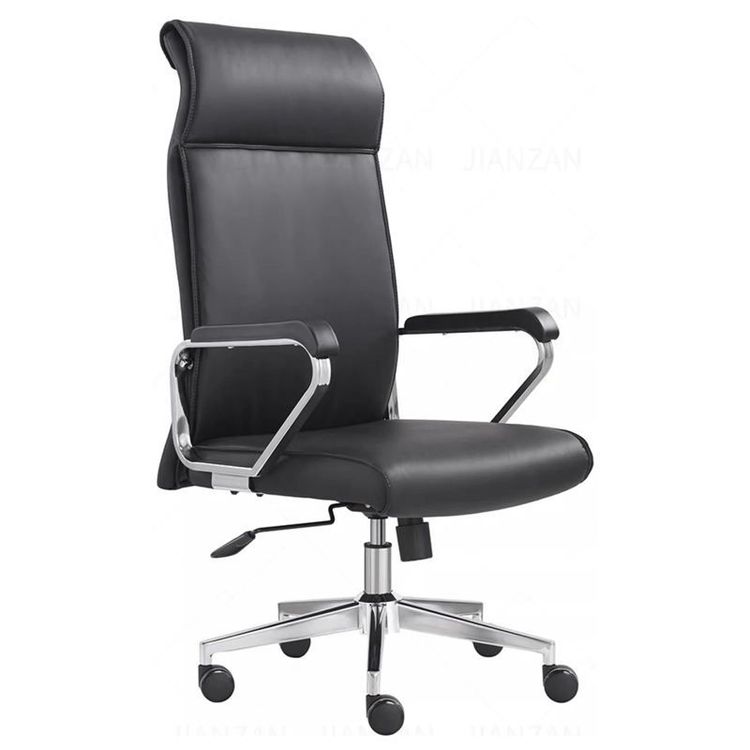
Aluminum Office Chair Buying Guide: What to Know Before You Buy
Before purchasing an aluminum office chair, it is essential to consider factors such as material and structure, ergonomic design, adjustability, comfort, durability, safety, cost-effectiveness, and user reviews. Here is a detailed analysis:

1. Material and Structural Characteristics
Aluminum frames are a common choice for office chairs due to their high strength and lightweight properties, often combined with high-density PU molded foam seats for stable support. Some metal office chairs incorporate adjustable components (such as headrests and armrests) to enhance ergonomic adaptability. Pay attention to the surface treatment process of the aluminum (such as anodizing), which directly affects corrosion resistance and aesthetic appeal.
2. Ergonomic Design Priorities
For prolonged use scenarios, focus on the dynamic support system:
- Adjustable lumbar support should conform to the natural curvature of the spine, avoiding fixed designs that leave the lower back unsupported.
- The chair back should feature an S-shaped curve design, paired with breathable mesh or 3D fabric to distribute back pressure evenly.
- The front edge of the seat cushion should have a waterfall design to reduce pressure on the thigh veins and prevent numbness from prolonged sitting.
3. Multi-Dimensional Adjustability
Core adjustable parameters include:
- Seat height adjustment: Should cover a range of 50-80cm to accommodate users of different heights.
- Armrest adjustment: 3D/6D armrests allow for up-down, front-back, left-right, and rotational adjustments to match keyboard operation height.
- Recline locking: Multi-position tilt locking functionality (e.g., 90°-135°) facilitates switching between work and rest scenarios.
- Synchronized tilting: The chair back and seat cushion adjust in tandem to maintain body balance.
4. Enhanced Comfort Design
- Seat cushion material: High-density cold-cured foam (density ≥45kg/m³) is more resistant to sagging than regular foam and, when paired with breathable holes, improves heat dissipation.
- Additional features: Hidden footrests and retractable headrests significantly enhance comfort during lunch breaks.
- Noise control: Gas lift and recline mechanisms should be TUV-certified to avoid producing unusual noises during use.
5. Durability and Maintenance Considerations
Although aluminum frames are corrosion-resistant, they should still avoid prolonged contact with acidic liquids. It is recommended to choose models that have passed BIFMA standard testing, typically with a load-bearing capacity of over 136kg. For use in dining areas, prioritize waterproof and stain-resistant fabrics (such as PU leather or Teflon-coated fabrics) to simplify cleaning.
6. Safety Certifications and Compliance
Verify whether the product has passed international safety standards such as ANSI/BIFMA X5.1-2017, with a particular focus on gas lift explosion-proof certification (Class 4 gas lifts are safer) and five-star base load-bearing test reports. Checking recall databases can help avoid batches with structural defects (such as backrest fractures or loose bolts).
7. Cost-Effectiveness Evaluation
Products in the 2000-5000 yuan price range typically balance functionality and cost. Be wary of low-priced products that reduce costs by eliminating adjustable modules or using low-density foam. It is advisable to calculate the daily usage cost (total price ÷ expected service life) and prioritize brands offering warranties of five years or more.
8. User Review Reference Standards
Focus on feedback from users who have used the product for more than three months, filtering for frequently mentioned keywords:
- Positive reviews: Lumbar support strength, smoothness of gas lift adjustment, fabric durability.
- Negative reviews: Armrest wobble, unusual noises from the recline mechanism, wheel stuttering.
Data from professional review organizations (such as Wirecutter, Consumer Reports) can serve as supplementary references.