
Office Chair Backrest Perforation
The perforation design of office chair backrests primarily serves three core needs: ventilation, weight reduction, and ergonomic compliance. The specific functions and parameters are as follows:
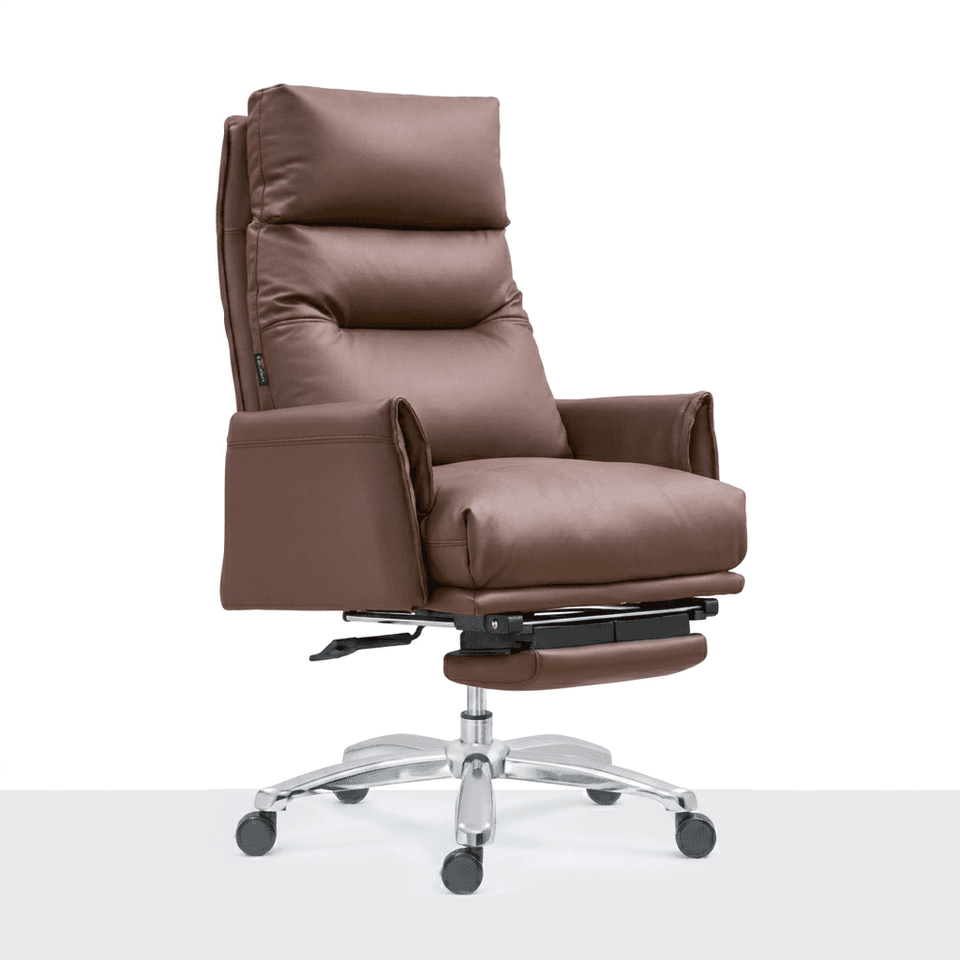
Ventilation is the primary purpose of perforation design. When sitting for extended periods, the area where the back contacts the chair surface experiences reduced blood circulation due to prolonged pressure, leading to increased sweat secretion. If the backrest is airtight, sweat cannot evaporate promptly, causing a sticky and uncomfortable feeling on the back and potentially leading to skin issues. Perforated structures create air circulation channels, accelerating heat exchange between the back and the external environment. For example, the perforation design of the BIMLL car lumbar support perforated suede backrest cushion enables microcirculation on the cushion surface, quickly expelling heat and moisture emitted from the back. Experimental data shows that after three to four hours of continuous use, a backrest with perforation design can reduce back humidity by 30%-40%, significantly enhancing comfort.
Weight reduction is the practical value of perforation design. Office chairs need to balance support and portability, especially in scenarios requiring frequent movement or adjustment, where a heavy backrest increases the user's burden. Perforation reduces the overall weight by removing material from non-load-bearing areas while maintaining structural strength. For instance, after adopting a perforation design, a certain brand of office chair reduced its backrest weight by 15% while only experiencing a 5% decrease in support force, achieving a balance between lightweight design and functionality.
Ergonomic compliance is the advanced application of perforation design. The hole distribution on some high-end office chairs is not random but designed according to the physiological curves of the human spine. For example, the hole density in the middle of the backrest may be higher to match the lordotic curve of the lumbar spine, dispersing pressure; holes in the scapular region may be larger to reduce muscle compression. This design can increase the fit between the backrest and the back by 20%-30%, reducing fatigue from prolonged sitting.
Perforation parameters need to be adjusted according to the scenario. For ordinary office chairs, the hole diameter typically ranges from 0.5 to 2 centimeters, with uniformly distributed small holes. This parameter range ensures both ventilation and backrest support strength, preventing local deformation caused by excessively large holes. In gaming chairs or high-end ergonomic chairs, the hole diameter may expand to 2-5 centimeters, combined with zoned designs to accommodate more intense physical activities or longer usage times.


