
Partition Wall Behind the Office Chair
The situation of the partition wall behind the office chair should be judged based on multiple factors and not solely on Feng Shui. The following analysis covers aspects such as practical functions, materials, and distance:
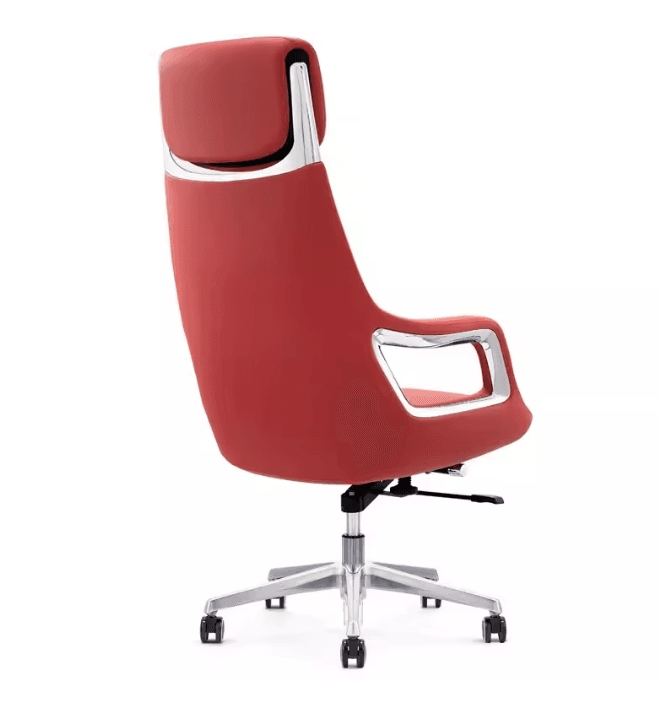
Practical Functions
The partition behind the office chair can block the line of sight and protect privacy. In an open-plan office environment, a properly placed partition can provide employees with a relatively independent workspace, reduce external interference, and improve work efficiency. However, factors such as the material, size, and location of the partition can affect airflow and lighting within the office. If the partition is improperly placed, it may hinder normal airflow, resulting in stale air in the office. It may also block light, making the work area dim and affecting employees' visual comfort and physical and mental health.
Material Selection
In terms of materials, a solid wall is generally a better choice behind the office chair. A solid wall offers good stability and sound insulation, providing a stronger sense of security and stability. Three-ply board is mainly used as a partition. It is thin and inexpensive. If the office needs partitions, three-ply board is a cost-effective option, but it is best to decide based on the overall layout. For example, in office areas where sound insulation requirements are not high and flexible layouts are desired, three-ply board partitions can be appropriately used. In areas that require a quiet work environment, solid walls or other materials with better sound insulation should be given priority.
Distance Consideration
In terms of distance, the ideal distance between the chair and the wall is usually 50 to 100 centimeters. This distance takes into account factors such as ergonomics, ease of movement, use of items, and rational space planning. A distance of 50 to 100 centimeters allows employees to have enough space to stretch their bodies when seated, avoiding a sense of oppression from being too close to the wall. It also makes it convenient for employees to turn around and retrieve items behind them, such as files and books, when needed. However, the specific distance should be adjusted flexibly according to the actual situation. For example, if the office space is small, the distance can be appropriately reduced; if the space is large, the distance can be increased according to personal needs.


