
How to Pick a Great Desk Based on Panel Knowledge
When choosing an office desk, the panel material—the desk's 'core'—directly determines its load-bearing capacity, environmental performance, and service life. A quality office desk needs more than good looks: it should rest on solid materials and fine craftsmanship. This guide breaks down how to choose a desk scientifically across two core dimensions: panel types and workmanship details.
I. Panel Types: The Desk's 'Core' Determines Baseline Performance
Most office desks use engineered wood such as particleboard, fiberboard, and plywood, each with its own physical characteristics. Solid wood is the premium option, offering natural texture at a higher cost. Understanding these differences is the first step in choosing well.
Particleboard: The Key to Load-Bearing and Screw-Holding Power
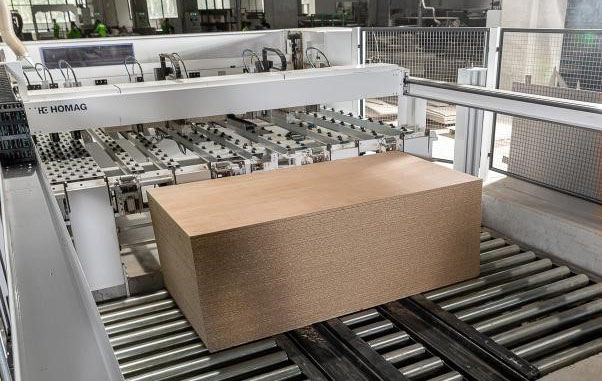
Particleboard is made by gluing and pressing wood chips together, and is commonly used for desk bodies and frames. Its core strengths are strong screw-holding power and high modulus of rupture in bending, allowing it to carry heavy loads without deforming. For example, quality particleboard uses large chips in a multi-layer mat structure, significantly improving compression resistance and durability.
When selecting, pay attention to board density and chip size. Generally, boards with a density above 650 kg/m³ count as high-density particleboard and should be your first choice. Such boards are uniform in structure, resist deformation, and stay tight through repeated assembly and disassembly—ideal for scenarios that involve frequent reconfiguration or heavy office equipment. Inferior particleboard may contain impurities, leading to poor screw-holding, crumbling edges, and a shorter service life.
Fiberboard (MDF): The Basis of Flatness and Shaping Ability
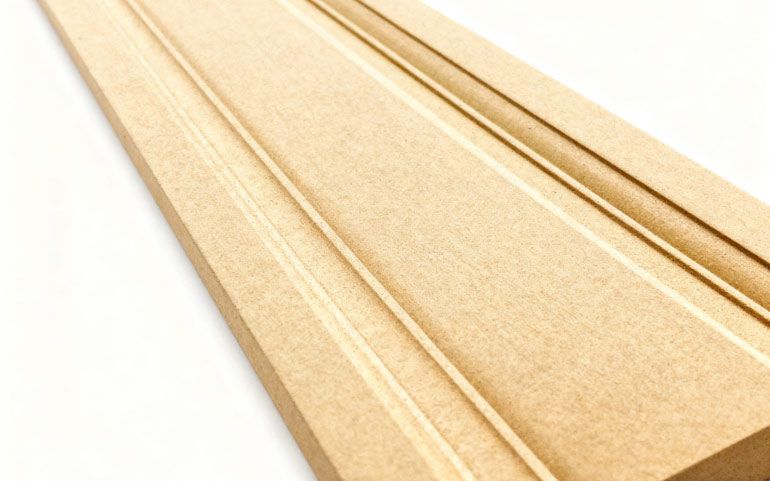
Fiberboard is made from wood fibers, with a smooth, fine surface well suited to desktop finishes. It mills and carves easily, enabling complex shapes such as curved edges, but its looser structure means weaker screw-holding, so it usually needs to be paired with reinforced structural panels.
Low-grade fiberboard may fray at the edges and contain excessive adhesive, hurting both appearance and environmental safety. It's best to choose high-density fiberboard—typically above 800 kg/m³—combined with an eco-friendly finish, which effectively improves durability and safety.
Plywood (Multi-Layer Board): Assurance of Structural Stability
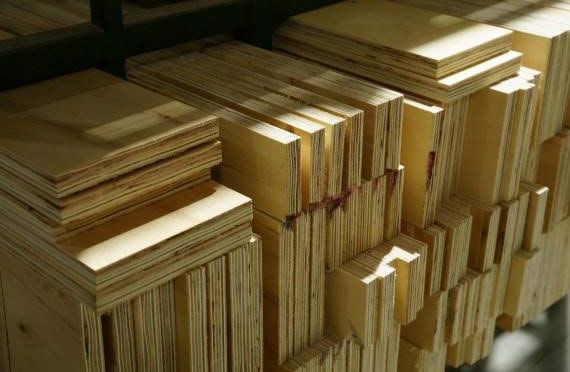
Plywood is made from an odd number of veneer layers glued with the grain alternated, offering outstanding compression and bending performance. It is often used for support parts of the desk, such as legs or frames. Quality plywood uses many layers (11 or more), a defect-free core, and tight thickness tolerances, making the desk more resistant to wobble and heavy loads.
Note that if the adhesive used in plywood production doesn't meet environmental standards, formaldehyde emissions may run high. Prioritize boards made with formaldehyde-free or low-formaldehyde adhesives, and check the relevant environmental test reports.
Solid Wood: The Premium, Eco-Friendly Choice
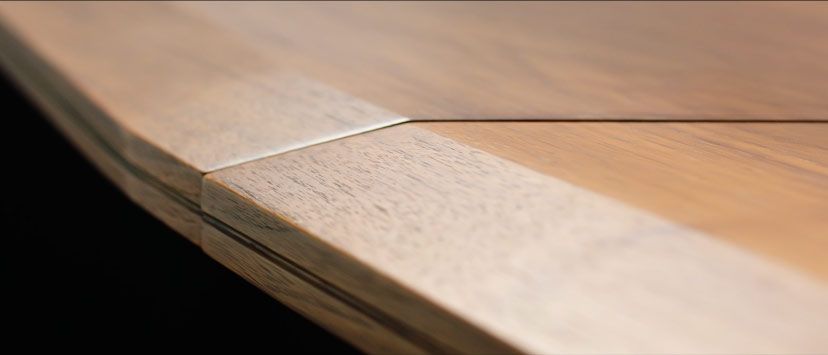
Solid wood desks are natural and eco-friendly with a premium feel, but they cost more and can warp with humidity. They suit settings where appearance matters most, though they require regular care. When choosing, pay attention to the wood species (white oak, for instance, is high-end and durable) and the drying process to avoid cracking.
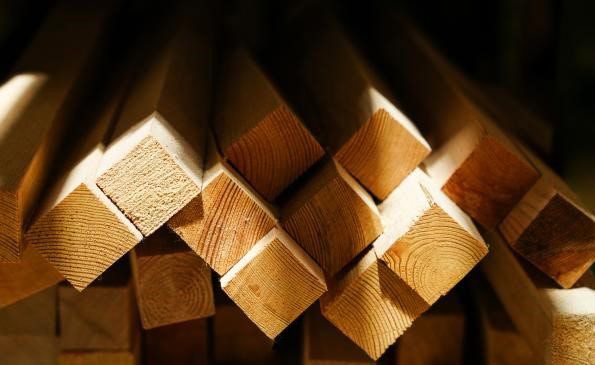
II. Workmanship Details: Amplifying the Panels' Strengths, Avoiding Hidden Flaws
Good panels need good workmanship to reach their full potential. A desk's edge banding, gluing, and adhesive application directly affect environmental safety and durability—details you can't afford to overlook.
Edge Banding: The First Line of Defense Against Moisture
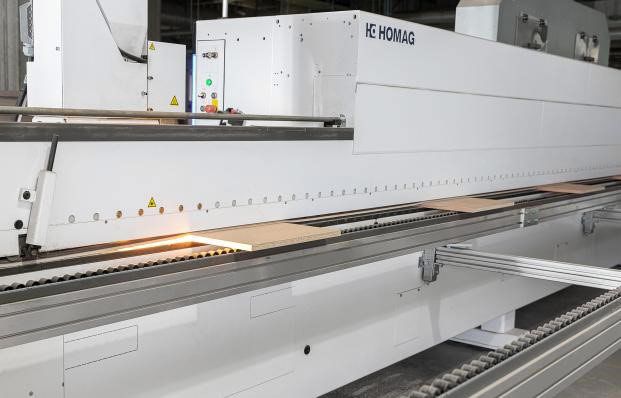
Edge banding seals panel cut edges, preventing formaldehyde release and moisture intrusion. Quality desks use laser or precision machine edge banding for a seamless, smooth result; poor banding cracks easily and lets panels swell. Run your finger along the edge when inspecting—seamless, flush banding is a hallmark of quality.
Gluing and Adhesives: The Heart of Health and Sustainability
Adhesive quality directly affects a panel's formaldehyde emissions. Prefer desks made with formaldehyde-free adhesives (such as MDI) or E0-grade eco-adhesives, whose formaldehyde emissions are far below national standards. With inferior glue, panels may keep releasing formaldehyde for a long time, degrading indoor air quality. Always check the product's environmental test report before buying to ensure it's safe to use.
When choosing an office desk, the panel is the hidden 'engine of quality.' From the screw-holding power of particleboard to the flatness of fiberboard and the stability of plywood, each material suits different scenarios. Combined with eco-friendly workmanship—formaldehyde-free gluing, precision edge banding, and moisture-proofing—it helps you pick a desk that is both safe and durable. Remember: a good desk should be built on solid materials and fine workmanship, a reliable partner for productive work.
You may also like

The Primacy Effect: First Impressions Apply to Office Furniture Too
Read More
Back to the 60s? Reinventing the Cubicle
Read MoreChampioning Formaldehyde-Free Offices: Yihang's Healthy Work Mission Upgraded
Read More