How to Choose Meeting Chairs: Three Points to Find the Right One
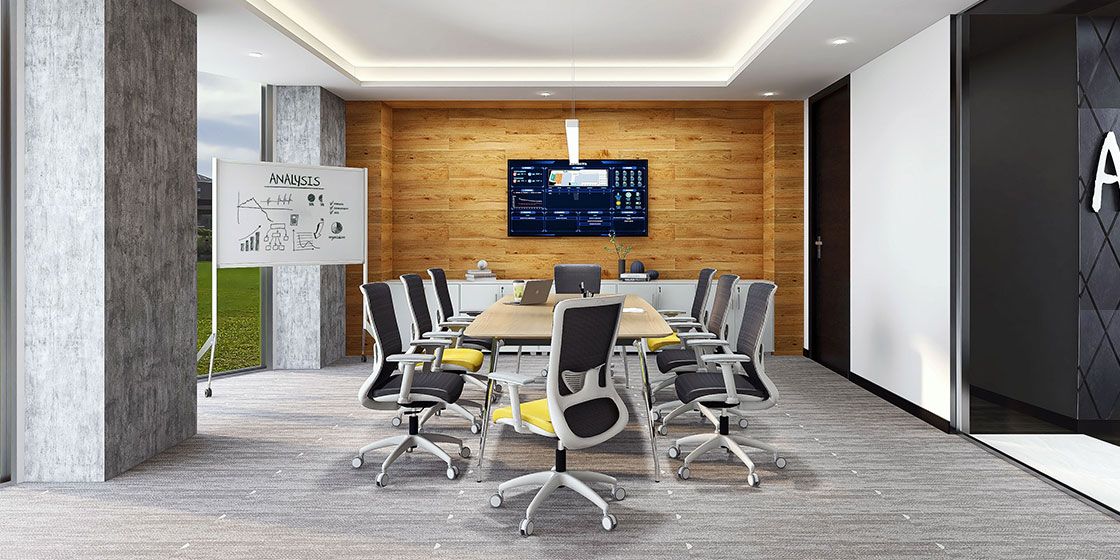
Kickoff meetings, training sessions, study groups, exchange meetings… in today's way of working, meetings have become a vital channel for advancing work and driving decisions, so meetings are now a daily routine for office workers. As the irreplaceable furniture of the meeting space, the conference chair deserves far more attention than it gets: it helps companies build meeting rooms of different styles and gives employees a more efficient, more comfortable meeting experience. That makes choosing a high-quality conference chair especially important. Below, Yihang shares how to pick one, covering three key considerations.
1. Check the chair's materials and test reports
A conference chair's quality concerns both employee safety and the seating experience, so during purchasing, ask the seller for a load-bearing test report. The base's gas lift rod must not be overlooked either: substandard gas lifts may cut corners on materials, use nitrogen below 90% purity, or seal poorly — all serious safety hazards. Also, if you choose mobile conference chairs, the number of casters matters. Four casters have a small contact footprint and save space, but move too fast and can tip over; five casters are safer than four; six are the most stable, yet because the wheels sit so close together, they may catch feet while moving. Each has trade-offs — choose according to your situation.
2. Check the comfort of the chair's backrest
Many companies face long meetings and training sessions, so the comfort of the meeting room's chairs matters enormously. If you want a chair that stays comfortable through hours of sitting, backrest design is critical. When selecting conference chairs, make sure the backrest provides effective support for the back. Employees of different heights and weights also need different degrees of backrest tilt, so pay close attention to how flexibly the chair adjusts.
On the market, backrest adjustment usually comes in two types: manual and automatic. The former uses a lever to adjust and lock a fixed angle; the latter uses ergonomics to let the chair automatically fit the curve of the user's back and settle at the most suitable angle for each person. Take Yihang's Hatu office chair: it adopts a bridge-style yoga exercise-physiology design, precisely positioning itself for different heights and for sitting postures that lean forward, upright, or recline, helping employees stretch, mobilize their joints, and relieve fatigue — so even after long sessions in the chair, they feel less worn out.
3. Check the flexibility of the chair's armrests
Armrests of different widths and heights change how a chair feels to sit in. Armrests set too low cannot properly support the elbows, making employees hunch unconsciously; armrests set too high keep the shoulder muscles tense and make sitting uncomfortable. A reference height for armrests is 21–22 cm above the seat surface — though the final say should come from a real sit test. Buyers should also pay extra attention to the joints connecting the armrests during the sit test, checking whether they interfere with major posture adjustments. To suit more working styles, conference chairs increasingly offer adjustable armrests or attachable small desk panels that make meetings run more efficiently — worth exploring on the market.
Conclusion: we hope this introduction to conference chair craftsmanship helps you better master the art of choosing one. The keys are your genuine seating experience and the product's genuine materials, combined with a judgment based on your meeting scenarios, intended users, and room size.