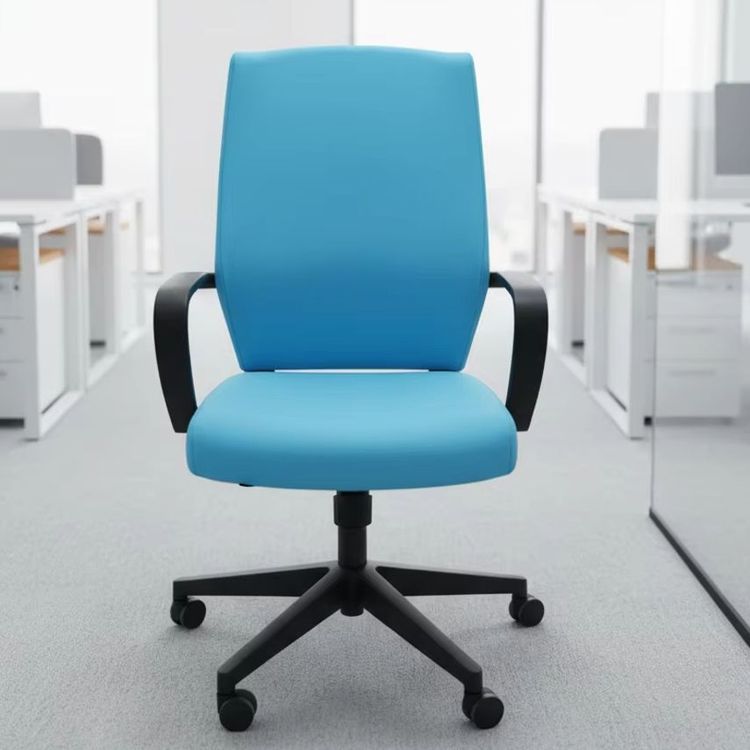
How to Buy Executive Office Chair: A Complete Guide
When purchasing an executive office chair, it is essential to evaluate it from five core dimensions: lumbar support, adjustability, structural quality, material selection, and warranty service to ensure the product meets ergonomic needs and offers long-term value.

1. Lumbar Support Design
Lumbar support is one of the core functions of an executive office chair, directly affecting comfort during prolonged sitting. Prioritize models with adjustable or fixed lumbar support: adjustable support (such as inflatable or mechanical types) can accommodate users of different body types, while fixed support is suitable for those with a well-defined lumbar curve. In terms of materials, mesh support offers better breathability, making it ideal for high-temperature environments; high-density foam support provides a closer fit but requires regular cleaning. Some high-end models feature dynamic support technology that automatically adjusts the support intensity based on sitting posture, making them suitable for long working hours.
2. Multi-Dimensional Adjustability
Executive chairs need to meet personalized fitting requirements, with key adjustable parameters including:
- Seat Height Adjustment: Ensure the soles of your feet rest flat on the ground with your thighs parallel to the floor;
- Armrest Adjustment: Support vertical, horizontal, and angular adjustments to prevent shoulder suspension;
- Backrest Angle: An adjustable range of 100°-135° can meet both office and rest needs;
- Headrest Adjustment: A height and angle-adjustable headrest can relieve cervical spine pressure.
Some models also come with seat depth adjustment, suitable for users with different leg lengths. It is recommended to test sit to verify whether the adjustment range covers your needs.
3. Structural Quality Assessment
When the budget is sufficient (e.g., over $1000), prioritize models with integrated steel frames or aerospace-grade aluminum alloy frames, which offer significantly better load-bearing capacity and resistance to deformation than plastic structures. Pay close attention to the material of the five-star base: nylon is suitable for light use, while metal (such as aluminum alloy) is more suitable for high-frequency movement scenarios. The gas lift should be BIFMA certified to ensure smooth lifting and no explosion risk. For the bottom casters, it is recommended to choose hard floor-specific silent wheels or carpet-specific thickened wheels to avoid scratching the floor or getting stuck.
4. Material and Style Matching
The material of an executive chair directly affects its appearance and maintenance costs:
- Genuine Leather: Exudes professionalism but requires regular maintenance, with a price range of $80-$460 per piece;
- Faux Leather: Offers good cost-effectiveness and better wear resistance than genuine leather but has poorer breathability;
- Mesh Fabric: Provides excellent breathability, suitable for summer or poorly ventilated environments, but tends to accumulate dust;
- Fabric: Offers a soft touch but is more difficult to clean.
For color selection, it is recommended to coordinate with the main color scheme of the office environment, with dark colors (such as black and brown) appearing more稳重 (stable and solemn).
5. Warranty Policy Comparison
The manufacturer's warranty period is an indirect reflection of product quality: basic models typically offer 1-3 years of limited warranty, while high-end models may extend it to 5-10 years. Pay close attention to whether the warranty covers easily damaged parts such as gas lifts and casters, and whether on-site repair services are supported. Some brands offer extended warranty options, which can be purchased based on usage frequency.