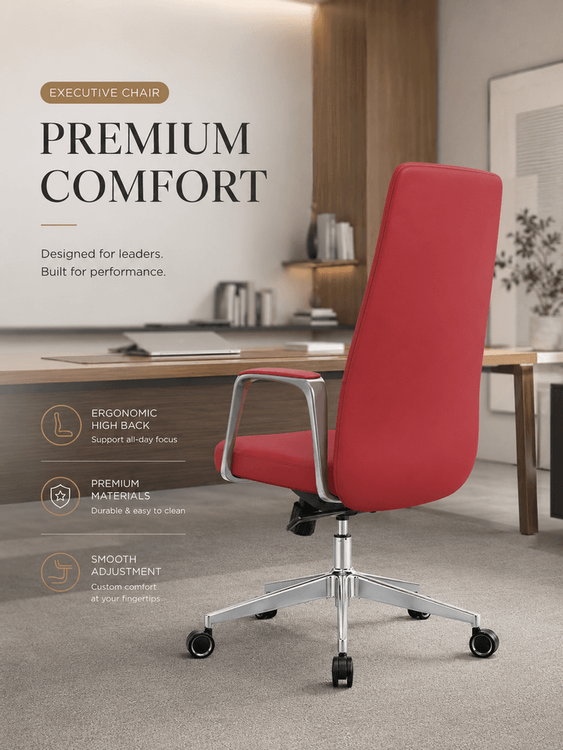
Introduction to Home Office Chairs
Home office chairs are designed specifically for home office, study, and entertainment scenarios, with the core function of alleviating prolonged sitting pressure through ergonomic design to suit long-term use.

I. Core Design Features
Home office chairs focus on ergonomics, providing key support for the cervical and lumbar spine. Their design typically includes adjustable headrests, backrests, lumbar supports, and armrests:
- Headrest: Adjustable in height or angle to fit the neck curve, reducing cervical spine pressure, especially suitable for reclining rest.
- Backrest and Lumbar Support: Some products feature dynamic support design, automatically adjusting support intensity based on sitting posture (e.g., office work, studying, or reclining), avoiding localized pressure from a single fixed lumbar support design.
- Armrests: Support vertical, horizontal, or rotational adjustment to fit different heights and desk heights, reducing shoulder fatigue.
Material selection balances breathability and comfort:
- Seat and Backrest: Often made of mesh or eco-friendly materials for strong breathability, avoiding stuffiness; some high-end models use memory foam to fit body curves and disperse pressure.
- Seat Cushion: Moderately soft and hard, balancing support and comfort, avoiding excessive softness causing buttock sinking or excessive hardness causing discomfort.
II. Functional Configuration and Practicality
Functional configuration should be selected based on actual needs:
- Adjustment Functions: Include seat depth (moving the seat forward and backward), reclining angle (locking or infinitely adjustable), headrest height, etc., to fit different body types and use scenarios.
- Dynamic Support: For multi-scenario use at home (e.g., office work, reading, napping), some products provide adaptive support through elastic backrests or gravity-sensing technology, enhancing long-term use experience.
- Detail Design: Factors such as breathability (mesh material is superior to leather), backrest elasticity (avoiding excessive softness causing collapse), armrest width (fitting different arm activity ranges), etc., directly affect comfort and durability.
III. Durability and Safety
Key structures must pass stability tests:
- Chassis and Gas Lift: Must pass extreme pressure tests (e.g., BIFMA standards) to ensure smooth lifting and no air leakage risk; some products are certified by EU EN1335 or US ANSI/BIFMA for higher safety.
- Chair Leg Material: Nylon or metal materials are more stable; a five-claw design is more resistant to tipping than a four-claw design; silent wheels are suitable for wooden floors, avoiding scratches.
IV. Market Positioning and Selection Advice
Prices vary widely, and core factors should be considered comprehensively for selection:
- Low-priced Models: Basic functions, suitable for limited budgets or short-term use, but attention should be paid to material durability (e.g., gas lift quality).
- Mid-to-High-end Products: Balance design and experience, such as dynamic support, high-grade materials, or ergonomic certifications, but high prices do not necessarily mean better suitability for home scenarios; priority should be given to testing support and seating comfort.
Summary: The selection of home office chairs should focus on support, comfort, and durability, combined with use scenarios (e.g., whether reclining rest is needed) and budget, avoiding blind pursuit of functions or brand premiums.