Healthy Work Research: Are You Using Your Standing Desk at the Right Height?
By and large, most people now accept that alternating between sitting and standing is better for your health, effectively easing the musculoskeletal strain of doing only one or the other all day. Yet some people report that even after switching to a sit-stand routine, they still feel discomfort.
Looking into this, we found that the desk height is the key culprit. How high should you set an adjustable desk for maximum comfort? To find out, the Yihang–Nanjing Forestry University Healthy Office Research Center studied sit-stand desk heights from two angles: "comfort differences at different desk heights" and "the most suitable desktop height."
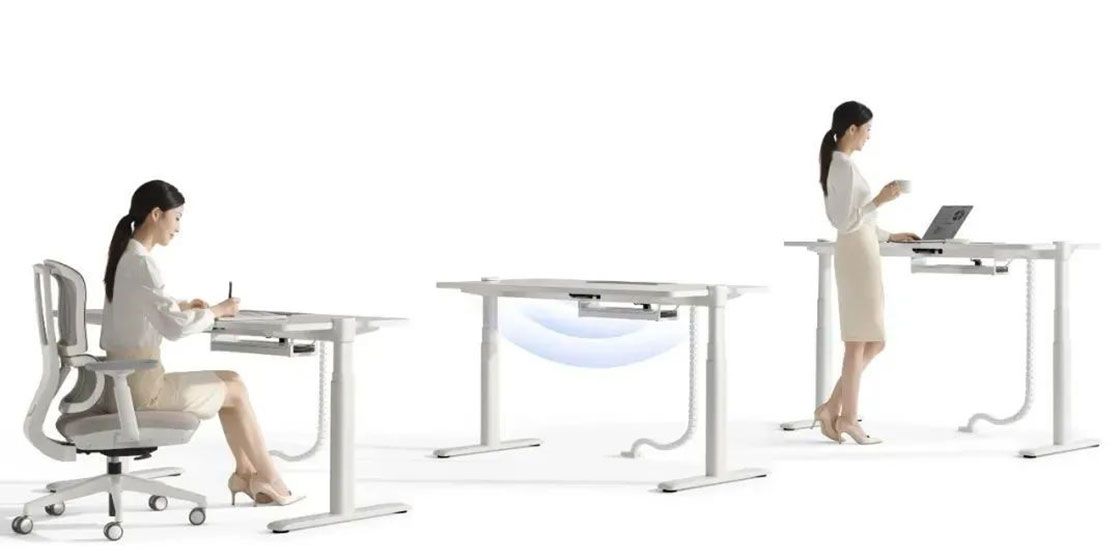
Is a higher desktop really more comfortable?
Field research by the center found that the desktop heights people set for themselves on sit-stand desks vary quite a bit, and the same variation shows up when people of different heights use the same desktop height. These differences in desktop height produce the differences in working posture shown below.
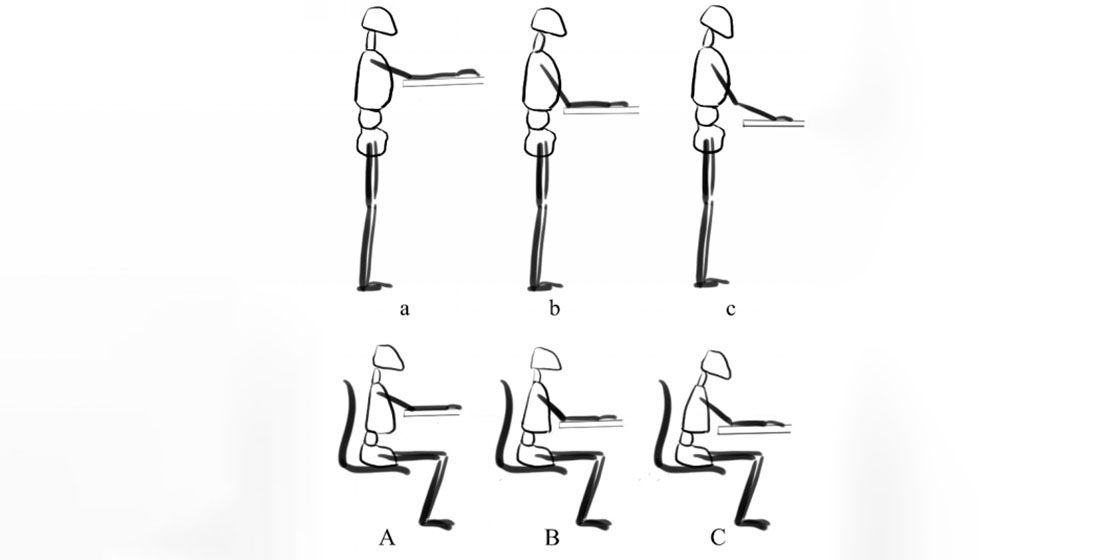
The study of comfort differences at different desk heights used the RULA method, a common technique for assessing musculoskeletal disorder risk. By holding other conditions constant and analyzing standing and seated postures at the three heights shown above, the study evaluated postural load under each experimental condition (a higher score means greater musculoskeletal discomfort from that posture). The data are shown in the table below:

The table shows that when the desktop is too high (standing a and sitting A), the elbows end up in a propping posture and the shoulders and elbows ache; when the desktop is too low (standing c and sitting C), it not only causes neck soreness but also leaves the forearms and wrists unable to relax. When the desktop is at the right height (standing b and sitting B), the body feels most comfortable.
What is the right desk height for sitting and standing?
Based on the analysis above, the arms are likely the body part most affected by desk-height changes. So the experiment used elbow height as the baseline (the desk-height settings were determined by the range each subject personally found most comfortable, measured in cm) to analyze how desktop height affects comfort in seated and standing postures.
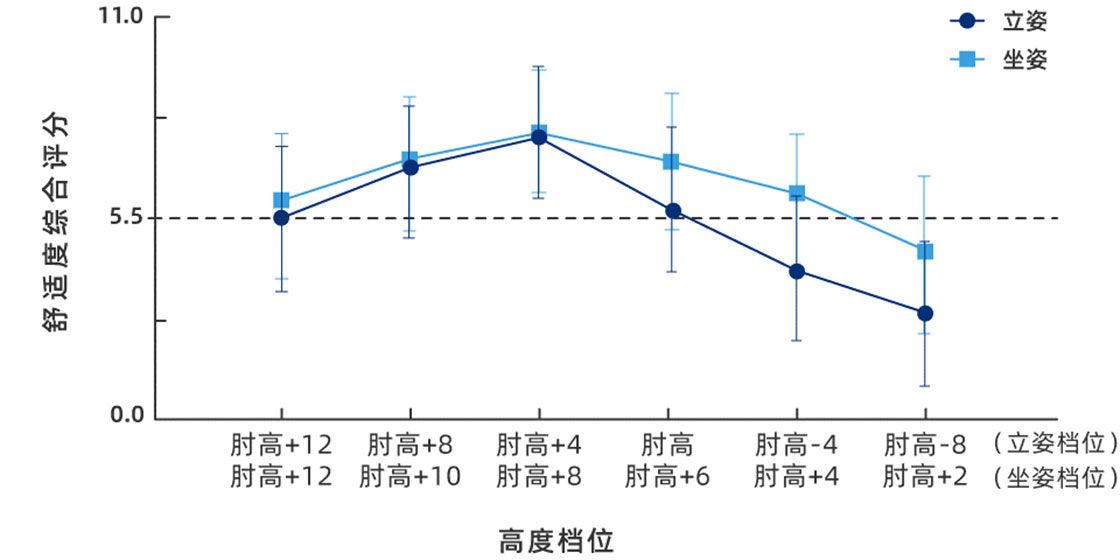
The research found that comfort ratings for both sitting and standing follow a parabolic curve as desk height drops: comfort peaks at a certain height, then falls to its lowest point as the desk gets lower still.
Our experimental results also showed that people misjudge their own optimal desk height by an average of 22±12 mm — the largest misjudgment reached 70 mm!
The research shows that the most comfortable standing desk height is elbow height +4 cm, and the most comfortable seated desk height is elbow height +8 cm.
Conclusion
If you spend long hours at a computer every day, getting a sit-stand desk and adjusting it to the height that suits you best is well worth it. And even with this office essential, remember to alternate between sitting and standing — that is what healthy working is all about.
*About the Yihang–Nanjing Forestry University Healthy Office Research Center
The Yihang–Nanjing Forestry University Healthy Office Research Center was jointly established by Yihang Technology Co., Ltd. and Nanjing Forestry University. Anchored in the office furniture sector, it conducts research on ergonomics and health topics spanning furniture products, office behavior, and the office environment, with the aim of building a healthy office system that is safe, healthy, comfortable, and efficient.
You may also like
Warm Up Your Work Life with Van Gogh Yellow
Read MoreChampioning Formaldehyde-Free Offices: Yihang's Healthy Work Mission Upgraded
Read More
Freedom Without Excess: Where Creative Teams Should Work
Read More