
Do More Open Offices Mean Lower Efficiency? Acoustic Design Is the Overlooked Hidden Productivity
In office space design, we obsess over looks, layout, and storage — yet rarely treat “sound” as a core metric. The truth is that the acoustic environment affects employees’ focus, collaboration, and mood every moment of the day. Its impact on work performance is every bit the equal of visual design.
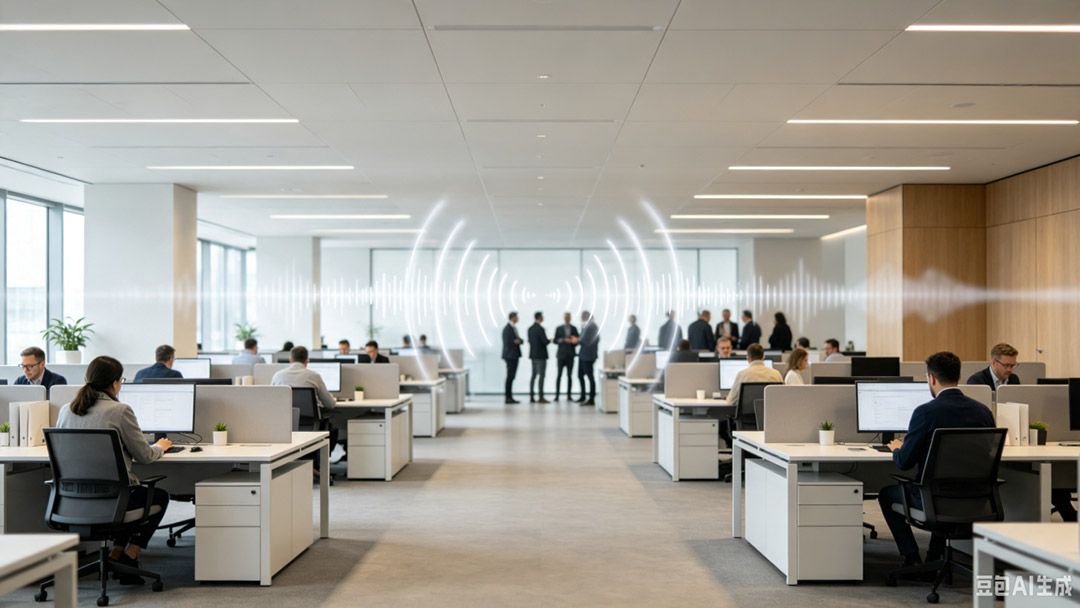
*Image generated by Doubao AI
Why do “more open” offices leave people more exhausted?
Open-plan offices were meant to break down barriers and boost collaboration, but acoustic shortcomings often undercut the effect.
Research has confirmed that background noise — especially human speech — significantly impairs cognitive performance, with the greatest disruption to work that demands intense focus and relies on short-term memory (source: Jahncke et al., 2011). Frequent auditory interruptions keep loading the brain’s cognitive bandwidth and accelerate occupational fatigue.
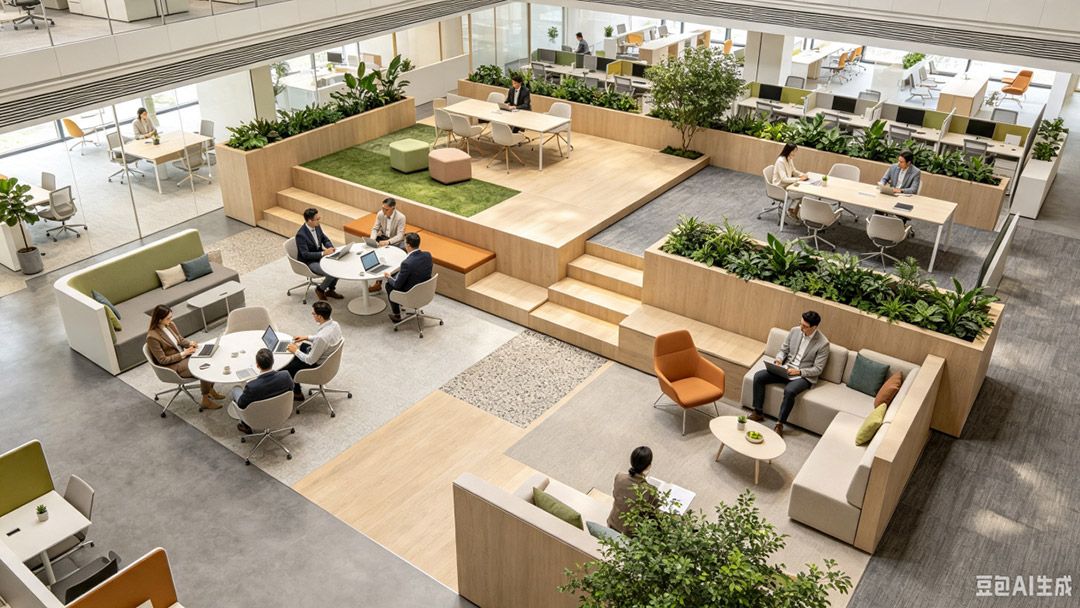
*Image generated by Doubao AI
Employees resort to “self-rescue”: noise-canceling headphones, hunting for quiet corners, deliberately avoiding face-to-face conversation. The space may look open and transparent, but actual working states grow more fragmented — and the team’s sense of connection quietly erodes.
The core of office acoustics: not eliminating sound, but taking back control
A common misconception is that office acoustics means making the office completely silent. Truly excellent acoustic design never eliminates sound altogether — it makes sound controllable, adaptable, and bounded: conversation stays in collaboration zones without disturbing those focusing; when privacy is needed, an independent sound field is always within reach.
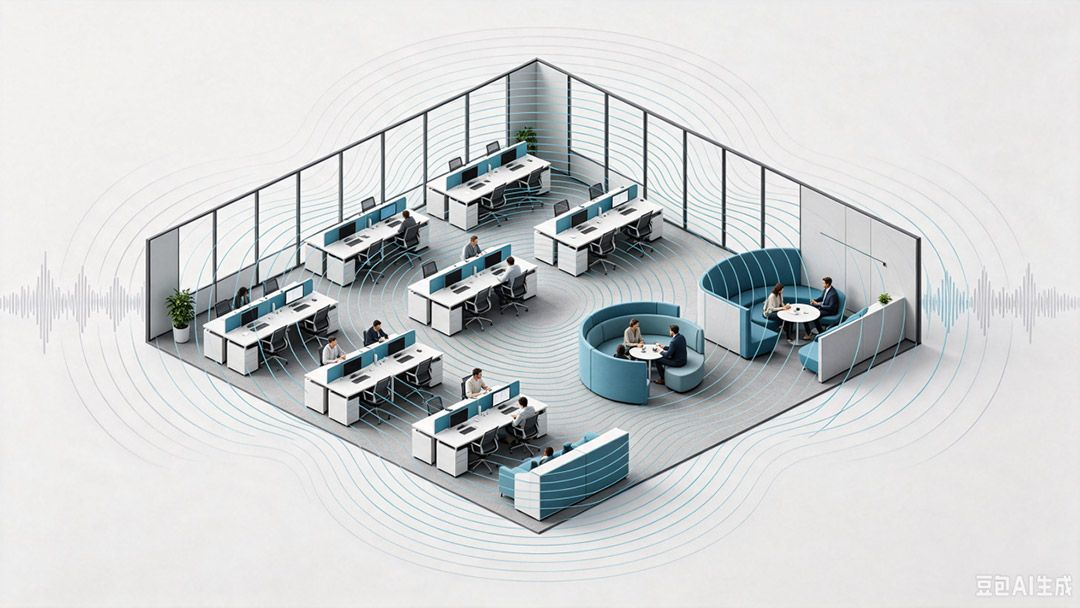
A mature office acoustic solution starts from the underlying logic of the space. Planning holistically around activity-based working, it clearly divides collaboration and discussion zones, deep-focus zones, and casual exchange areas, matching each type of sound to the space function it belongs with.
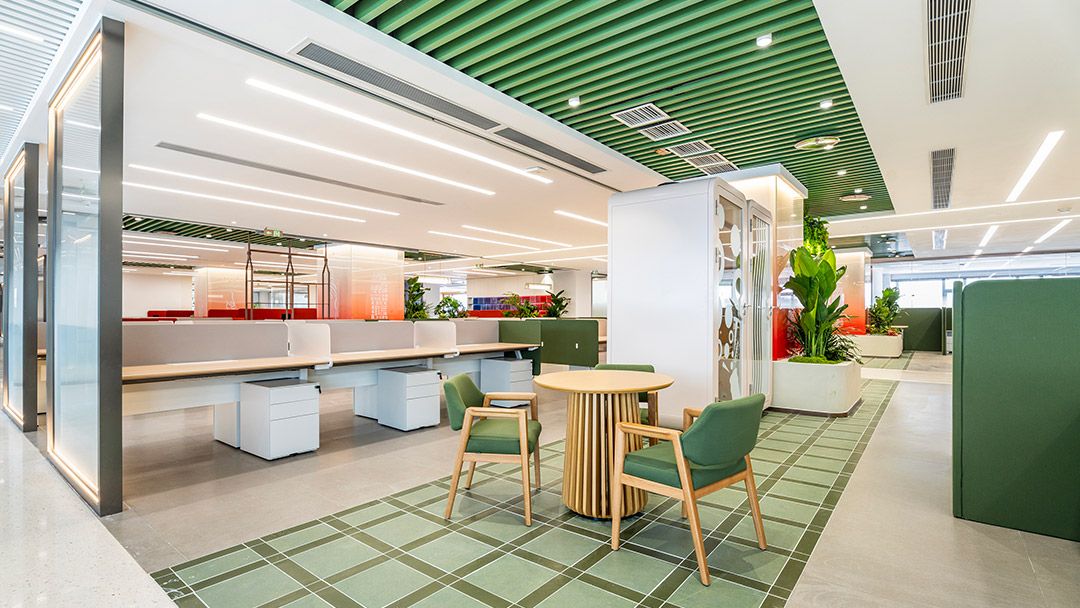
Research on office behavior shows that employees actively switch settings according to the task, seeking quiet environments for deep work (source: Kim & de Dear, 2013). Plan the layout in line with real working behavior, and sound becomes an aid to work rather than an obstacle.
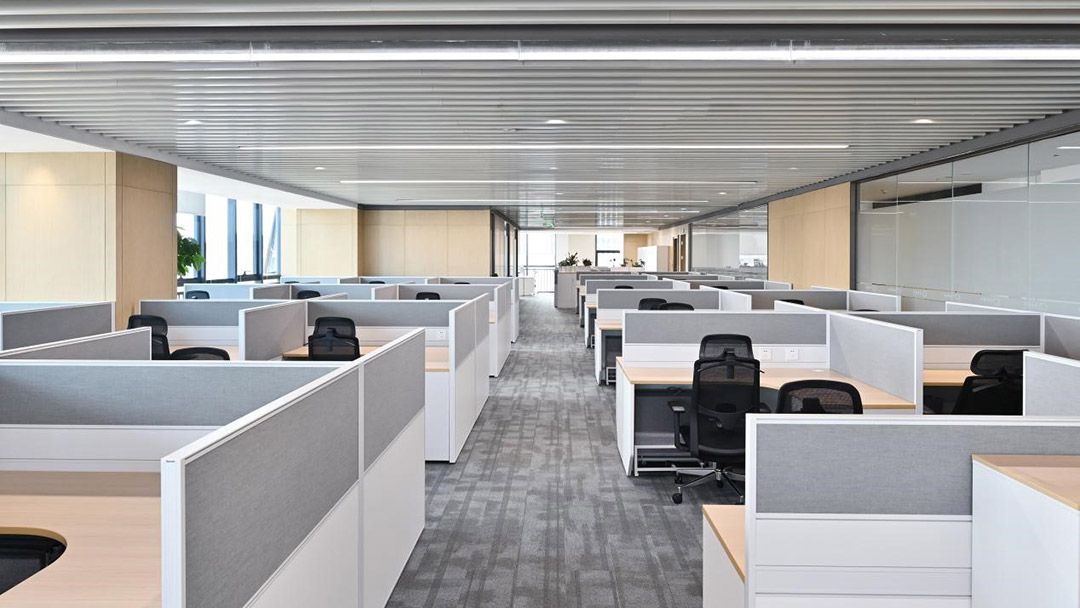
On that foundation, add sound-absorbing wall panels, acoustic ceilings, and soft-finish furniture to absorb scattered sound waves and cut reverberation — lowering the ambient noise baseline across the whole space and laying a calm acoustic backdrop everywhere.
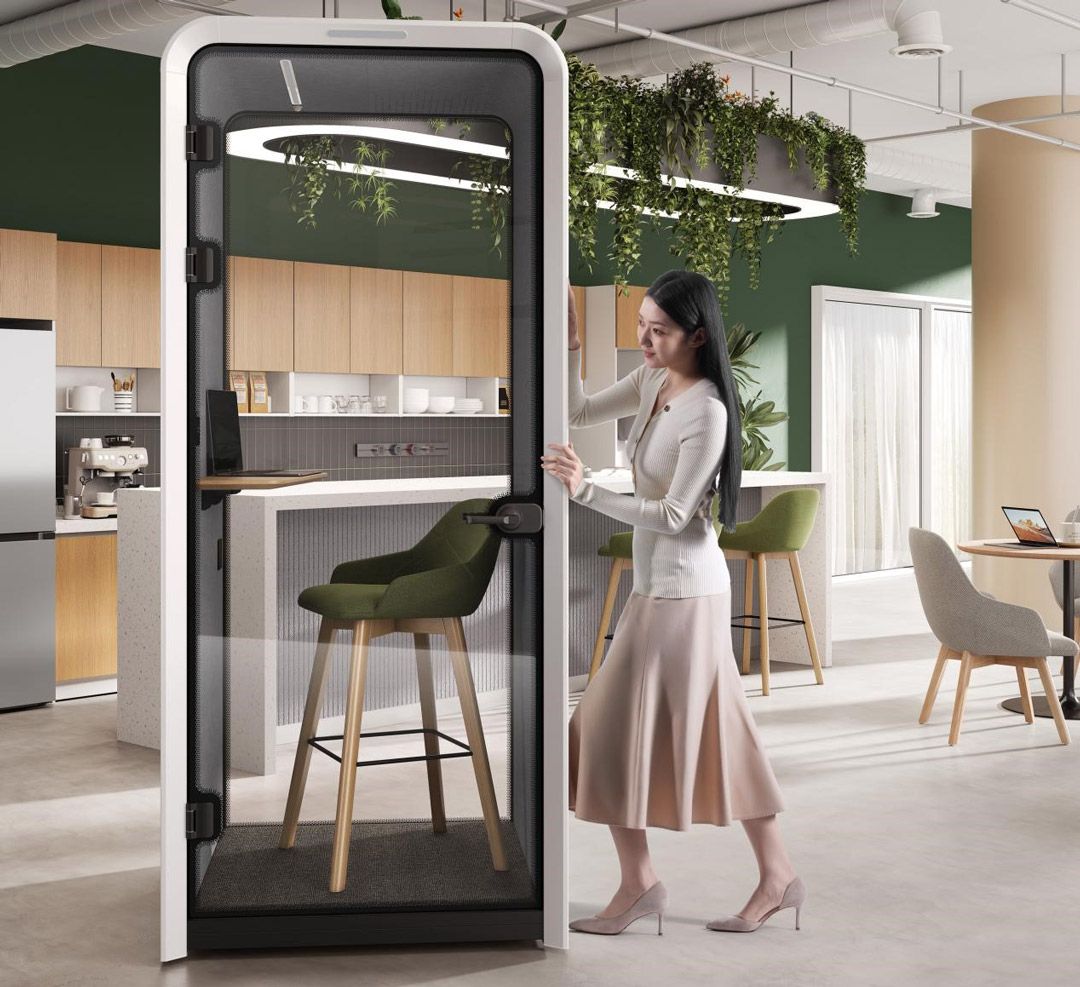
Even the most thorough master plan can’t cover every dynamic, individual need. Deep-focus sprints, private business calls, small confidential negotiations — these fragmentary scenarios all need an immediately available, controllable independent acoustic space.
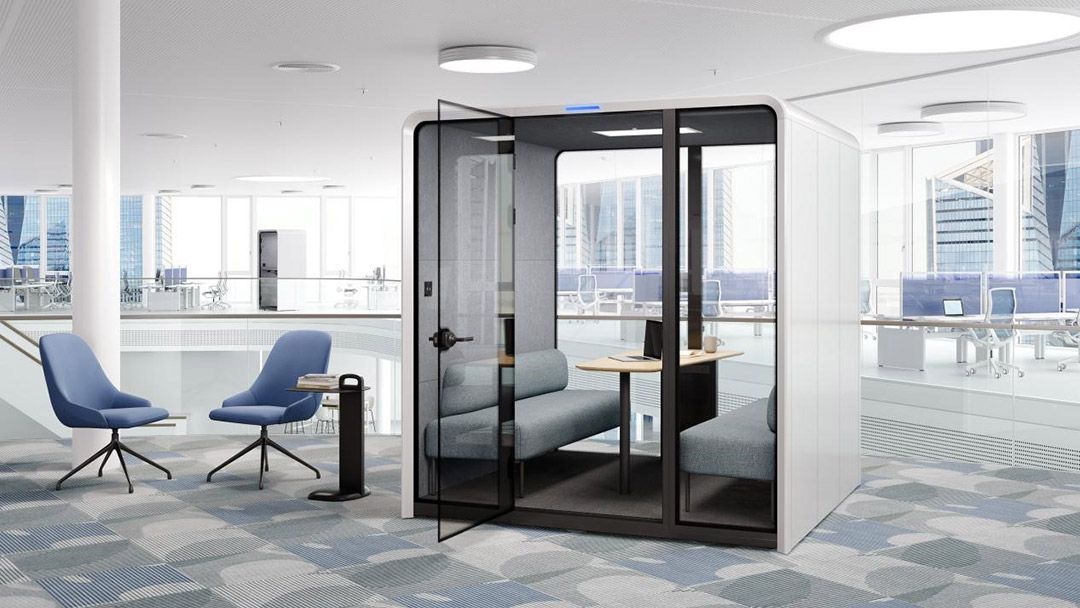
Modular products such as acoustic booths and phone booths fill exactly this gap — private sound environments on demand, with effective sound isolation and controllable interior conditions. Without restructuring the overall office layout, they inject a high degree of adaptability and hand employees control over sound at any moment.
Yihang’s acoustic office solution: space that adapts to people’s rhythm
From whole-space planning to base materials, to modular acoustic units deployed flexibly, multiple layers of design together form a complete office acoustic solution. Its ultimate goal is to let space adapt to people’s working rhythm — not to make people tolerate the space’s flaws.
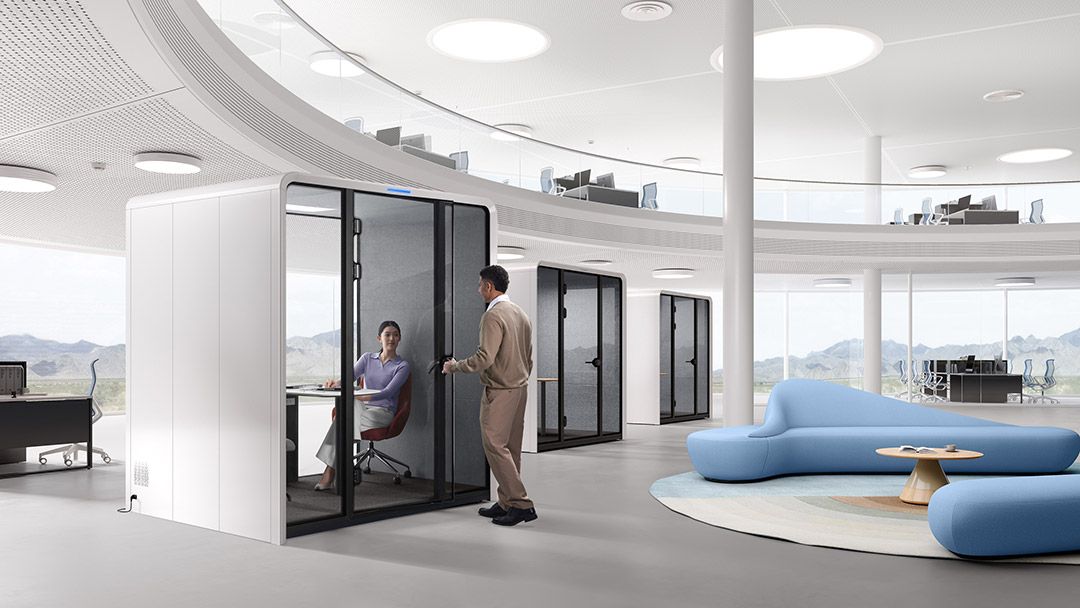
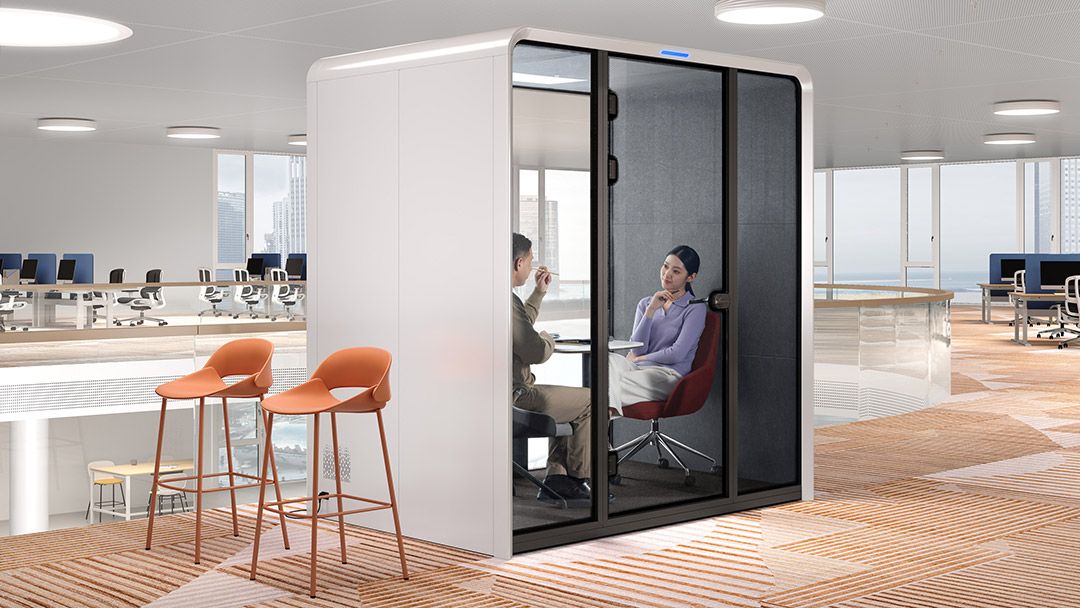
As a leader and innovation engine of China’s office furniture industry, Yihang keeps human needs at the core, integrating acoustic design, ergonomics, eco-friendly materials, and smart office technology into full-scenario solutions. With overseas R&D centers and nationally accredited laboratories, and more than a thousand patents to its name, Yihang keeps advancing the technology and experience of the workplace. Backed by six global manufacturing bases and a worldwide sales and service network, Yihang provides one-stop, end-to-end service — from space planning and product customization to delivery, installation, and after-sales maintenance — carrying professional acoustic thinking into every detail of the office.

When sound becomes part of the office’s systematic design, the workplace gains more than visual polish — it genuinely empowers efficient work and comfortable experience. A good office can hold both the energy of open collaboration and the calm of deep focus.
You may also like
Championing Formaldehyde-Free Offices: Yihang's Healthy Work Mission Upgraded
Read More
European Designer Interview: Uncovering the Fun of Office Furniture
Read More
Inspiring Offices: Design That Attracts and Keeps Talent
Read More