
Inspiring Offices: Design That Attracts and Keeps Talent
First impressions matter! When job candidates walk into your office, they immediately notice your building and start forming an impression of your company. If your company has an attractive office space, candidates will be far more enthusiastic about joining. To attract top talent, compensation and company culture remain the key drivers in the job market — but they must also be embodied in the physical space.
Post-80s and post-90s employees make up a large share of today's workforce, and when deciding whether to accept a job, their considerations go beyond salary — candidates increasingly weigh design elements in the office, the quality of the office furniture and its pros and cons, and the healthiness of the work environment. New research shows that office design affects not only recruiting but can even cause candidates to turn down an offer if the environment isn't appealing enough.
What the research says
According to one study, 81% of job seekers say office design and the work environment are important factors in deciding whether to work for a company. Among candidates who received offers from companies with mediocre office design, 43% rejected the job because of the office environment. For companies searching for every possible advantage in attracting and retaining the best talent, this is a thorny problem. Because of office design issues, when HR extends an offer, only 60% of candidates accept — not a high conversion rate. One study found that extra amenities are the top factor influencing candidates' decisions: these are employee-benefiting space amenities such as an in-building gym, parking, or childcare services.
Want to know which office amenities your employees and candidates love most? Just ask them.
Companies can ask directly, or create and circulate a survey. Once you have enough data, review the results and identify shared preferences. This will help you determine which furniture to install and which new amenities will help you attract and retain the talent you want most.
A well-designed office space has proven to be a powerful tool for attracting and retaining employees.
01. Workplace design elements and strategies
To help companies recruit and retain top talent, we're looking at strategies for office design elements and space planning that can reshape your company's first impression and create a positive work environment that keeps employees satisfied.
02. Use natural resources and spatial language
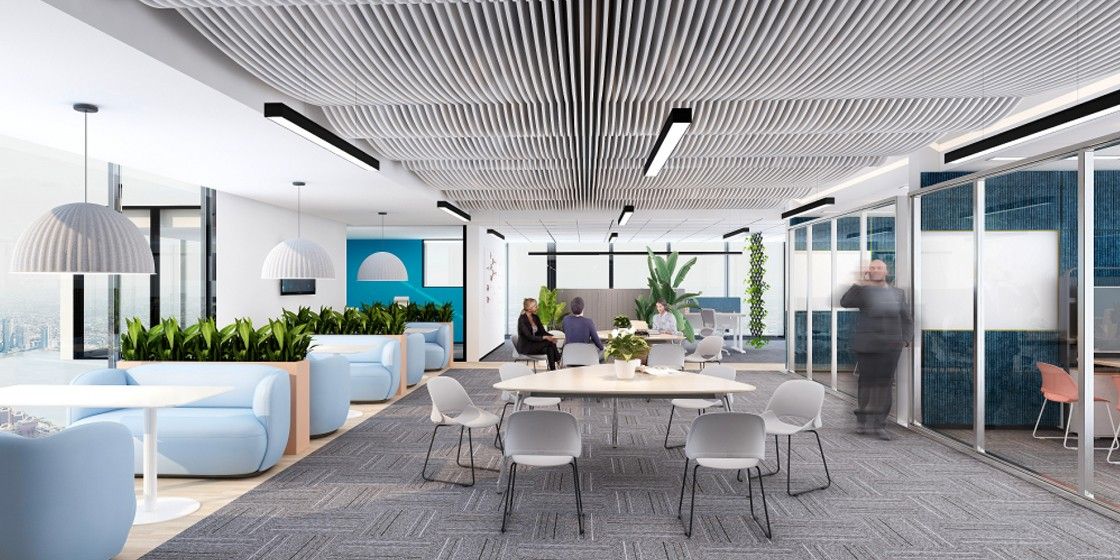
If your office is in a prime location with good natural scenery, use it to create an attractive environment. Install a glass wall on one side of the office, use highly translucent materials for interior partitions, and choose open-style office furniture so that natural light and views enter the office to the greatest extent. Transparent glass lets daylight reach deep into the office, not just the perimeter. The layout can be designed to ensure the maximum number of people can enjoy the natural scenery at the same time.
Beyond creating a positive first impression, natural light delivers long-term health benefits — an invisible form of care that helps retain employees.
03. Balance private and open space
Creating a variety of different workspaces in the office is essential to accommodate different work habits and employee needs.
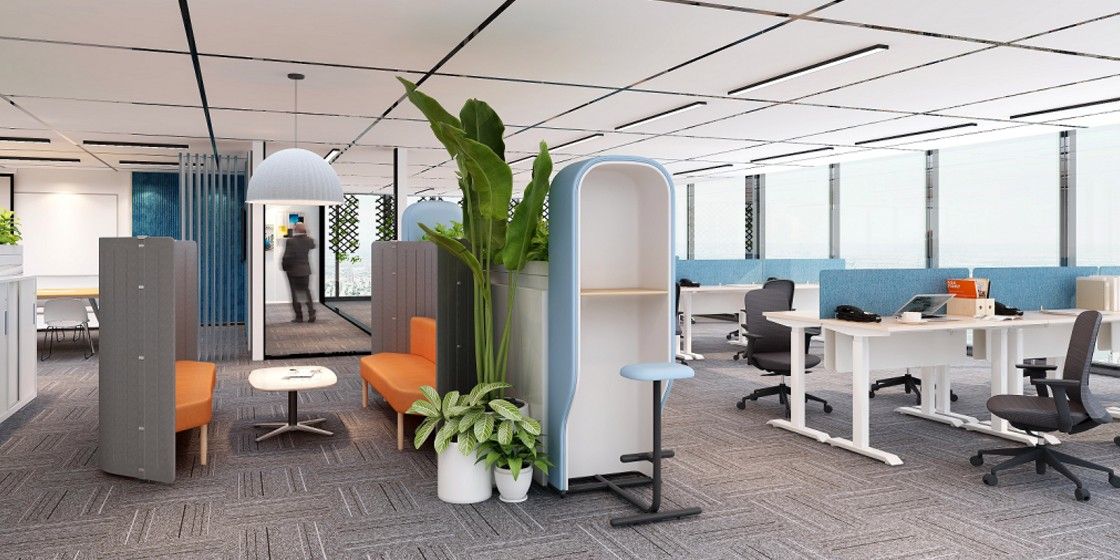
For example, if your office is open-plan, that's great for encouraging collaboration and communication — but it's just as important to add independent spaces or privacy-oriented furniture modules: private nooks or phone booths for individual focused work, and enclosed meeting rooms where teams can meet without disturbing other colleagues.
04. Design for everyone
The needs and expectations of an office space change with age, so the office and its furniture types should meet everyone's needs as much as possible.
By role, managers work better in a semi-private space: choose semi-private furniture such as higher screens or standalone partitions to help them focus deeply. Staff — especially younger employees — want unconventional, flexible spaces rather than being stuck in cubicles all day, and given their collaboration needs, they may prefer open-plan furniture layouts.
05. Express your brand and culture
A great office speaks for itself. Nothing communicates your company culture more clearly than your workspace. A great space improves application and retention rates (not to mention client impressions) — which means brand success.
When you show the world a thoughtfully designed workplace, it communicates like a visual identity, revealing the company's personality. Having the right space can exert a powerful pull on high-quality candidates.
06. Home-style design in the office
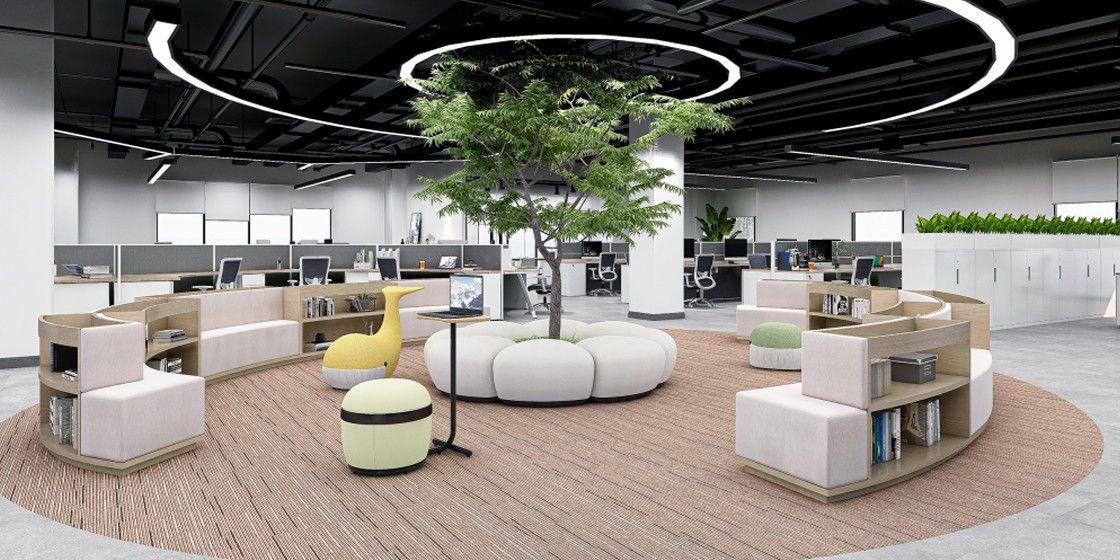
The recently popular home style makes offices more attractive, giving them a domestic feel — more like home. From furniture selection to interior arrangement, everything from sofas and lounge chairs in common areas to indoor plants and rugs helps companies provide an environment where employees feel comfortable.
Beyond making employees feel as relaxed as they would at home, a major benefit of this space style — somewhere between home design and commercial design — is that it increases social opportunities among employees.

07. Employees as brand ambassadors
Companies redesign to boost overall productivity, efficiency, and engagement. Employees who feel a strong sense of identification with their workplace are more committed — and happier — at work. This also makes them eager to share information about the company's office and culture. Genuinely happy employees indirectly elevate your brand and are interested in referring more talented people to the company. Once you've built an attractive workplace, all of this is part of the chain reaction you set off.
Conclusion
Companies are adapting to changes in the nature of work and the workforce, and while doing so, considering how to provide employees with a workplace that balances, diversifies, and instills a sense of mission. Placing current and future employees at the center of the workplace design lifecycle boosts productivity, creativity, and well-being.
If you've already invested in workplace design, it will pay dividends for your talent development. If you plan to re-plan your office, listen to your employees and create a space they actually want. When your office is a place that meets expectations, your employees will look forward to work every day.
You may also like
Post-Pandemic Interior Design: Productivity in Truly Safe Places
Read More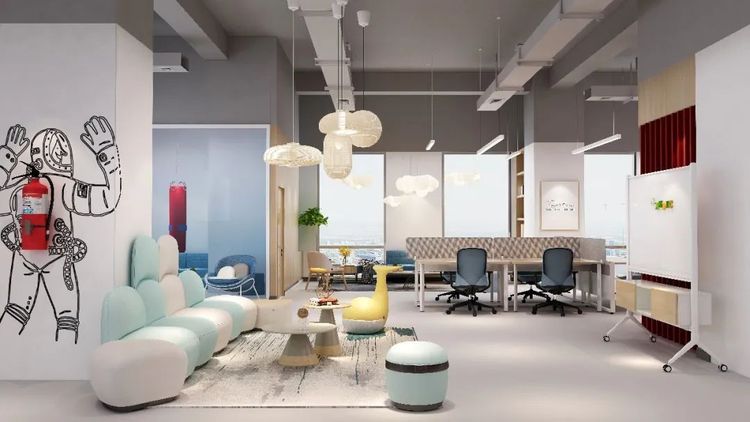
Smart Offices That Understand What You Need
Read More