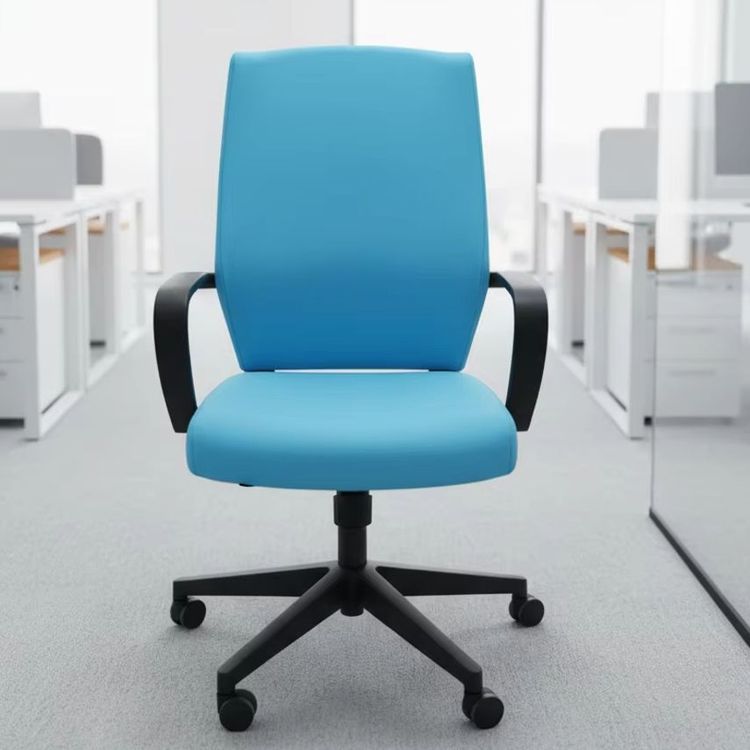
Best Office Chair for Relief: What to Look For
When selecting the best office chair for relief, it is essential to focus on the following core features:

1. Adjustable Lumbar Support
Lumbar support is crucial for alleviating fatigue from prolonged sitting. An adjustable lumbar support device can conform to the natural curvature of the spine, making it particularly important for individuals with lumbar disc herniation or those who work at desks for extended periods. By adjusting up or down and forward or backward, users can fix the support position according to their body shape, preventing muscle tension caused by a suspended waist. Studies have shown that ergonomic lumbar support can reduce lower back pressure by more than 30%.
2. Seat Depth Adjustment
The seat depth should match the length of the thighs. If the seat is too deep, pressure will be applied behind the knees, obstructing blood circulation; if it is too shallow, it will fail to support the thighs, leading to concentrated pressure on the buttocks. By adjusting the seat's front-to-back position using sliding rails or mechanical structures, users can ensure that the thighs are fully supported by the seat while maintaining a 2-3 finger-width gap between the knees and the seat edge, thereby distributing body weight pressure.
3. Recline Function
Dynamic sitting postures are more beneficial for relieving fatigue than static ones. A reclining backrest allows users to lean back between 110° and 130°, reducing the load on the lumbar spine and hip joints by distributing spinal pressure to the backrest. Some high-end models are equipped with a synchronous tilting mechanism that enables the backrest and seat cushion to tilt in unison, maintaining pelvic stability and avoiding the discomfort of "sliding out of the seat".
4. Armrest Adjustability
The height, width, and angle of the armrests should match the desktop. If the armrests are too high, they will cause the shoulders to hunch; if they are too low, they will force the elbows to hang, leading to muscle tension in the neck and upper back. 4D adjustable armrests (up and down, forward and backward, left and right, and rotation) can accommodate different body types and operating postures, such as supporting the elbows while typing or relaxing the arms while reading.
5. Breathable Material
Prolonged sitting can lead to heat and sweat accumulation on the buttocks and back. Breathable materials such as mesh or perforated leather promote air circulation, reducing skin stickiness. Especially in summer or environments without air conditioning, breathable materials can significantly enhance comfort and prevent skin problems caused by moisture.
6. Swivel Base
The swivel function reduces body twisting. With casters and a swivel base, users can reach surrounding items, such as file cabinets or printers, without significantly twisting their waists. This design reduces lateral stress on the lumbar spine and has a positive effect on preventing lumbar muscle strain.
Summary: When choosing an office chair, it is essential to weigh the priority of features based on individual needs. For example, individuals with lumbar spine conditions should prioritize models with strong lumbar support, while those who need to move frequently should focus on the smoothness of the swivel base. Properly configuring these features can significantly enhance sitting comfort and reduce health risks.