Xiaoshan Office Chair Design
Xiaoshan office chair design exhibits diverse, human-centered, intelligent, and eco-friendly characteristics, with specific features as follows:

1. Human-Centered Design: Meeting Ergonomic Needs
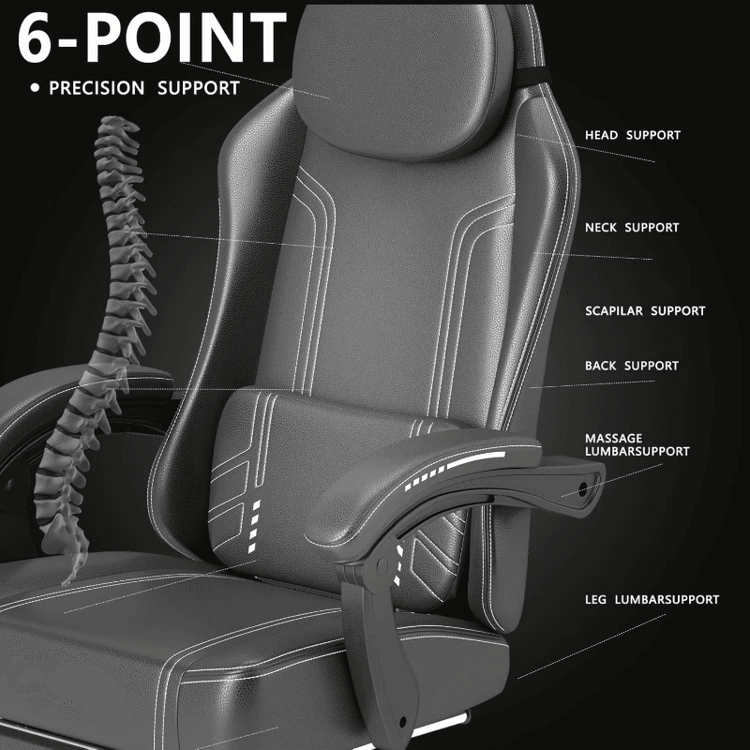
Xiaoshan office chair design prioritizes user comfort by optimizing structure through ergonomic research. For example, the backrest is designed to fit the natural curve of the spine, providing lumbar support to alleviate prolonged sitting pressure; the seat cushion uses high-elastic materials with controlled thickness to ensure even weight distribution; armrests support height and angle adjustments to accommodate different sitting postures. Some designs also incorporate adjustable lumbar support modules, allowing users to customize support intensity based on their body type, further reducing fatigue.
2. Intelligent Integration: Technology-Driven Functional Upgrades
Intelligence is a key development direction for Xiaoshan office chairs. Taking the Sunon Technology H5 ergonomic office chair as an example, it features a multi-dimensional intelligent adjustment system that automatically adapts to users of different body types through sensors or mechanical structures. For instance, the backrest tilt angle, seat depth, and armrest positions can be dynamically adjusted according to the user's body shape or office scenarios (such as meetings or breaks), breaking through the limitations of traditional furniture where “function and aesthetics are separated” and enhancing usage efficiency and experience.
3. Eco-Friendly Philosophy: Dual Optimization of Materials and Processes
Eco-friendly design permeates the entire lifecycle of Xiaoshan office chairs. In material selection, priority is given to low-carbon materials such as reclaimed wood, bamboo, and recyclable plastics to reduce reliance on virgin resources; production processes employ low-carbon techniques to lower energy consumption and emissions, such as using water-based coatings instead of solvent-based ones to reduce volatile organic compound (VOC) emissions. Some companies also establish product recycling systems to promote the implementation of a circular economy model.
4. Integration of Art and Function: Enhancing Spatial Aesthetic Value
Modern office chair design balances practicality and aesthetics. Designers use streamlined shapes, contrasting color schemes, or mixed materials (such as metal and fabric) to give products a unique visual style. For example, the Sunon H5 office chair adopts simple geometric lines and neutral tones, meeting the needs of modern office environments while reinforcing a technological feel through details like hidden adjustment buttons, elevating the overall spatial quality.
5. Flexibility and Multi-Functionality: Adapting to Diverse Scenarios
To meet new demands such as remote work and collaborative meetings, Xiaoshan office chair design emphasizes modularity and adaptability. For example, some products support height adjustment, 360-degree rotation, and multi-angle tilting, suitable for standing work or short breaks; detachable armrests and headrests allow users to quickly adjust configurations based on task types (such as typing or reading), enhancing product practicality.