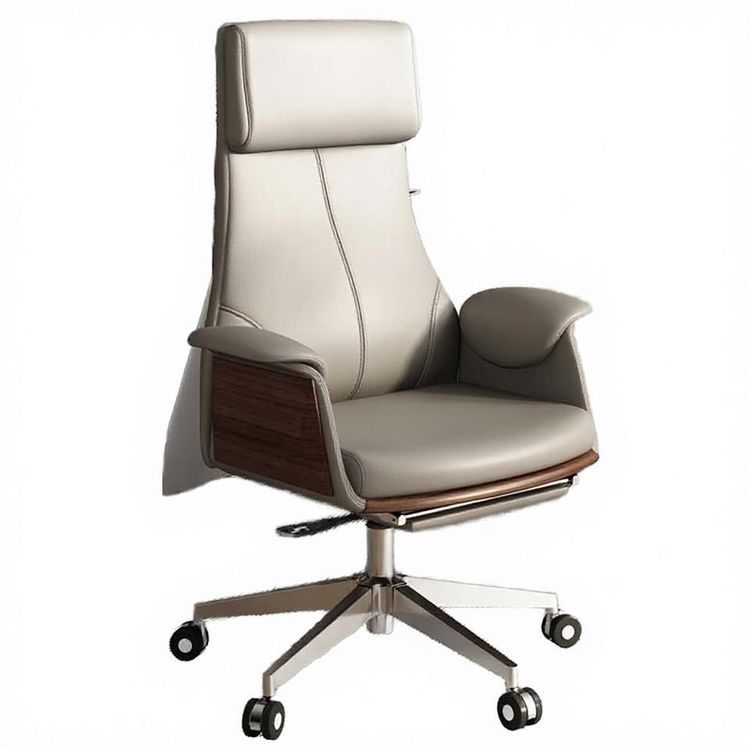
Features of Japanese-style Office Chairs in Wuzhong District
The characteristics of Japanese-style office chairs in Wuzhong District can be summarized into the following four points, inferred based on the commonalities of regional enterprises and Japanese design concepts:

1. Integration of Exquisite Craftsmanship and Eco-friendly Materials Office furniture enterprises in Wuzhong District are renowned for their exquisite craftsmanship. From raw material selection to production processes, they adhere to strict standards, with some enterprises having obtained ISO14001 environmental management system certification, reflecting their emphasis on environmental protection. Japanese-style office chairs are likely to continue this philosophy, prioritizing the use of eco-friendly materials such as natural wood, bamboo, or high-density foam, reducing the use of chemical coatings and adhesives. Meanwhile, Japanese design emphasizes the combination of 'nature and practicality'. The chair surface may retain the original texture of the wood or feature a matte finish for a low-key texture, avoiding excessive decoration. In terms of detail finishing, parts such as the chair back seams and armrest curves may undergo hand-trimming processes to ensure a smooth touch, aligning with the Japanese 'wabi-sabi' aesthetic concept of 'refinement in imperfection'.
2. Balance Between Ergonomics and Minimalist Design The Japanese style centers on 'restraint and practicality'. The personalized customization services provided by enterprises in Wuzhong District may be reflected in the ergonomic designs of the chair back curves and lumbar support. For example, referring to the design logic of Okamura's computer chairs in Japan, Japanese-style office chairs may adopt a single-back structure, dispersing pressure through precisely positioned support points (such as the 3rd to 5th lumbar vertebrae) rather than relying on complex multi-back linkage systems. In terms of material selection, high-density foam or breathable mesh fabric may become mainstream, with the former providing long-lasting support and the latter adapting to long hours of desk work, avoiding a stuffy feeling. In terms of functional design, Japanese-style office chairs may abandon redundant modules (such as detachable headrests), retaining only basic functions like height adjustment and reclining, reducing visual distractions through a minimalist design.
3. Optimization of Multi-functionality and Space Adaptation Japanese office spaces often enhance efficiency through 'multi-purpose use of a single item'. It is speculated that office chairs may continue this practicality. For example, adjustable armrests may support both height and angle adjustments to accommodate users of different heights; the height adjustment mechanism may use a gas lift or mechanical catch to meet the needs of standing work and sitting posture switching; the reclining mechanism may offer 3-5 locking positions to adapt to scenarios such as meetings and rest. Additionally, the 3D rendering customization services provided by enterprises in Wuzhong District may help users plan the spatial arrangement of chairs with desks and storage cabinets in advance, avoiding size conflicts and reflecting the wisdom of 'making the most of small spaces' in Japanese design.
4. Innovation through Brand Collaboration and Technology Integration Enterprises in Wuzhong District frequently collaborate with domestic and foreign brands, potentially introducing traditional Japanese craftsmanship (such as mortise-and-tenon joints) and modern technology. For example, the chair leg connections may adopt mortise-and-tenon jointing techniques, reducing the use of metal fittings, lowering noise, and enhancing structural stability; the chair back may incorporate smart sensors to monitor sitting posture in real-time and provide adjustment reminders, integrating Japanese 'craftsmanship spirit' with Internet of Things technology. Some enterprises may also draw on the accumulations of brands like Okamura in the field of ergonomics, optimizing the chair back curves through big data analysis to form a unique style that is 'simple yet not ordinary'.
Note: Currently, no direct cases of Japanese-style office chairs in Wuzhong District have been found. The above characteristics are inferred based on the commonalities of regional enterprises and Japanese design logic. For specific products, further consultation with local enterprises is required.