Workplace Research: The Right Standing Desk Height for Comfort
By now, most people accept that alternating between sitting and standing is better for the body, effectively relieving the musculoskeletal strain caused by a single posture (sitting or standing all day). Yet some people report that even after switching to sit-stand working, they still feel discomfort.
Looking into this problem, we found that the height to which the desk is raised is the key to the discomfort. So how high should a height-adjustable desk be set for the greatest comfort?
To answer this, the Yihang-Nanjing Forestry University Healthy Office Research Center studied the sitting and standing heights of height-adjustable desks from two angles: “comfort differences under different desk heights” and “the most suitable desktop height.”
If the desk is higher, is it really more comfortable?
Field research by the center found that the desktop heights people choose for themselves on height-adjustable desks vary from person to person, and when people of different heights use the same desktop height, the same differences appear. These differences in desktop height produce the differences in working posture shown below.
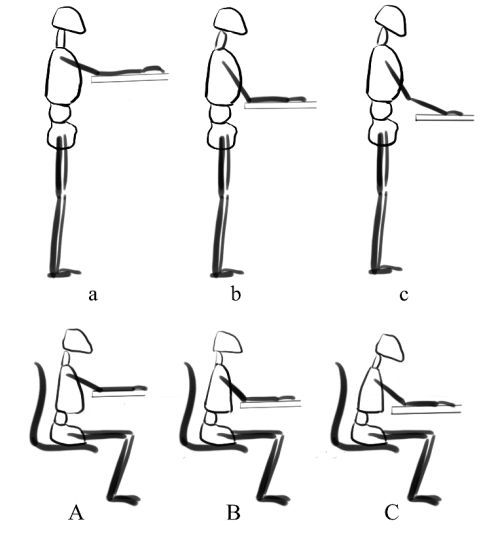
The study of comfort differences under different desk heights used the RULA method (a common musculoskeletal disorder risk assessment method). By controlling for identical conditions, it analyzed the standing and sitting postures under the three heights shown above to evaluate postural load under the experimental conditions (a higher score indicates greater musculoskeletal discomfort from the posture). The data below was obtained:

From the table above: when the desktop is too high (standing a and sitting A), the elbows take on a supporting posture and the shoulders and elbows ache; when the desktop is too low (standing c and sitting C), it not only causes cervical soreness but also prevents the forearms and wrists from relaxing. With the desktop at an appropriate height (standing b and sitting B), the body feels most comfortable.
What is the right desk height for both sitting and standing?
Based on the analysis above, the arms are likely the part of the body most affected by changes in desk height. We therefore conducted experiments using elbow height as the baseline (the desk height settings were determined from the range of heights participants themselves considered most comfortable, in cm) to analyze the influence of desktop height on sitting and standing comfort.
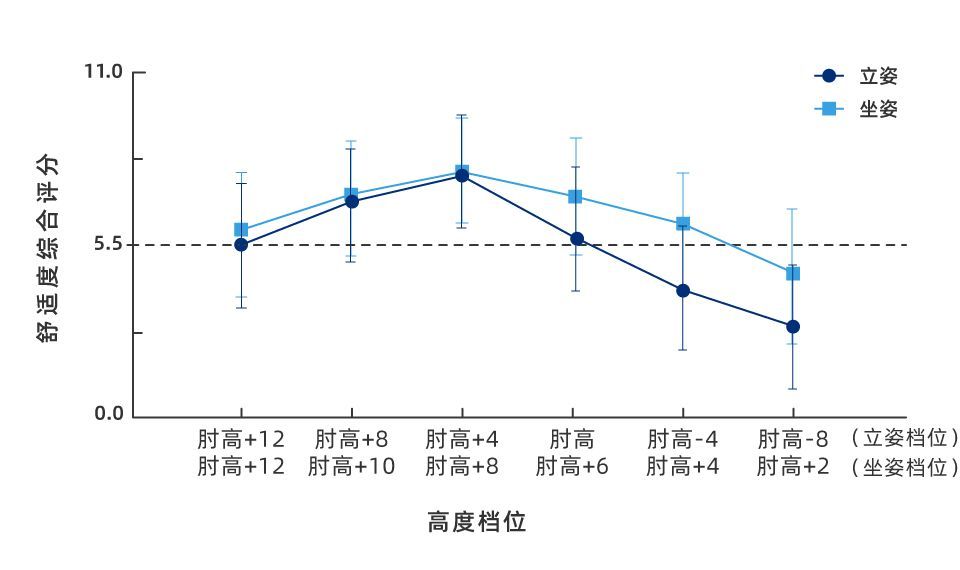
The study found that comfort ratings in both sitting and standing positions follow a parabolic curve as desk height decreases: comfort peaks when the height drops to a certain point, then falls to its lowest as the desk gets lower still.
Our experimental results found that people's judgments of their optimal desk height carry an average error of 22±12mm, with maximum judgment errors reaching 70mm!
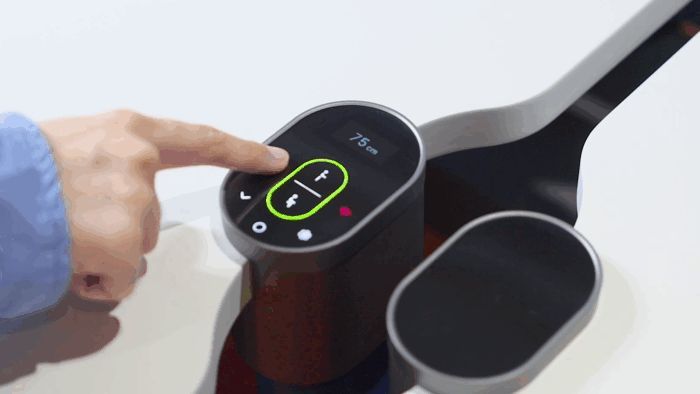
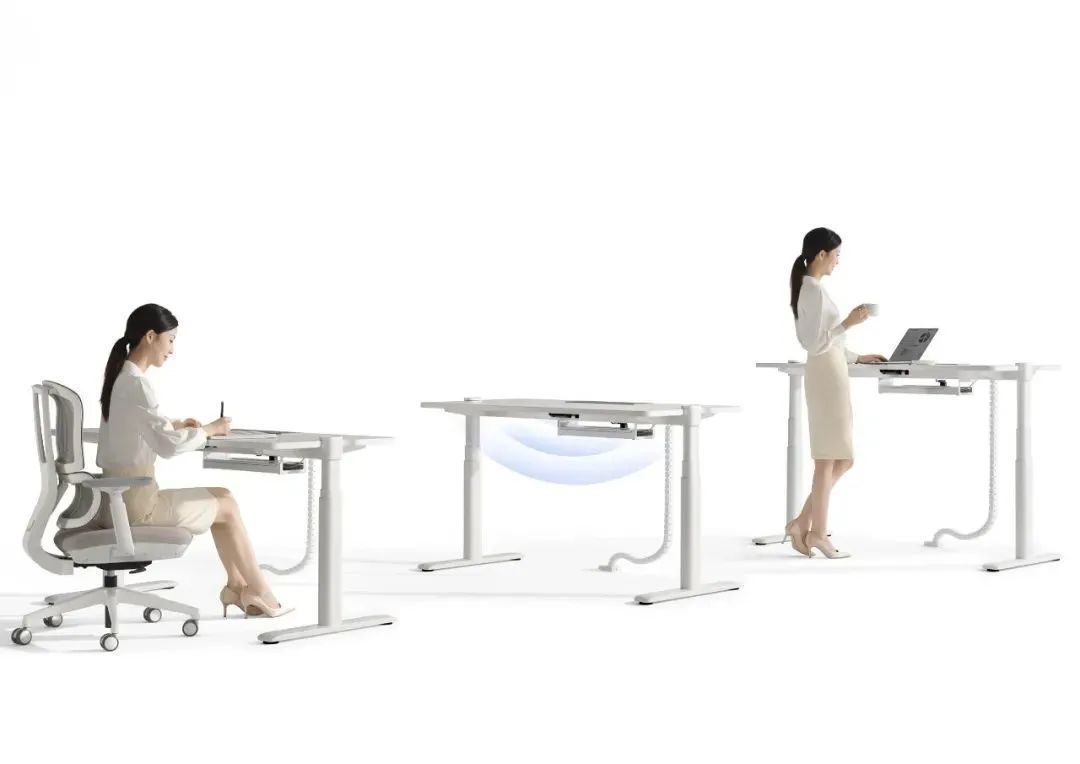
Figure: Yihang UP7 sit-stand workstation
Conclusion: the most comfortable standing desk height is elbow height + 4cm; the most comfortable sitting desk height is elbow height + 8cm.
About the Yihang-Nanjing Forestry University Healthy Office Research Center
The Yihang-Nanjing Forestry University Healthy Office Research Center was jointly established by Yihang Technology Co., Ltd. and Nanjing Forestry University. Combining Yihang's positioning in office furniture, it conducts research into the ergonomic characteristics and health topics of furniture products, office behaviors, and office environments, with the aim of building a safe, healthy, comfortable, and efficient healthy-office system.