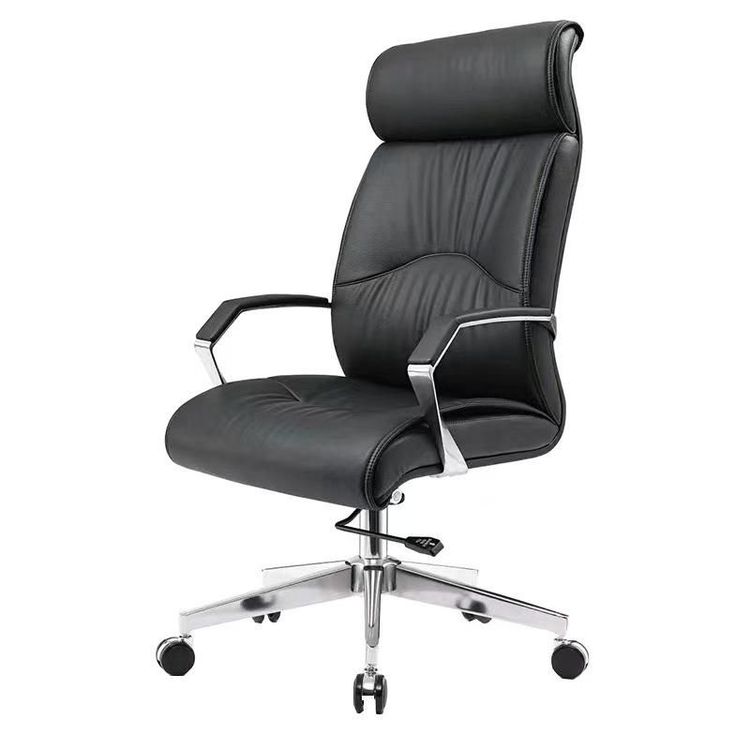
Why Office Chair Weight Capacity Matters: A Quick Guide
The weight capacity of an office chair is crucial as it directly relates to the safety, comfort, and health of the user. Here are the specific reasons:

Ensuring Safety
The weight capacity of an office chair is a core indicator of its safety. If the chair is designed to bear less weight than the user's body weight, structural damage such as base breakage or support frame deformation may occur during long-term use or sudden stress. For example, if a user weighing 180kg uses a chair with a nominal weight capacity of 100-150kg (typical for ordinary chairs), the chair may suddenly collapse due to excessive pressure, causing the user to fall and get injured. For individuals with a larger body weight, choosing an office chair with a weight capacity of at least 400lb (181kg) that has been verified can significantly reduce such risks.
Maintaining Comfort
Chairs with insufficient weight capacity often experience a decline in comfort. When the body weight exceeds the chair's design limit, the seat may collapse due to excessive compression, leading to uneven pressure distribution on the buttocks and legs, causing numbness or pain. The backrest may not fit the curve of the back due to insufficient support, resulting in a hollow waist, which can easily lead to fatigue or even lumbar muscle strain with long-term use. In addition, if the chair frequently shakes or makes strange noises due to weight capacity issues, it can also interfere with work concentration. Choosing a chair with a weight capacity much higher than the actual body weight (such as a person weighing 150kg choosing a chair with a weight capacity of over 200kg) can ensure that the seat, backrest, and other components maintain stable deformation and provide long-lasting support.
Adapting to Special Body Type Needs
Standard office chairs are usually designed for average body types, but individuals with a larger body weight or greater height may face the problem of "mismatched size". For example, the seat depth, seat width, or backrest height of ordinary chairs may not meet the needs of larger individuals, resulting in a lack of support for the thighs, squeezing of the shoulders, or no support for the head. High-weight-capacity chairs, on the other hand, often feature wider seats, deeper seat depths, and higher backrests, while also improving stability through reinforced structures (such as thickened steel pipes and high-density sponges), thus better adapting to special body types and avoiding the embarrassment and discomfort of "a small chair supporting a large body".
Extending Product Lifespan
The weight capacity is closely related to the materials and craftsmanship of the chair. Chairs made of sturdy materials (such as thickened metal frames and high-strength plastic bases) can not only bear greater weight but also resist wear and aging during daily use. If a chair is used beyond its load capacity for a long time, even if it is not immediately damaged, it may accelerate component fatigue (such as air rod leakage or wheel jamming), shortening the overall lifespan. Choosing a chair with a matching weight capacity can ensure that each component works within a reasonable stress range, extending the lifespan and reducing replacement costs.