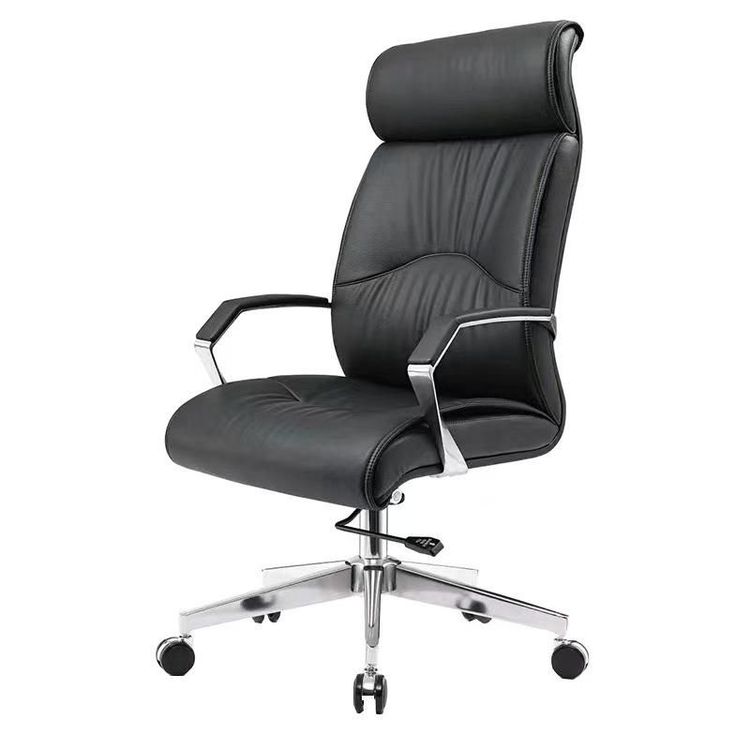
Why Office Chair Plastic Matter: A Quick Guide
Plastic is crucial in office chairs as it meets performance requirements, reduces costs, supports environmental protection, and promotes recyclable design.

Meeting Diverse Performance Requirements
The plastic structural components of office chairs (such as five-star bases, armrests, and back frames) need to withstand complex working conditions. For example, five-star bases must bear static and dynamic loads of up to 150kg, requiring high impact strength, high rigidity, and fatigue resistance. Armrests need to resist sweat corrosion and scratching, while back frames must combine toughness (to prevent brittle fracture) with dimensional stability (to avoid seasonal softening or embrittlement). A single general-purpose plastic cannot meet these conflicting requirements, necessitating performance customization through the formulation engineering of modified plastics. For instance, adding 20%-30% glass fiber can increase rigidity by 100%, and adjusting 3-5 parts of toughening agents can enhance impact strength by 200%.
Optimizing Cost and Supply Chain Efficiency
Modified plastics reduce unit costs through large-scale production. Manufacturers do not need to build their own laboratories to develop specialized formulations; they can directly purchase pre-optimized materials, ensuring quality stability while reducing R&D investment. This model has driven the rapid development of the modified plastics industry, making it a key link connecting basic resin suppliers with end-product manufacturers. For example, one company shortened its material development cycle from 18 months to 3 months and reduced costs by 25% by purchasing modified plastics.
Supporting Environmental Sustainability
The choice of adhesives in plastic chair production directly affects environmental indicators. Solvent-based adhesives release VOCs such as benzene, while water-based adhesives reduce VOCs but require high energy consumption for drying. Solvent-free adhesives can achieve zero emissions but require specialized curing equipment. Additionally, bio-based resins (derived from corn starch or vegetable oils) offer renewable alternatives but need molecular modification to enhance performance to levels close to those of petroleum-based products. For example, a bio-based back frame enhanced with nanocellulose achieves a flexural modulus comparable to that of ABS resin.
Promoting Recyclable Design
Modified plastics can address material pollution caused by traditional adhesives by introducing degradable chemical bonds or dynamic covalent bonds. Thermoplastic adhesives can be disassembled by heating, while thermosetting adhesives require mechanical or chemical separation. Self-healing adhesives and dynamic bond technologies can extend product lifespan and support multiple reassembly, although current costs are high and large-scale applications still face challenges. For example, a company developed a dynamic covalent bond back frame that achieves 100% material separation during recycling using a specific catalyst.