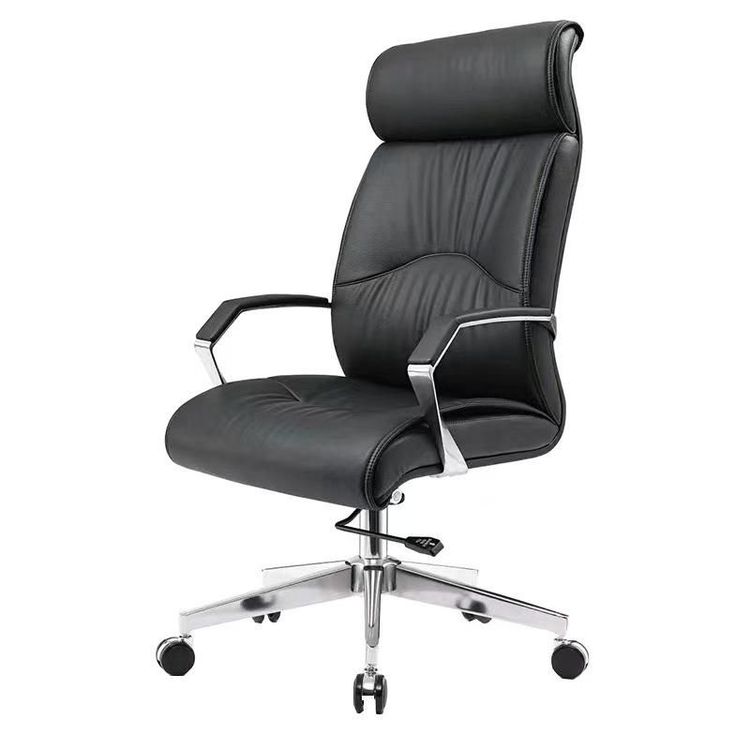
Why Office Chair Material Matters: A Quick Guide
The importance of office chair materials is reflected in their direct impact on the chair's stability, durability, comfort, and safety, serving as the core factor determining product performance and user experience.

From a structural design perspective, material properties determine functional realization
The support structure of an office chair (such as the chair legs, backrest frame, and seat frame), cushioning system (seat and backrest fillings), and adjustment mechanisms (gas lift rods, tilt-lock devices) all rely on material properties to achieve their functions. For example, metal frames are more durable than plastic frames due to their high strength and rigidity, but they may add weight; high-density foam fillings have strong resistance to collapse and can maintain their shape for a long time, while low-density materials are prone to sagging and deformation. In adjustment mechanisms, the reliability of the material of the gas lift rod directly affects the smoothness of height adjustment and safety. If the material strength is insufficient, frequent adjustments may lead to air leakage or breakage risks.
From a material selection perspective, performance requirements drive precise matching
Different components of an office chair have stringent requirements for material performance, necessitating the optimization of performance through modified formulations. For example, five-star bases need to withstand a 150kg static load test and require the use of high-impact, high-rigidity modified plastics (such as PP or PA with added glass fibers); armrests need to be resistant to sweat corrosion and surface scratching, often using engineering plastics with added toughening agents; backrest frames need to be tough and dimensionally stable, avoiding softening in summer and brittleness in winter, which can be achieved through weathering agent modification; seat chassis need to be resistant to creep to prevent collapse after long-term use, requiring the optimization of material molecular structures. Virgin plastics (such as pure PP and PA) cannot simultaneously meet these indicators, necessitating the balancing of performance through modified formulations with added glass fibers, toughening agents, and weathering agents.
From a cost and supply chain perspective, material selection affects economic efficiency
The material cost of office chair structural components accounts for up to 70%. International chemical giants (such as BASF and Covestro) offer standard-grade materials with complete certifications but at high prices and with slow customization responses. Local modification plants, on the other hand, can balance performance and cost through customized formulations. For example, adjusting the glass fiber content (a 20% vs. 30% difference in rigidity by a factor of two) or the proportion of toughening agents (a 3-part vs. 5-part difference in impact resistance by a factor of two) can precisely match the working conditions of different components, avoiding over-design or insufficient performance.
From a practical application perspective, material differences are directly related to user experience
Low-density seat fillings may collapse after a few months, leading to a decrease in comfort; plastic frames may lack sufficient support under extreme body types or special usage habits, posing safety risks; issues such as uneven lifting of gas lift rods or weak locking force during armrest adjustments are all directly related to material selection. Therefore, material selection needs to balance performance, cost, and user experience to avoid long-term usage problems caused by short-term cost compromises.