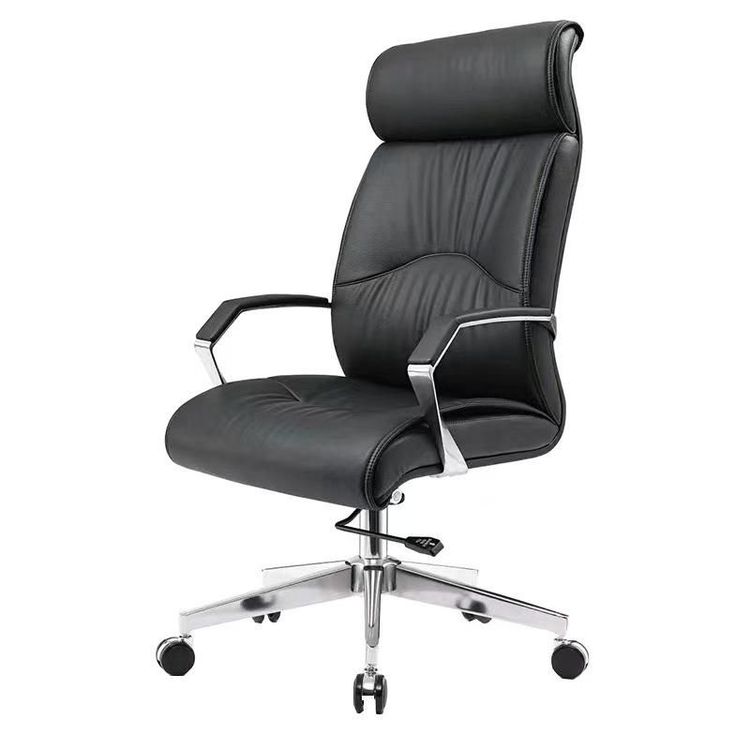
Why Office Chair Manufacturing Matters: A Quick Guide
The importance of office chair manufacturing lies in its direct impact on user experience, product lifespan, and industry technological development through scientific design, material optimization, and scenario adaptation, essentially transforming ergonomics into mass-producible solutions.

1. Ergonomic Support System: The Core of Health and Comfort
The primary function of an office chair is to maintain the natural curvature of the spine and distribute pressure, relying on the collaborative design of support structures, cushioning systems, and adjustment mechanisms. Support structures such as chair legs, backrest frames, and seat frames must possess sufficient strength; for example, metal frames are more durable than plastic and can avoid deformation after long-term use. The cushioning system must balance density and resilience; high-density foam seats can resist sagging over time, while low-density materials can lead to concentrated pressure on the buttocks. Adjustment mechanisms (such as gas lifts and tilt locks) directly affect safety and adaptability; gas lifts must meet international standards (such as BIFMA certification) to avoid explosion risks. These design details collectively determine whether users can maintain proper posture and reduce the risk of occupational diseases such as back pain.
2. Material Science: The Foundation of Product Lifespan and Performance
The selection of structural materials is key to quality differences. Seventy percent of the cost of an office chair comes from modified plastics (such as glass-fiber-reinforced PP and weather-resistant PA), which require customized formulations for different components: five-star bases need high impact resistance to prevent breakage, armrests need resistance to sweat corrosion to avoid surface peeling, and backrest frames need toughness and dimensional stability to adapt to temperature changes. Improper material formulations (such as insufficient glass fiber content or incorrect proportions of toughening agents) can lead to wobbling, breakage, or seasonal embrittlement within six months, significantly shortening the product lifespan. Additionally, the density and resilience of fillers (such as foam and memory foam) must strictly match usage scenarios; for example, high-frequency usage scenarios require higher-density materials to resist sagging.
3. Scenario-Based Design: Balancing Cost and Functionality
Universal office chairs adapt to different body types through adjustable components (such as headrests and armrest heights), but users with extreme body types (such as those over 190 cm tall or weighing over 120 kg) may face insufficient support. Differentiated scenario demands drive manufacturers to optimize designs: conference room scenarios prioritize smooth-rolling casters to reduce movement noise, while office scenarios focus on examining seat cushion support and backrest stability to support long working hours. This demand differentiation prompts manufacturers to continuously invest in material modification formulations and structural optimization, such as developing high-resilience foam for gaming chairs and antibacterial coatings for medical scenarios.
4. Industry Technical Barriers and Supply Chain Value
The modified plastics industry provides low-cost, high-stability solutions for manufacturers through "targeted optimization" of virgin resins. International chemical giants (such as BASF) offer standard grades, while local modifiers develop customized formulations for specific working conditions (such as low-temperature resistance and UV resistance). This division of labor reduces manufacturers' R&D costs but requires them to have in-depth knowledge of material properties. For example, chair legs must maintain impact resistance in environments ranging from -20°C to 60°C, relying on precise control of the PP base material and glass fiber ratio by modifiers. The existence of technical barriers makes office chair manufacturing not just simple assembly but a complex systems engineering involving mechanical simulation, material testing, and scenario validation.