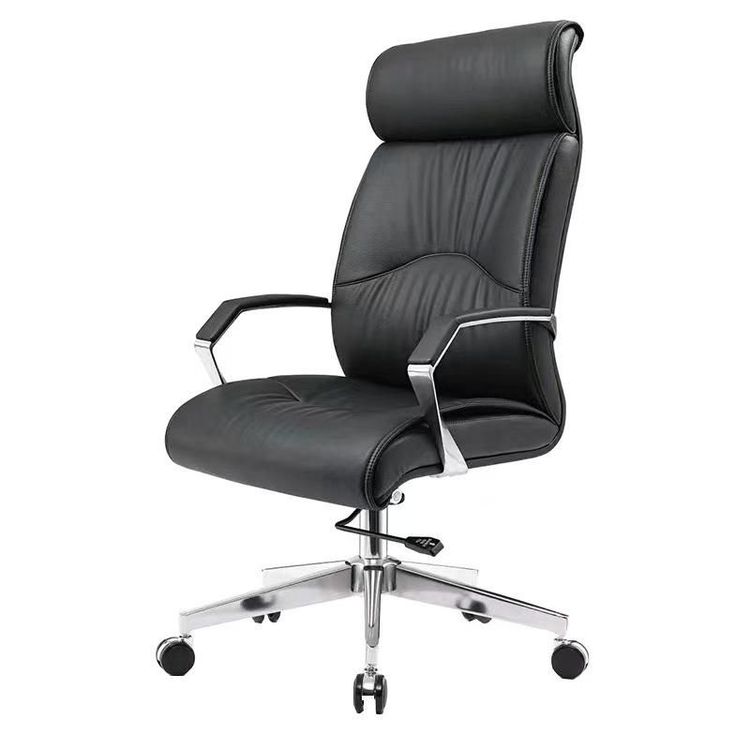
Why Office Chair In Stock Matter: A Quick Guide
The importance of office chair inventory management is reflected in optimizing capital utilization, reducing operational costs, and enhancing customer satisfaction, with its core logic explained through business indicators such as inventory turnover rate.

1. Maintain capital liquidity and avoid resource idleness
The inventory turnover rate is a key indicator for measuring a company's operational efficiency, with the formula being Cost of Goods Sold (COGS) ÷ Average Inventory. For consumer goods like office chairs, a high turnover rate means that products are quickly converted into cash flow, supporting the company's procurement, production, and market expansion. If inventory is overstocked (low turnover rate), capital is tied up in warehousing for an extended period, potentially causing the company to miss investment opportunities or face cash flow pressures. For example, if an office furniture company stocks an excessive number of office chairs, it will need to pay additional warehousing fees, and the products may be forced to be sold at a discount due to outdated styles, further compressing profit margins.
2. Balance supply and demand and reduce sales losses
Insufficient inventory (excessively high turnover rate) also poses risks. If a company does not have enough office chairs in stock, it may lose customers to competitors due to stockouts when facing sudden orders or promotional activities. According to industry data, annual losses in the retail sector due to stockouts account for approximately 4%-7% of sales. By accurately predicting demand and maintaining a safety stock, companies can ensure timely order delivery and maintain brand reputation. For example, during the pandemic, when remote work demand surged, companies that had pre-stocked ergonomic chairs quickly captured the market, while those with insufficient inventory missed out on growth opportunities.
3. Control operational costs and enhance profit margins
Inventory management directly affects warehousing, logistics, and损耗 (here, it should be 'loss' or 'damage') costs. Office chairs are relatively large in size, and excessive inventory occupies more warehouse space, increasing rental and management fees. Additionally, long-term storage may lead to product wear and tear or technological obsolescence (such as outdated intelligent adjustment features), forcing discounted sales. Conversely, by dynamically adjusting inventory levels (such as adopting a Just-In-Time (JIT) production model), companies can minimize holding costs and concentrate resources on high-value activities like research and development or marketing.
4. Support supply chain stability
The production of office chairs involves multiple stages, including raw material procurement, assembly, and distribution, requiring inventory levels to align with the supply chain rhythm. If inventory is too high, upstream suppliers may adjust prices due to demand fluctuations; if inventory is too low, downstream distributors may reduce their willingness to cooperate due to stockouts. By establishing a data-driven inventory model (such as combining historical sales data with market trend forecasts), companies can optimize procurement cycles and reduce the risk of supply chain disruptions.
It should be noted that the inventory strategy for office chairs, as consumer goods, differs from that of luxury items (such as high-end designer chairs). The latter, due to their high unit price and elastic demand, can accept a lower turnover rate to maintain scarcity; whereas office chairs need to achieve economies of scale through high-frequency turnover, placing higher demands on a company's demand forecasting and supply chain responsiveness.