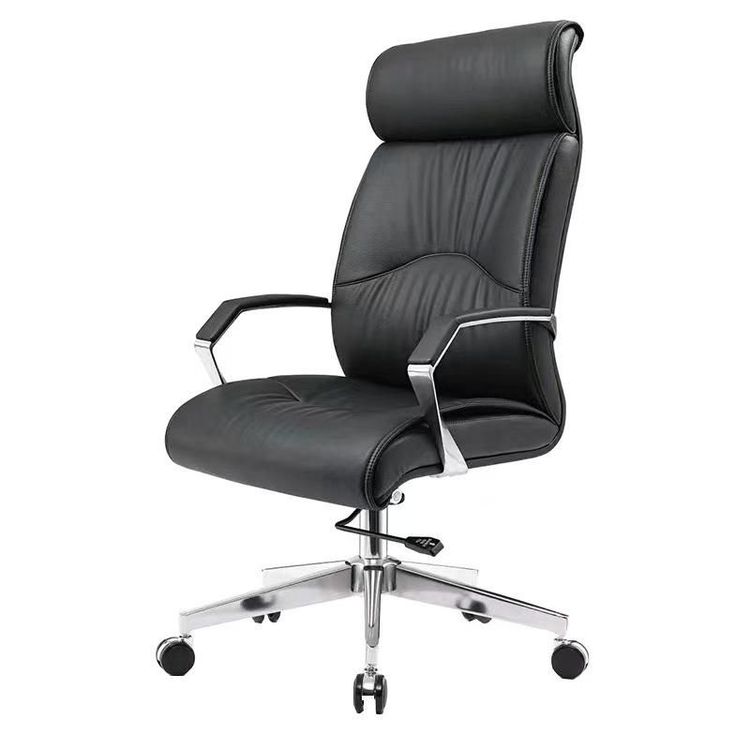
Why Office Chair High-Density Foam Matters: A Quick Guide
The use of high-density foam in office chairs is crucial because it provides lasting comfort and support, especially for those who sit for extended periods.

I. Lasting Support, Preventing Sagging
The core advantage of high-density foam lies in its structural stability. Ordinary foam, due to its lower density, is prone to irreversible deformation under long-term pressure, leading to seat sagging and reduced support. In contrast, high-density foam increases the number of foam cells per unit volume, forming a denser structure that effectively resists pressure. For example, high-density foam used in premium office chairs can withstand tens of thousands of pressure cycles without significant deformation, ensuring that the seat maintains its original shape over long-term use, providing continuous support for the back and buttocks, and preventing posture distortion or muscle fatigue caused by insufficient support.
II. Comfort and Ergonomic Fit
High-density foam is not “rock-hard”; instead, it achieves a “soft yet supportive” feel by optimizing the balance between density and elasticity. Its surface can slightly indent according to the body's curves, dispersing body pressure and reducing localized pressure points (such as the tailbone and ischium). At the same time, the rebound speed of high-density foam is moderate, allowing it to quickly adapt to changes in sitting posture without generating excessive “rebound force,” thereby maintaining the natural curvature of the spine and reducing the risk of lower back pain caused by prolonged sitting. For instance, some high-end office chairs employ a layered design, using low-density foam on the surface of the seat cushion for initial softness and high-density foam at the bottom for deep support, balancing short-term comfort with long-term health.
III. Durability and Cost-Effectiveness
From a product lifecycle perspective, the durability of high-density foam significantly extends the lifespan of office chairs. Ordinary foam seats may need to be replaced every 2-3 years, whereas high-density foam seats can last more than 5 years, reducing the cost and environmental impact of frequent replacements. Additionally, high-density foam is more resistant to tearing and aging, making it less prone to cracking or crumbling even when exposed to sunlight or humidity for extended periods, further lowering maintenance costs. For corporate procurement or long-term home use scenarios, the initial higher investment in high-density foam can be amortized over long-term use, ultimately achieving higher cost-effectiveness.
In conclusion, high-density foam, through its combination of physical properties and ergonomic design, has become a key material for enhancing the comfort, support, and durability of office chairs, serving as a core element in ensuring healthy sitting and a positive user experience.