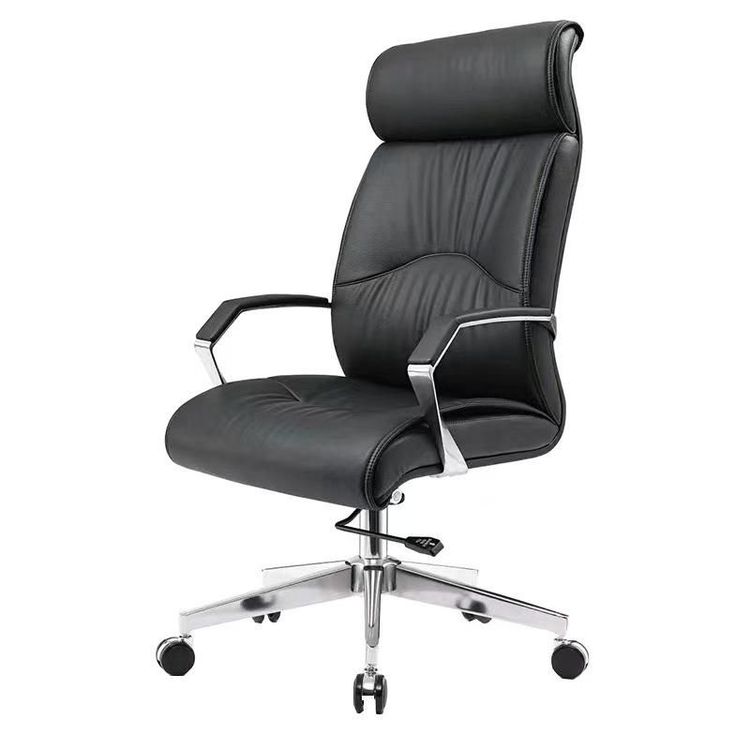
Why Office Chair Headrest Matter: A Quick Guide
The importance of headrests on office chairs primarily relates to comfort, support, safety, and health benefits.

1. Comfort and Support
Headrests are a core component of ergonomic design, especially for scenarios involving prolonged desk work. They provide precise support for the head and neck, distributing cervical spine pressure and preventing muscle fatigue caused by a suspended position. For example, when a user needs to briefly lean back and rest, the headrest fills the gap between the head and the chair back, maintaining the natural curvature of the cervical spine and reducing soreness caused by improper posture. This supportive effect is particularly noticeable after several hours of continuous work, significantly reducing accumulated physical fatigue.
2. Safety and Motion Buffering
Although sudden movements in an office environment are far less intense than car collisions, headrests still reduce the risk of neck strain by limiting excessive backward head movement. For instance, when a user quickly turns around or stands up, the headrest prevents the cervical spine from bending sharply due to inertia, protecting muscles and ligaments from excessive stretching. While not an active safety device, this buffering mechanism reduces the likelihood of accidental injury through passive design.
3. Ergonomic Health Benefits
Ergonomic chairs equipped with headrests support various regions of the spine (cervical, thoracic, and lumbar) in harmony, helping users maintain the natural “S”-shaped physiological curve. Some high-end models feature adjustable height and angle functions for the headrest, allowing it to adapt to the cervical curvature of users of different heights and further enhancing support precision. Long-term use can reduce the incidence of occupational diseases such as cervical spondylosis and periarthritis of the shoulder, making them especially suitable for groups like programmers and designers who need to maintain fixed postures for extended periods.
4. Indirect Improvement of Work Efficiency
Physical comfort is positively correlated with cognitive focus. When users do not need to frequently adjust their posture to relieve neck discomfort, their attention can be more concentrated on work tasks. Studies show that using an office chair with a headrest can reduce the frequency of distractions caused by physical discomfort among employees by approximately 30%, thereby indirectly improving overall work efficiency.
5. Functional Diversification and Scenario Adaptation
Modern headrest designs have transcended traditional support functions, integrating modules such as massage, heating, and Bluetooth speakers to meet diverse needs. For example, a headrest with a heating function can alleviate neck stiffness in winter, while a headrest with built-in speakers can create an immersive office environment. This functional expansion upgrades office chairs from a single tool to a comprehensive health management system, adapting to various scenarios such as working from home and gaming entertainment.