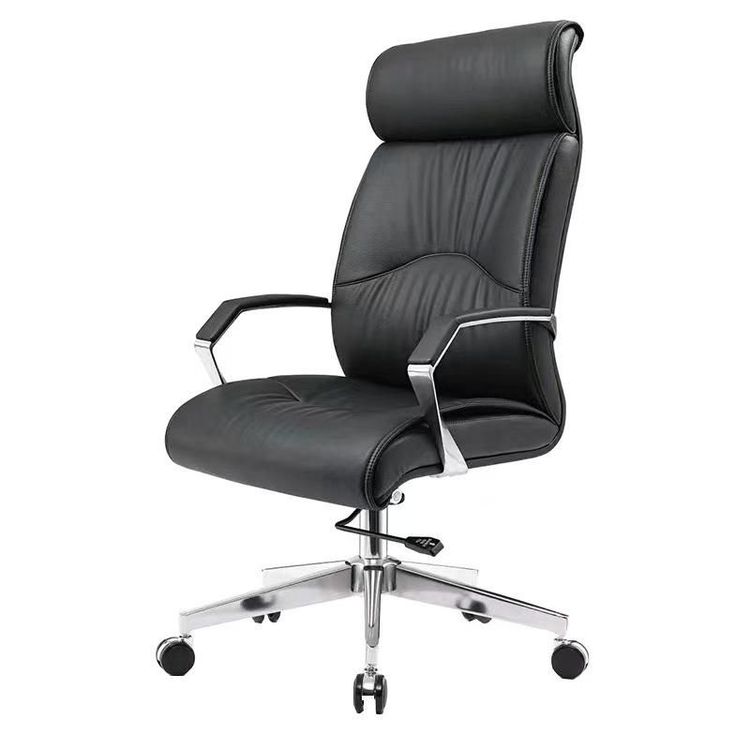
Why Conference Office Chairs Matter: A Quick Guide
The importance of conference office chairs is reflected in four aspects: ergonomic support, dynamic adjustability, scenario-specific functionality, and extended social attributes, making them key tools for ensuring meeting efficiency and experience.

1. Ergonomic Support: Alleviating Prolonged Sitting Fatigue and Protecting Spinal Health
In conference settings, participants often need to maintain a static sitting posture for 1-2 hours, placing high demands on the chair's support. High-quality conference office chairs utilize a combination of support structures (such as metal chair legs and backrest frames) and cushioning systems (high-density foam padding) to distribute body pressure and maintain the natural curvature of the spine. For example, metal frames are more durable than plastic, preventing a decline in support over time and avoiding issues like a sagging lower back or forward-leaning neck caused by chair deformation, thereby reducing the risk of muscle strain from prolonged sitting.
2. Dynamic Adjustability: Meeting the Personalized Needs of Multiple Users
Academic conferences require frequent shifts between speaking and listening postures, with significant height differences among participants. Conference office chairs offer features like pneumatic height adjustment and tilt-lock mechanisms to quickly adapt to users of different body types. For instance, the seat height adjustment range is typically 40-50cm, ensuring comfortable seating for users ranging from 1.5 to 1.9 meters in height; the tilt-lock function allows users to adjust the backrest angle as needed, preventing fatigue from fixed postures and enhancing efficiency during multiple-user transitions.
3. Scenario-Specific Functionality: Enhancing Mobility and Short-Term Support
Unlike office settings, conferences emphasize mobility (such as smooth-rolling casters) and short-term sitting support. High-quality conference chairs are often equipped with silent omnidirectional casters that rotate 360 degrees and move silently, avoiding disruptions to the meeting. Additionally, their seat cushions are designed for initial support rather than long-term resistance to sagging (the latter being more suitable for office settings), ensuring comfort for participants over 1-2 hours.
4. Extended Social Attributes: Boosting Focus and Interaction Quality
Academic conferences are essentially knowledge-sharing social events, where participants' physical states directly influence their mental engagement and communication effectiveness. Comfortable conference office chairs indirectly enhance focus and interaction quality by reducing physical fatigue. For example, when participants do not need to frequently adjust their posture or endure back pain, their attention is more easily directed toward the discussion, fostering cross-disciplinary idea exchange and increasing the overall value of the meeting.
While there are no independent studies specifically focused on conference office chairs, the above conclusions are derived from the intersection of general office chair design principles and conference scenario requirements, ensuring both scientific validity and practical applicability.