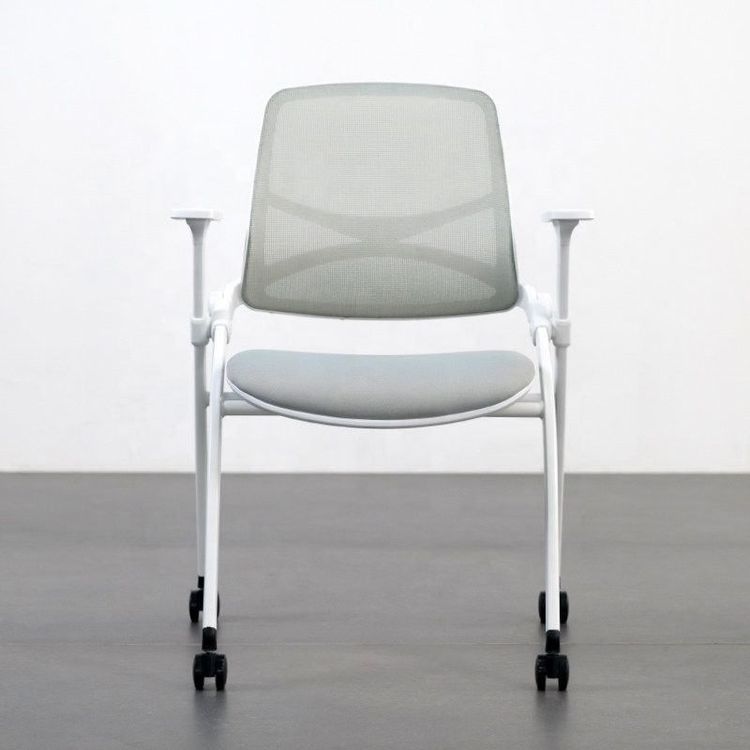
Traditional Leather Office Chair
The traditional leather office chair is a high-end product in the office furniture market, featuring natural leather as its core material. It combines comfort, durability, and design aesthetics, making it suitable for independent offices and other settings, though it requires regular maintenance and has relatively high upkeep costs.

Material Characteristics: Natural Advantages and Limitations
Leather, as a natural protein fiber structure, has fine pores distributed across its surface, offering significantly better breathability than synthetic leather or PU leather. This effectively reduces sweating during prolonged office work, enhancing comfort. Its fiber bundles are strong, providing superior abrasion resistance compared to most synthetic materials. In office chair scenarios involving frequent movement or heavy loads, the leather surface is less prone to cracking or peeling, demonstrating outstanding durability. However, leather is sensitive to temperature and humidity, requiring protection from direct sunlight or damp environments to prevent drying and cracking or mold growth from moisture. Regular use of specialized care products is necessary to maintain its flexibility. Additionally, the grade of leather directly affects performance: top-grain leather retains a complete fiber layer, offering better breathability and tensile strength, with a soft touch and durability; split-grain leather, processed through mechanical calendering, has slightly weaker breathability but lower costs, suitable for users with limited budgets who still prefer natural materials.
Design Features: Balancing Comfort and Functionality
The design of traditional leather office chairs revolves around the needs of prolonged sitting, often incorporating high-density foam and metal frames. High-density foam provides uniform support, preventing localized sagging, while the leather outer layer combines a comfortable touch with a premium feel. The chair structure emphasizes a wide seat, high backrest, and reclining function, meeting the comfort and ceremonial needs of managers or desk workers. The metal frame, as the support core, not only bears the weight of the leather and foam but also ensures chair stability and rotational flexibility. Some models are equipped with pneumatic height adjustment mechanisms to accommodate different office settings.
Applicable Scenarios and Maintenance Costs
These chairs are primarily used in independent offices, executive meeting rooms, and other settings requiring client reception or prolonged work. Classic colors like black and brown easily blend into modern, Chinese, or industrial-style decor. The swivel and reclining functions enhance usability flexibility, but maintenance costs are relatively high: liquid spills must be avoided (stains penetrate easily and are difficult to remove), regular cleaning and dusting are necessary, and heat sources should be kept at a distance to prevent leather deformation. Improper care significantly increases the risk of fading and cracking, resulting in higher long-term usage costs compared to ordinary office chairs.
In summary, the traditional leather office chair, with its natural materials, ergonomic design, and high-end positioning, is the preferred choice for users pursuing quality and comfort, though its maintenance requirements and budget considerations must be weighed.