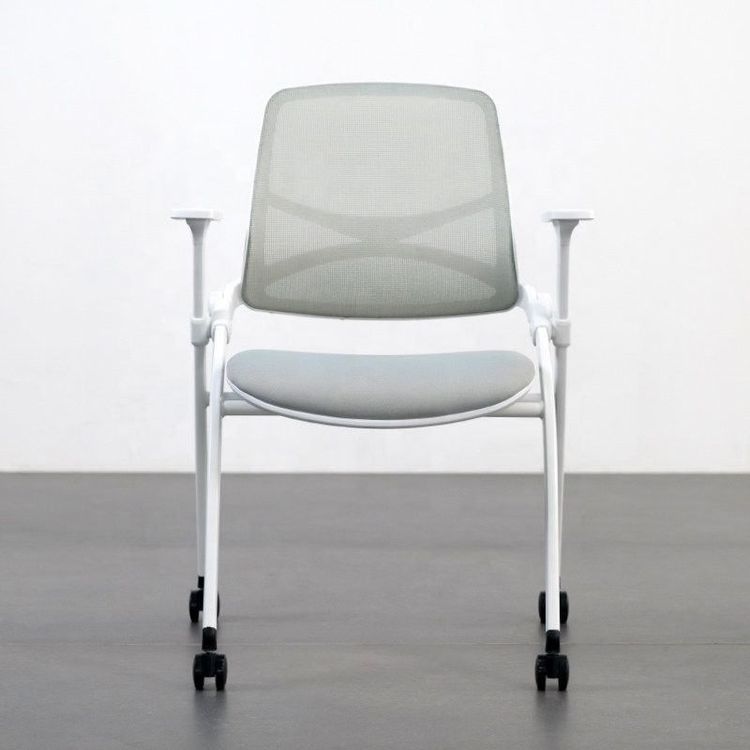
Technology of Office Chairs
The technology of office chairs is primarily reflected in multiple dimensions such as dynamic ergonomics, holographic motion tracking, ventilation adjustment, precise adaptation, and health care, enhancing the user experience through the integration of materials, structures, and intelligent technologies.

1. Dynamic Ergonomics Technology
This technology focuses on the interaction between "human-chair-device" and achieves fine-tuned support force adjustment through a flexible backrest and electric-assisted push rods. For example, the 5-centimeter electric-assisted push rod of the Qingxian Dynamic Ergonomics Chair can adapt to different body shapes, and the linkage system coordinates the neck pillow, backrest, seat cushion, and armrests to ensure that the line of sight, back, buttocks, legs, and arms remain comfortable at all times. This design breaks through the traditional fixed support mode, enabling the chair to actively adapt to the dynamic needs of the human body.
2. Holographic Motion Tracking and Gravity Adaptive Technology
The holographic motion tracking system (such as the Qingxian Pro model) captures human movements in real-time through sensors, achieving "human moves, chair follows" and supporting reclined office scenarios, addressing the issue of support disconnection in traditional chairs when reclining. The gravity adaptive back-tracking technology, through innovative chassis design, automatically adjusts the back-tracking force according to the user's weight, providing continuous support without manual adjustment. For example, the pioneering Gravity Adaptive Xiaoyao Active Support Office Chair adopts this technology.
3. Ventilation and Adjustment Technology
The suction-type seat cushion ventilation technology achieves efficient ventilation while maintaining the softness of the seat cushion through airflow circulation design, addressing the issue of heat buildup during prolonged sitting. The five-level precise adjustment technology covers dimensions such as seat height, recline, and armrests, ensuring that each angle meets ergonomic standards and adapts to multiple scenarios such as office work, meetings, and rest.
4. Customized Health Care
The "Thousand People, Thousand Backs" technology provides customized support solutions for each user by analyzing different body shape characteristics through big data. The spinal stretching function, combined with a maximum recline angle of 160 degrees and an independent footrest, simulates a zero-gravity environment and works with a massage module to achieve reciprocal relaxation of the spine, alleviating fatigue from prolonged sitting. Such designs upgrade office chairs from "support tools" to "health care devices."
5. Adaptive Adjustment Technology
High-end models adopt dynamic balance chassis and floating wing lumbar supports, automatically adapting to changes in sitting posture through the interaction of material elasticity and mechanical structures. For example, the floating wing lumbar support can adjust the support angle as the waist moves, while the dynamic balance chassis maintains stability through optimized gravity distribution, reducing the frequency of manual adjustments.