Swivel Office Chair
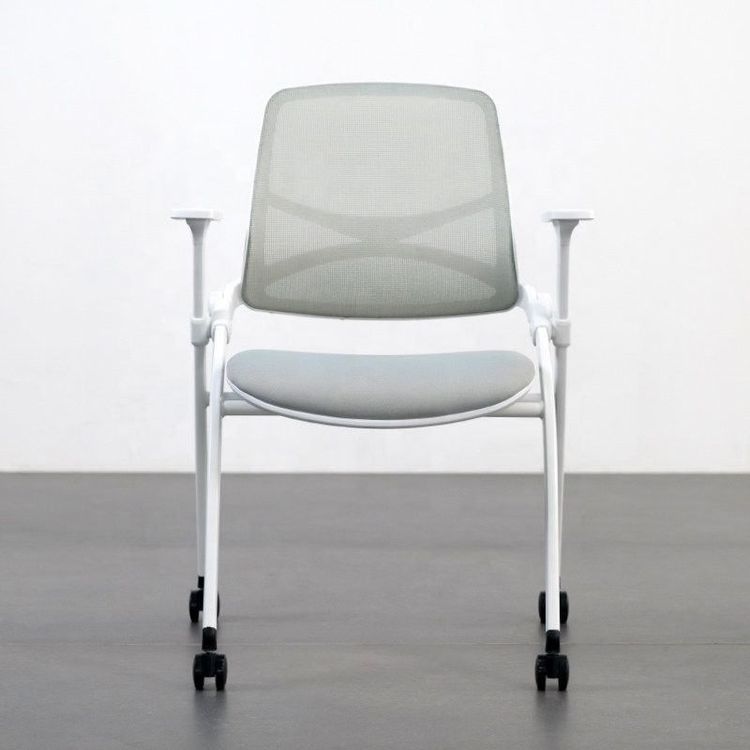
A swivel office chair typically refers to a chair with a rotatable seat, belonging to the category of office chairs or computer chairs. It is called a swivel chair in English, with core functions of 360-degree rotation and flexible movement. Its structure includes a headrest, backrest, seat, armrests, gas lift support, swivel joint, and a base with wheels. When purchasing, attention should be paid to adaptability, quality, and ergonomic design.

Core Functions and Structural Features
The core functions of a swivel chair are 360-degree rotation and flexible movement. Its base is usually designed with five wheels, allowing for position adjustments without standing up, facilitating file retrieval or communication with colleagues, reducing fatigue from prolonged sitting, and enhancing work efficiency. Structurally, a swivel chair consists of a headrest, backrest, seat, armrests, gas lift support, swivel joint, and a base with wheels. The gas lift support relies on high-pressure nitrogen inside to generate elastic force through a piston, supporting body weight and allowing height locking for vertical adjustment; the swivel joint ensures the rotational connection between the seat and the base.
Classification and Suitable Scenarios
Based on the rotation angle, swivel chairs can be classified as semi-swivel chairs (90 degrees left and right) and full-swivel chairs (360-degree rotation). Full-swivel chairs are more common in office settings due to their higher flexibility; semi-swivel chairs may be used in environments with limited space or simple functional requirements. Additionally, the design of swivel chairs should match the usage scenario: circular bases or five-point wheel bases are suitable for different floor materials; high-back designs are suitable for scenarios requiring neck support (such as studies), while low-back or streamlined designs are more suitable for modern spaces like workshops.
Key Points for Purchase and Quality Evaluation
When purchasing a swivel chair, three aspects should be considered:
- Space and Style Adaptability: Choose a base size according to room dimensions to avoid occupying too much space; the material of the armrests (such as plastic, metal, or padded) should coordinate with the overall style.
- Quality Evaluation:
- Seat Comfort Test: The seat should be moderately soft or hard and not collapse after long-term use;
- Wheel Stability: The wheels should be smooth and quiet to avoid scratching the floor;
- Gas Lift Reliability: Choose a gas lift that has passed safety certification to prevent explosion risks.
- Price Range: From basic models costing tens of yuan to high-end ergonomic chairs costing tens of thousands of yuan, a balance should be struck based on budget and needs.
Uniqueness of Ergonomic Swivel Chairs
Compared to ordinary swivel chairs, the core difference of an ergonomic swivel chair lies in its dynamic lumbar support design. Its lumbar support can adjust the support angle following the movement of the waist, relieving lumbar pressure caused by prolonged sitting, suitable for people who need to work at a desk for long periods. Additionally, some high-end models are equipped with adjustable headrests, armrest heights, and tilt angles to further conform to the body's curves.