Student Cushion and Office Chair
The selection of student cushions and office chairs should be based on functional requirements and budget. Here is a detailed analysis:

1. Core Functions and Suitable Scenarios of Office Chairs
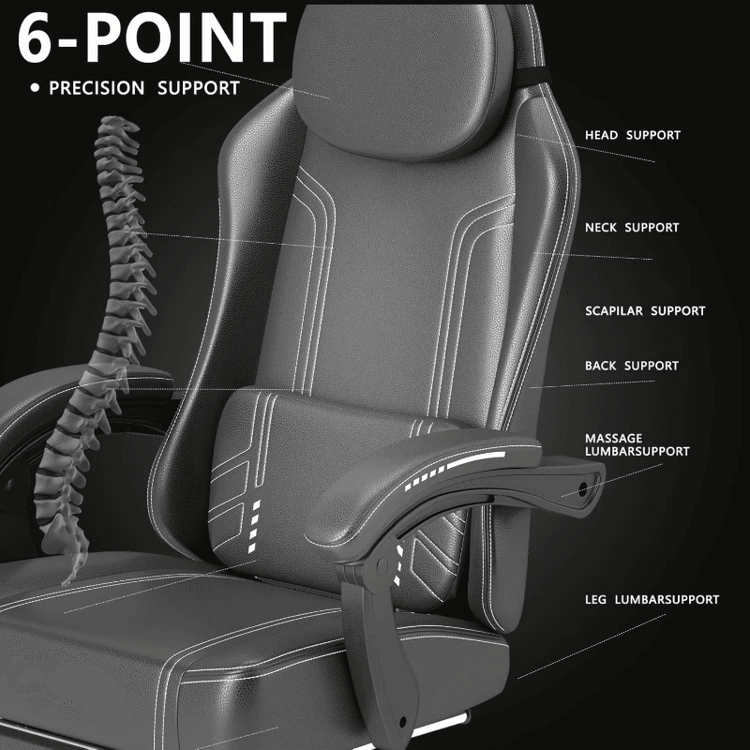
Office chairs are designed with ergonomics at their core, aiming to alleviate fatigue from prolonged sitting, especially suitable for long hours of studying or working. For example, the ENOVA Ergonomic Chair features an adaptive chassis and a 3D adjustment system. Its independent lumbar support on the backrest allows for multi-level adjustments up and down, accommodating medium-sized individuals (recommended height: 165cm~185cm) at a highly cost-effective price point in the hundred-dollar range. Its advantage lies in dynamically distributing spinal pressure and reducing the sensation of a hollow lower back, making it suitable for users who need to frequently adjust their sitting posture.
2. Diverse Options for Student Cushions
Student cushions are characterized by their lightweight and lumbar support features, with a wide price range (from a few yuan to tens of yuan) to cater to different needs:
- Integrated Lumbar Support Cushions: These cushions fix the waist position through an integrated design, suitable for fixed workstations but with lower flexibility.
- Student and Children's Lumbar Support Cushions: Optimized for the physique of teenagers, these cushions use memory foam or high-rebound sponge to relieve spinal pressure during growth periods.
- Office Cushions for Working Adults: These emphasize breathability and portability, with some products incorporating honeycomb structures or ice-silk fabrics, suitable for summer or poorly ventilated environments.
The limitation of these cushions lies in their lack of overall support, which may lead to localized fatigue from prolonged use due to a fixed sitting posture.
3. Subcategories and Adaptability of Computer Chairs
Computer chairs are divided into work chairs and student chairs based on their usage scenarios, with the core difference lying in their adjustment functions:
- Work Chairs: Equipped with adjustable headrests, lumbar supports, and armrests, they support multi-dimensional adjustments (such as seat height and tilt angle) to accommodate different body types and task requirements (such as typing and meetings).
- Student Chairs: These simplify adjustment functions, focusing on basic support and cost control. Some products include footrests, suitable for user groups with significant height differences.
4. Selection Recommendations
- Sufficient Budget and Long-Term Use: Prioritize ergonomic office chairs (such as the ENOVA Ergonomic Chair), whose dynamic adjustment functions can reduce the risk of muscle strain.
- Limited Budget or Temporary Use: Student cushions can serve as a transitional solution, but regular breaks to stand and move are necessary to compensate for the lack of support.
- Special Needs: Teenagers are advised to choose dedicated student chairs to avoid posture distortion caused by oversized adult office chairs. In summer, prioritize breathable cushions or mesh office chairs.
Summary: Office chairs provide systematic support, suitable for high-intensity usage scenarios. Student cushions offer the advantages of being lightweight and providing lumbar support, but they should be supplemented with regular movement based on usage habits. When selecting, consider body type, duration of use, and budget, prioritizing core needs (such as lumbar support and breathability).