Strange Office Chair
A 'strange office chair' typically refers to a chair with a special background story or that triggers unusual reactions from a group. Its 'strange' attribute often stems from psychological suggestion, environmental changes, or coincidental events, rather than the chair itself possessing supernatural factors.

1. Special Background and Symbolic Meaning
Such chairs are often imbued with special meanings due to the identity of the user or the context in which they are used. For example, an office chair originally favored by a leader may be neglected after the leader moves on, with its 'powerful aura' label gradually replaced by rumors such as 'bad feng shui' or 'hiding the predecessor's ambitions.' This transformation is essentially a psychological projection of the group towards power transitions—after the leader leaves, the chair shifts from being a 'symbol of authority' to a 'carrier of power vacuum,' with employees alleviating their unease about the unknown by attributing negative attributes to it.
2. Group Behavior and Conformity
The spread of rumors can trigger group behavior patterns. For instance, in an office, if someone experiences back pain after sitting in the chair, the entire office may adopt an 'off-limits' rule. This phenomenon is similar to the 'broken windows effect': when individual negative experiences are amplified, the group chooses to follow common taboos to avoid being labeled as 'outliers.' Even if the back pain may be caused by design flaws in the chair or individual posture issues, the group is more inclined to use simple explanations like 'the chair is cursed' instead of complex analyses to maintain internal cognitive consistency.
3. Interaction Between Environment and Psychological Suggestion
The 'strange' attribute of the chair is often related to environmental changes. When the leader is in power, the chair is the center of authority, and employees subconsciously adjust their posture and expressions to conform to the atmosphere; after the leader leaves, the chair is moved to a marginal area like the pantry, with the environment shifting from 'formal' to 'casual.' Employees may experience muscle tension due to a lack of psychological preparation when sitting on it, leading to back pain. This physical reaction is interpreted as 'the chair causing trouble,' but it is actually the result of the interaction between the environment and psychological suggestion.
4. Explanation from a Scientific Perspective
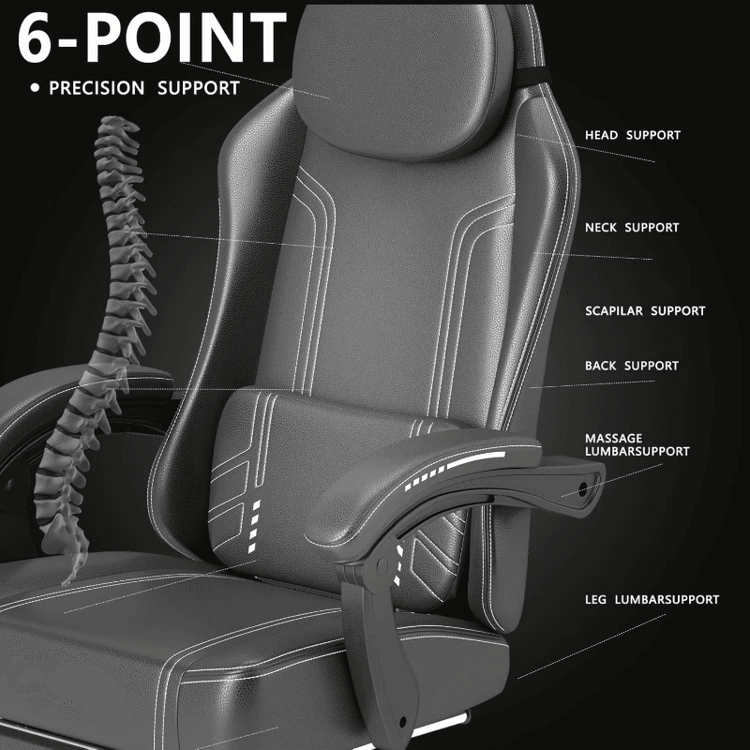
From an ergonomic standpoint, back pain may stem from design flaws in the chair (such as a lack of lumbar support) or improper sitting posture by the user; from a sociological perspective, rumors are a compensatory mechanism for the group towards power vacuums; from a psychological perspective, fear of the unknown amplifies the impact of coincidental events. The so-called 'strangeness' is essentially a cognitive tendency for humans to simplify complex phenomena into understandable symbols, rather than the chair itself being abnormal.