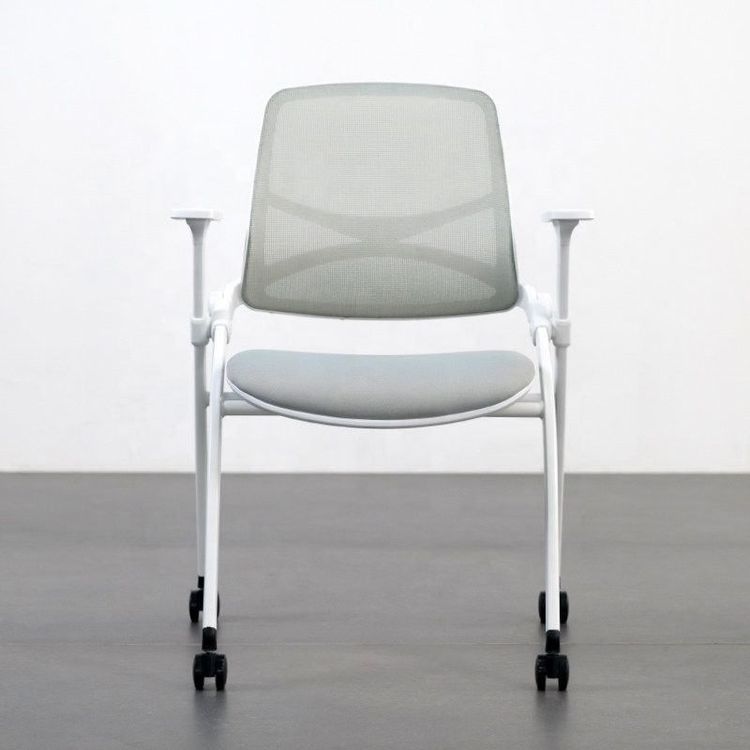
Steel Pipe Support Office Chair
The production process of steel pipe support office chairs combines mechanical processing, structural design, and ergonomic principles, with core steps divided into four stages: frame forming, elastic support system construction, upholstery production and assembly, and functional component integration.

1. Frame Forming and Basic Structural Processing
Forming the frame at the bottom of the chair is the first step. Workers use specialized machines to bend cold-drawn seamless alloy steel pipes into preset shapes. These steel pipes have high-precision characteristics, with minimal errors in parameters such as diameter and bending angles, ensuring precise alignment of frame nodes, reducing stress concentration issues during subsequent assembly, and preventing wobbling or loosening during chair use. After frame forming, the seat cushion part needs to be welded to the frame. The welding process must ensure uniform welds without pores to maintain the overall structural mechanical stability. The seamless structure of cold-drawn seamless steel pipes plays a crucial role at this stage, as their overall mechanical properties are superior to those of welded pipes, enabling them to withstand repeated pressures during daily use of office chairs.
2. Elastic Support System Construction
To enhance seating comfort, workers fix springs on the seat frame and horizontally fix steel bars in the middle of the springs. The springs provide basic elasticity, while the steel bars enhance the lateral stability of the support system, preventing the seat cushion from collapsing due to excessive local pressure. This design requires adjusting the spring's elastic coefficient according to ergonomic principles to ensure the seat can conform to the buttock curve while distributing pressure during prolonged sitting.
3. Upholstery Production and Assembly
The seat cover is usually made of leather material. Workers first cut out shapes matching the frame using templates and simultaneously cut out equally sized foam blocks. The foam is placed between the frame and the cover to provide a soft touch, with its density selected according to the usage scenario—medium- to high-density foam is commonly used in office chairs for a balance of support and comfort. After sewing the cover and foam together, they are fixed to the frame using snaps or adhesive bonding. The sewing process must ensure uniform stitches without wrinkles to avoid affecting the appearance. Before adding foam to the backrest, a layer of particleboard is installed. The rigidity of the particleboard enhances the stability of the backrest, preventing deformation after long-term use. The base requires a cover to stabilize the structure, with screw holes reserved on the cover for connecting the subsequent support frame.
4. Functional Component Integration
The support frame is the core functional module of the office chair, including a hydraulic device for height adjustment, a 360-degree rotating bearing, and movable wheels. The hydraulic device must pass pressure tests to ensure smooth lifting and lowering without oil leakage risks; the rotating bearing must ensure low friction and no abnormal noise to meet frequent turning needs; the wheels are usually made of silent materials to adapt to different floor environments. Finally, workers assemble components such as headrests and armrests onto the main structure, with the height and angle of the headrest adjustable to accommodate users of different heights.
The high-strength characteristics of cold-drawn seamless alloy steel pipes are fully demonstrated at this stage—their yield strength can be more than 1.5 times that of ordinary steel pipes, maintaining structural stability even when multiple people use the chair simultaneously or heavy equipment (such as computer hosts) is placed on it. Additionally, the high surface finish of the steel pipes allows for direct spraying or electrophoretic coating, meeting the texture requirements of high-end office furniture, and eliminating the need for additional polishing during processing, improving production efficiency.