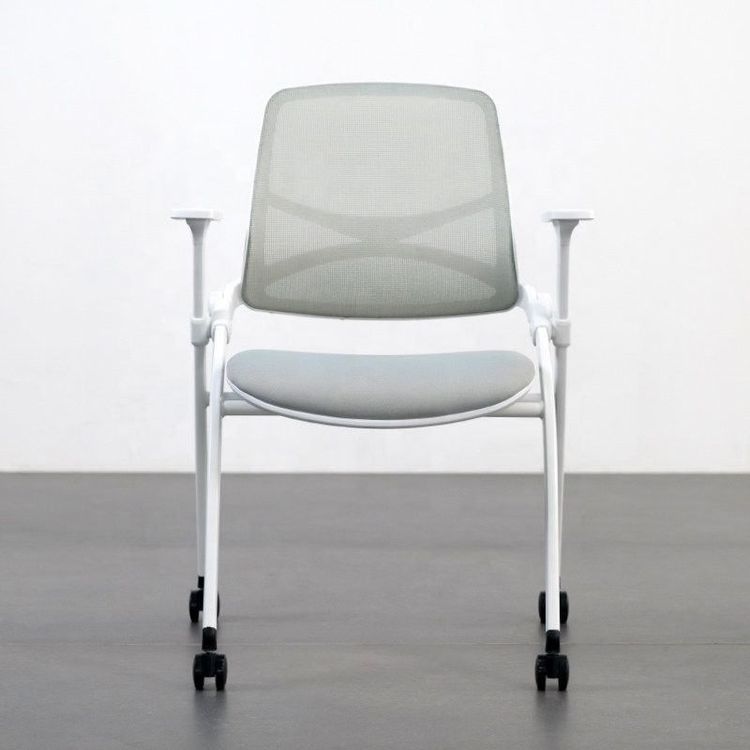
Standard Office Chair Size Dimensions: What to Know
The size range of standard office chairs varies depending on design, brand, and purpose, but typically covers the following core parameters, with some parameters showing gender differences:

1. Seat Height
Seat height is a key parameter affecting sitting comfort, usually ranging from 40 cm to 50 cm, with most designs supporting height adjustment to accommodate users of different heights. Specifically, the recommended seat height for men is 410 mm to 430 mm, while for women it is 390 mm to 410 mm. This range ensures that users can keep their feet flat on the ground and their thighs parallel to the ground, avoiding improper seat height that can lead to restricted blood circulation in the legs or excessive pressure on the lower back.
2. Seat Width
Seat width needs to balance comfort and space utilization, generally ranging from 45 cm to 55 cm, providing enough room for movement while avoiding body leaning due to excessive width. For gender differences, the front seat width of unisex designs is usually 400 mm to 420 mm, suitable for most body types.
3. Seat Depth
Seat depth directly affects thigh support and usually ranges from 35 cm to 45 cm, ensuring that the thighs are fully in contact with the seat surface while avoiding pressure on the back of the knees. The recommended seat depth for men is 400 mm to 420 mm, and for women it is 380 mm to 400 mm. This difference is mainly due to the larger average pelvic width in women, requiring a shorter seat depth to maintain proper sitting posture.
4. Backrest Height
The height of a standard office chair backrest usually covers the area from the lower back to the shoulders, with recommended values of 410 mm to 420 mm for men and 390 mm to 400 mm for women. This range provides lower back support while avoiding restricted shoulder movement due to an excessively high backrest.
5. Backrest Width
The logic behind backrest width is the same as that for seat width, with a unisex range of 400 mm to 420 mm, providing back support while avoiding body leaning forward due to excessive width.
6. Backrest Tilt
The backrest tilt angle is usually 98° to 102°, promoting a natural sitting posture and reducing lumbar pressure. Some high-end designs support angle adjustment to accommodate different work scenarios (such as focused work or short breaks).
Additional Notes
International standards (such as EN 1335) classify office chairs into three categories: A, B, and C, emphasizing adjustable sizes to fit different body types. For example, Category A chairs are suitable for users under 155 cm in height, while Category C chairs are suitable for users over 195 cm in height. When choosing, it is necessary to consider specific needs and prioritize the adjustability of seat height, seat depth, and backrest.