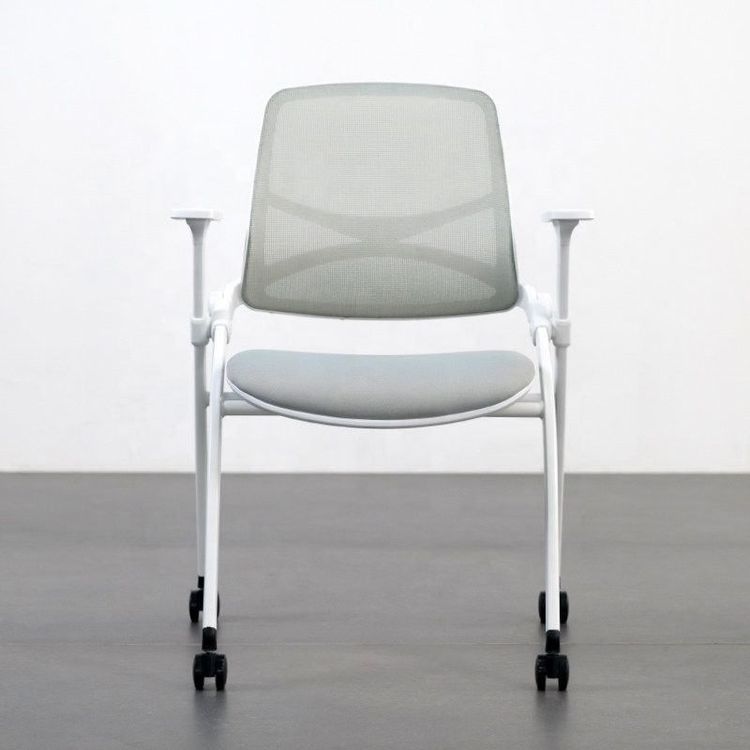
Sector-Shaped Office Chair
Currently, there is no clearly defined standardized product specifically called a 'sector-shaped office chair' in the market, but some sector-shaped chairs can extend their functionality by adapting to office scenarios. The following analysis is conducted from both traditional and modern perspectives:

Office Adaptability of Traditional Sector-Shaped Chairs
Taking the Wang Shixiang-style sector-shaped southern official's hat chair as an example, its design core originates from the solemn style of Ming-style furniture. It features a broad and expansive shape, with a sector-shaped curved backrest. The seat depth is approximately 15%-20% deeper than that of ordinary chairs, providing more ample lumbar support for users. This structural characteristic makes it perform excellently in static scenarios such as studies and tea rooms. When applied in an office, it can be used as the host's chair or as a seat for executives at independent workstations. Its materials are usually hardwoods (such as rosewood and red sandalwood), connected by mortise-and-tenon joints without the need for metal fittings, meeting the cultural atmosphere requirements of traditional office spaces. However, it should be noted that such chairs are not equipped with functions like pneumatic height adjustment and a rotating base found in modern office chairs, and their mobility is relatively weak, making them more suitable for fixed workstations or reception areas.
Extension of Modern Sector-Shaped Chairs into Office Scenarios
Some Nordic-style plastic sector-shaped chairs (such as PP-material dining chairs) can indirectly meet office needs through design optimization. These products adopt an integrated injection molding process, with the sector-shaped backrest and seat forming a continuous curved surface, conforming to the ergonomic requirements for supporting the natural curvature of the spine. Their lightweight design (with a single chair weighing about 3-5 kg) facilitates frequent movement, making them suitable for the flexible layout of open-plan offices or creative studios. However, two points need to be clarified: first, such chairs are not labeled as 'office chairs', and parameters such as seat depth and armrest height may not fully match the needs of long-term desk work; second, the breathability of plastic materials is weaker than that of mesh or leather office chairs, and they are prone to causing a stuffy feeling in summer use.
Purchase Recommendations
If you need to explicitly purchase an office chair, it is recommended to prioritize products labeled as 'ergonomic chairs' or 'computer chairs', whose functional designs (such as adjustable lumbar supports, 4D armrests, and breathable mesh) are more in line with office scenarios. If you are fond of the aesthetic value of sector-shaped chairs, you can consider a combination of traditional hardwood sector-shaped chairs and modern office chairs: use the former as the main chair to showcase cultural style and the latter as an auxiliary chair to meet functional needs.