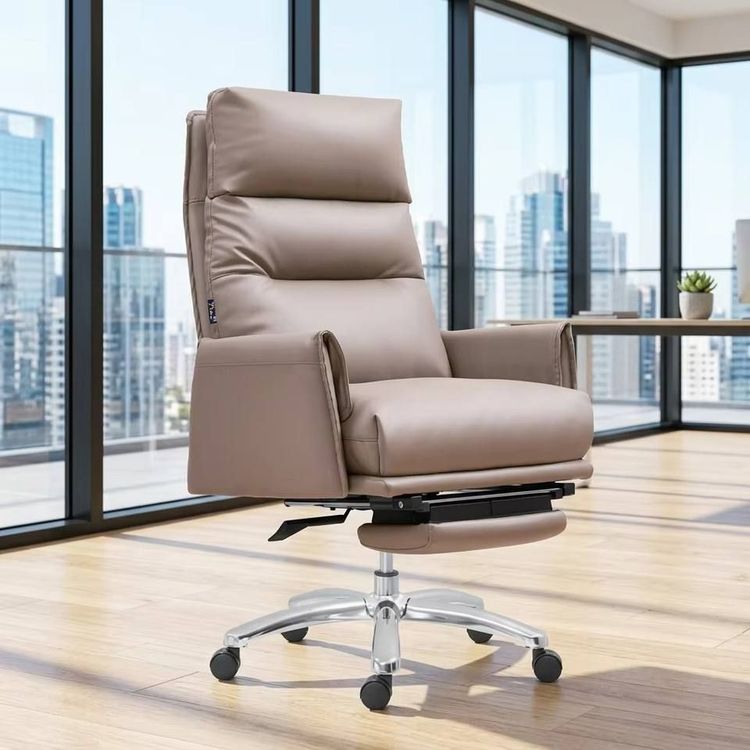
Section-Level Office Chair
The upper price limit for section-level office chairs is typically between 800 and 900 yuan. Specific standards vary slightly depending on the region and policy version, but they generally adhere to the common principles for office furniture allocation in central and local administrative units, which prioritize practicality and frugality to avoid over-allocation. The following provides an explanation from three aspects: price standards, supporting furniture, and allocation restrictions.

I. Office Chair Price Standards
Central administrative units clearly stipulate that the upper price limit for office chairs for personnel at the division level and below is 800 yuan. In local standards, most provinces follow or refer to this upper limit. For example, in the latest standards of Shaanxi Province (2021 edition), Hubei Province, Yunnan Province, and Hunan Province, the prices of section-level office chairs do not exceed 900 yuan. Some regions make minor adjustments to the upper limit based on actual needs. For instance, in Sanming City, the upper limit for office chairs in the offices of division-level leaders is 900 yuan, while for shared offices of section-level and below, it is 600 yuan, reflecting the flexibility of hierarchical management.
II. Supporting Furniture Allocation Standards
Section-level office desks and chairs should be allocated on the principle of 'one set per person', with the price of a single set not exceeding 2,000 yuan. In addition, each office can be equipped with two guest chairs, with a unit price not exceeding 400 yuan; one coffee table (including a tea cabinet) per office, with an upper limit of 800 yuan; and one file cabinet (including a bookcase) per person, with an upper limit of 1,500 yuan. These standards aim to balance functionality and economy, ensuring a clean and orderly office environment while avoiding resource waste.
III. Allocation Restrictions and Principles
The allocation of section-level office furniture strictly prohibits over-specification or luxury. For example, three-person seats or sofas are not allowed to prevent excessive decoration of office space. This regulation is consistent with the central government's requirement to 'tighten belts' and emphasizes the rational use of public resources. When implementing these standards, local authorities need to consider their financial situations and actual needs, and refine the rules within the framework of the general standards. For example, Sanming City's lower upper limit (600 yuan) for shared office chairs of section-level and below reflects adjustments made according to local conditions.
In conclusion, the allocation standards for section-level office chairs and supporting furniture are centered around 'practicality, frugality, and standardization'. The upper price limits are clear, with relatively small differences between regions. The types and quantities of supporting furniture are strictly restricted to ensure the compliant and efficient use of public funds.