Returning to the Office Safely: Post-Pandemic Workplace Solutions
As the spread of the pandemic began to show signs of slowing, the world economy changed dramatically. According to the World Bank's latest forecast, the global economy will contract by 5.2% this year. Demand fell across the board, putting pressure on businesses of every kind. The situation was even more pressing for companies preparing to reunite their employees in the office. Social distancing, collaboration, and health suddenly became top concerns for employees.
At the same time, the arrival of COVID-19 changed the way we work, and we have had to transition to new ways of working. For example, a growing share of employees are working from home. Tech companies seem to have welcomed the idea of remote work. Last month, Facebook told employees that if they wished, they could work from home for the rest of the year, while Twitter and Square said they could do so forever. In rapidly changing times, online collaboration through technology and digital devices has reshaped our social relationships and brought interpersonal challenges. But employees may be left feeling uncertain, overwhelmed, and socially isolated.
All of these are major issues. Every company is looking for a path to the new normal and a safe, effective way to bring its workforce back. No matter where employees are located, companies need to nurture employee engagement, because only engaged employees care about the company and do their best to achieve its goals. To emerge stronger, companies should reimagine their workplace layouts — meaning they should build a workplace around employees' needs, suited to their specific roles. That's why we put people first and prepare new space strategies that help organizations gain an adaptive advantage and stay ahead of the competition.
Embracing New Changes
1. Remote work is booming, but...
Over the past few months, we've all learned that we can't stop working — and that we can stay productive while working from home. As the coronavirus spread, many businesses closed their offices and moved employees to remote work. In such an uncertain period, employees have looked for ways to work efficiently at home while balancing work and family.
With all the attention on remote work, companies also need to focus on teamwork and effective communication. But remote communication isn't always easy. Gallup's State of the Global Workplace 2017 report found that 85% of employees worldwide are not engaged or are actively disengaged at work. Fortunately, increasing collaboration among remote team members isn't difficult. It does take effort, though — which is exactly why it's critical to develop a strategy for strengthening collaboration across remote teams.
2. Cubicles are making a comeback
The COVID-19 pandemic made working from home a necessity and won widespread acceptance around the world. As lockdowns lift in different countries, we may hope to return to our old ways, but we must accept the fact that the office will never be the same.
Over the past few decades, we embraced open workspaces designed to encourage colleagues to bump into each other and share ideas. But the very concept of face-to-face interaction is itself a problem in the post-COVID-19 world. Droplets of saliva, mucus, and phlegm carrying pathogens can spread disease. Health experts have begun recommending that offices change. One of the crisis's many lasting effects may be a move away from open-plan design and a revival of its predecessor: the cubicle.
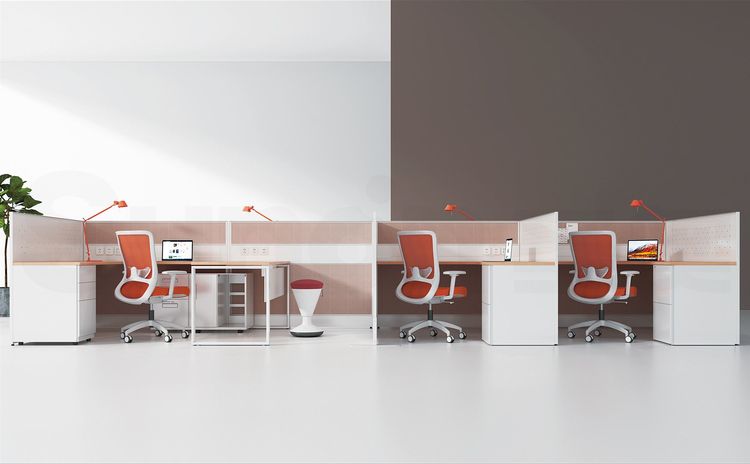
Cubicles and partitions are coming back, as the virus accelerates the shift away from open-plan offices. This will bring a higher degree of privacy to individual desks, along with the physical barriers this health crisis now demands. The downside is that it removes the "interruptions" that drive communication — the chance encounters between employees that spark creativity — so companies are planning more online collaboration to fill that gap.
3. Stand-up meetings really do work
The DRC collected data on how its members expect to do business differently in the years ahead. Here are the highlights of its survey:
88% expect travel to decrease;
74% say office space will stay the same;
77% want more flexibility to work from home;
84% say attendance at large gatherings will be lower;
70% expect fewer office meetings with clients/guests.
People even expect fewer meetings in general, but team meetings are a powerful productivity tool for companies. Working together can encourage stronger communication and collaboration.
But in such an extraordinary period, gathering can be tricky. Holding stand-up meetings in front of computers, with employees keeping their social distance, will be the right way to solve this problem. When people stand, they can spread out more, stay focused on the discussion, and worry less about their health.
4. Open-plan offices are evolving
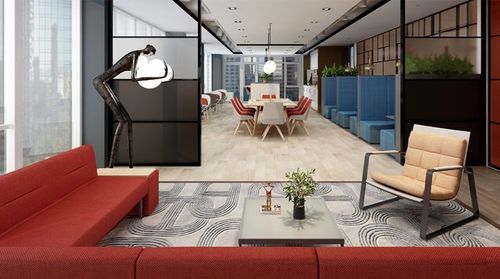
As the world goes through hard times, the way we live and work is being reexamined. It's time to start thinking about how work will change when companies bring employees back — and the thorniest problem may be the same one we faced before the COVID-19 pandemic: the open-plan office layout.
One of the biggest changes to the open-plan office will be based on the six-foot rule. Instead of the tape we see on floors today, designers can incorporate subtle visual cues to remind us to stand six feet apart. If the floor is carpeted, the texture may change every six feet, or the pattern on the walls may repeat every three to six feet.
Another will be taller partitions between workstations to create a semi-open office. Larger, lower-occupancy desks, partitions raised above current height standards, and more will become some of the new elements in existing and forthcoming office spaces. Transparent acrylic surfaces (for partitions) can be used to maintain direct sightlines and a sense of openness. Sound-absorbing panels can serve as both barriers and noise-reduction tools.
5. Resetting work-life expectations
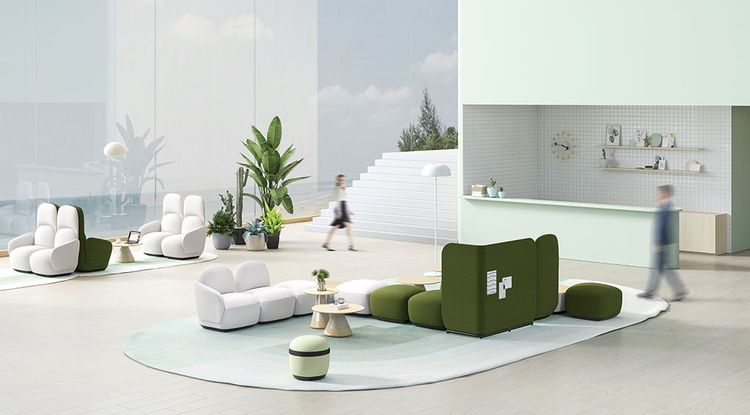
Although employees have now adapted to a work-from-home culture, many look forward to working remotely even after the pandemic fades. As people begin returning to the workplace, alternative work models — hybrid work in particular — will be a great way for organizations to provide breathing room while introducing and enforcing new social distancing measures.
Taking a hybrid approach — with some people working remotely and others in the physical office — is an alternative work model that reduces commuter traffic and eases employees' anxiety about returning to the office. This shift toward more flexible work policies allows companies to break free of conventional thinking and rethink how they help employees become more productive.
Strategic Space Planning
Home office setup
If you live alone, setting up a workspace may not be a problem. Those who live with family may need to find a space or room that shields them from everyday distractions. If you have one, a balcony or garden area can be used. A semi-open divider (curtains, a half-height cabinet, or tall plants) can also be used to mark off the area.
Physical office setup
Remote work is undoubtedly critical to business continuity, but office life will matter to some degree as well. The challenge is how companies can transform their existing offices into workplaces adapted to the post-pandemic era.
What does the future hold?
Even though we need to develop new solutions and act now to help one another get through this difficult period, we still need to consider the impact of these changes and how to mitigate similar crises in an unpredictable future. We should provide safe and adaptable solutions and reshape the world together.