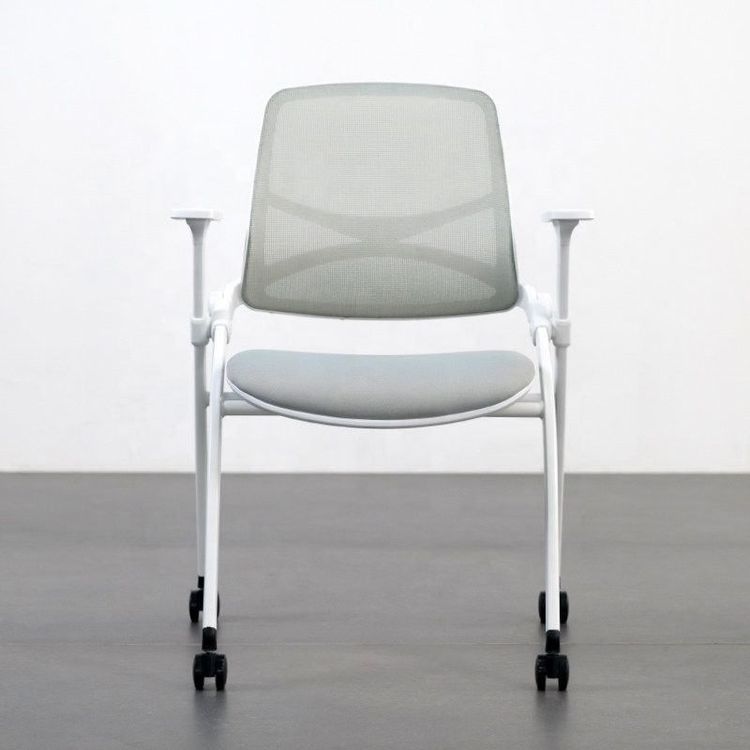
Old Office Chair Repair
Repairing an old office chair requires taking targeted measures based on specific issues. Here are common problems and their repair methods:

I. Repairing Tilt Issues
Tilt issues are often caused by damaged wheels or worn-out base sockets. The repair steps are as follows:
Check Wheel Condition
Place the chair upright and observe whether each wheel foot makes even contact with the ground. Invert the chair and check for any signs of bending, deformation, or breakage on the wheel feet. If the wheels are damaged, purchase new wheels that match the original size and material for replacement.Remove Old Wheels
Hold the bottom of the chair with one hand and grasp the wheel with the other hand, pulling firmly. If the wheel is stuck, insert a flat-head screwdriver into the gap between the wheel foot and the chair's contact point, and gently pry until the wheel loosens by about 1 centimeter, then pull again. In rare cases, if the wheel is secured with screws, use a screwdriver to loosen the screws and remove the wheel.Apply Lubricant
Spray a small amount of WD-40 or other spray lubricants into each socket on the chair's base, or use a straw to precisely insert it into the socket and spray for half a second. If no spray lubricant is available, apply a pea-sized amount of petroleum jelly to the wheel axle to reduce friction and prevent jamming.Install New Wheels
Align the rod of the new wheel with the base socket and gently push it with your hand until it is initially engaged. If it is not fully in place, gently tap the top of the wheel with a rubber mallet, avoiding the use of a metal hammer to prevent damage. After installation, check that the wheel is perpendicular to the base.Test Repair Effectiveness
Invert the chair, sit on the seat, and slowly rotate or move it to observe whether it is stable and free from tilting. If tilting persists, further inspect the seat plate for deformation or breakage, and replace it if necessary.
II. Repairing Other Common Issues
Repairing Missing Armrests
If the armrests are missing, first disassemble the chair (usually by loosening the fixing screws), and measure the dimensions, shape, and mounting hole positions of the original armrests. Based on the measurements, replicate new armrests using wood or plastic, ensuring they match the original structure before reinstalling.Replacing Broken Parts
For broken wooden parts (such as chair legs or crossbeams), purchase new wood of the same material and specifications, cut and sand it to the original dimensions. If a metal part is broken, it may need to be welded for repair or replaced with a new one. Use specialized glue or screws for installation to ensure structural stability.
Precautions: Before repairing, close the chair's pneumatic rod (if applicable) to prevent accidental lifting or lowering. Wear protective gloves when using tools to prevent cuts. If the chair has a complex structure or is severely damaged, it is advisable to contact a professional repair technician for handling.