Office Chair Wood: The Complete Buying Guide
Currently, a complete and specialized buying guide for 'Office Chair Wood' is not found, but reference suggestions can be provided by combining general office chair selection factors and the characteristics of wooden materials:

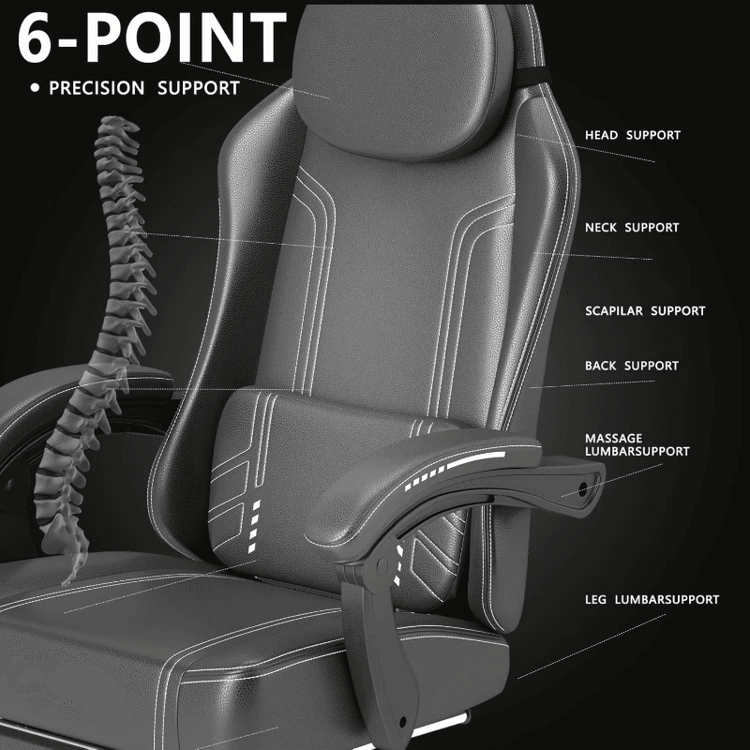
1. Fit and Ergonomic Design For wooden office chairs, priority should be given to ergonomic fit, including the curvature of the backrest, lumbar support, and seat depth. The curvature design of the wooden backrest should conform to the natural curve of the human spine to avoid long-term use leading to back fatigue. It is recommended to choose high-density foam or memory foam for the seat cushion to balance the hardness of the wooden frame and enhance comfort. Additionally, adjustable features (such as height, armrests, and backrest tilt) are crucial, and it is necessary to confirm whether the wooden structure supports the stable installation of mechanical adjustment devices.
2. Wooden Material and Craftsmanship Material selection directly affects durability and aesthetics. Hardwoods (such as oak and walnut) have high density and strong resistance to deformation, making them suitable for chair frames. Softwoods (such as pine) require moisture-proof and insect-proof treatment; otherwise, they are prone to cracking. Craftsmanship details should be carefully inspected: whether the joints use mortise-and-tenon structures (more stable than nail gun fixation), whether the surface coating is eco-friendly paint (to avoid formaldehyde emissions), and whether the wood grain is clear and natural (reflecting the authenticity of the material). If the seat surface is wooden, it is necessary to confirm whether the surface has been sanded to prevent splintering and skin irritation.
3. Size and Space Matching Wooden office chairs are usually relatively large in size, and the size should be selected according to the usage scenario. It is recommended that the backrest height exceed the shoulders by 5-10 cm to provide sufficient support. The seat depth should match the length of the thighs (usually 40-45 cm) to avoid the back of the knees hanging in the air. The width of the armrests should leave space for the arms to hang naturally (about 50-60 cm). If used in a small office, a foldable or lightweight design can be chosen to reduce space occupation.
4. Stability and Load-Bearing Capacity The stability of wooden chair legs depends on material density and structural design. For four-legged chairs, it is necessary to confirm whether cross-braces are added for support to prevent tipping over. For five-star-based chairs, it is necessary to check the firmness of the connection between the wheels and the wood (it is recommended to choose metal reinforcement parts). In terms of load-bearing capacity, hardwood chair bodies can usually withstand a weight of 100-120 kg, but long-term overloading should be avoided to prevent structural deformation.
5. Style and Scene Matching The style of wooden office chairs should be coordinated with the office environment. Chairs with a natural wood color are suitable for minimalist styles such as Scandinavian and Japanese styles. Dark-colored wood (such as walnut) is more suitable for traditional or retro styles. If used for home offices, models with upholstered seat cushions can be chosen to enhance a cozy feel. If used in commercial spaces, it is recommended to choose designs with clean lines and minimal decoration to highlight professionalism.