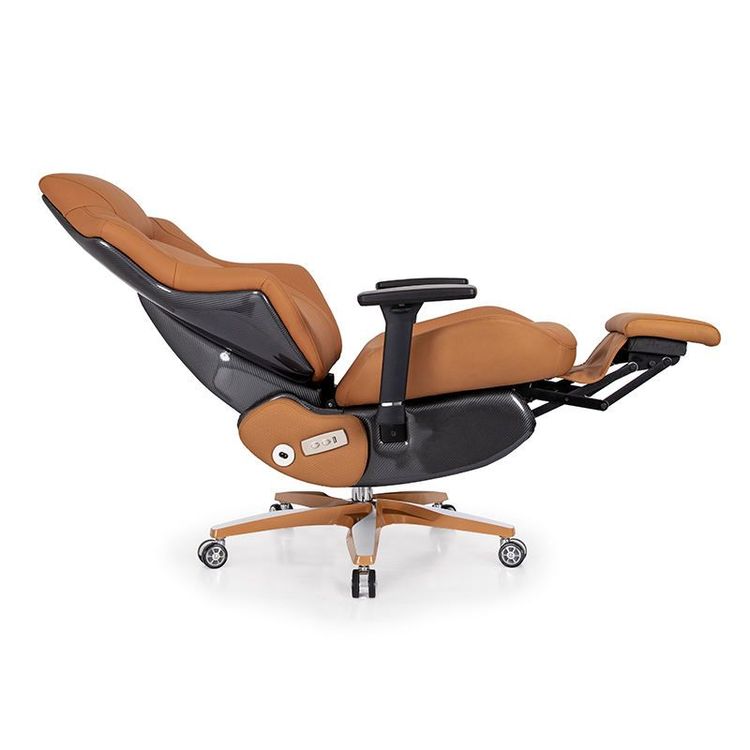
Office Chair with Features
When choosing an office chair, it's essential to consider functional requirements, budget range, and usage scenarios. The following provides reference suggestions from four dimensions: core parameters, brand models, price ranges, and additional features:

I. Function and Design: Dynamic Adjustment as the Core Requirement
The design focus of modern office chairs lies in dynamic support and multi-scenario adaptability. Mainstream products generally feature a lumbar-back linkage system, where the lumbar support, backrest, and headrest can automatically adjust angles with body movement, supporting modes such as 105° upright sitting, 125° relaxation, and 160° extreme recline for napping. Some high-end models also include lumbar stretching functions, allowing fine-tuning forward and backward via gas rods to alleviate prolonged sitting fatigue. The damping adjustment function is equally crucial, enabling users to adjust the recline resistance according to their weight to prevent过快 (too fast) or 过慢 (too slow) recline due to insufficient support. Additionally, 4D armrests (adjustable up/down, forward/backward, left/right, and rotation) and an adjustable headrest accommodate people of different heights, enhancing neck support comfort.
II. Brands and Models: Matching Products to Scenarios
- Jingdong Make Z9Pro Second Generation: Focuses on ergonomic design, using breathable mesh fabric and high-density foam cushioning. It supports three-way adjustments for height, backrest angle, and armrest position, suitable for users with limited budgets seeking basic comfort.
- Sihoo B100Pro: Enhances prolonged sitting experience by optimizing the lumbar support curve and cushion contour. Its flexible adjustment functions are compatible with office, meeting, and short rest scenarios, offering excellent cost-effectiveness.
- Hbada E3Air 4th Generation: Equipped with an independent floating lumbar support and dynamic back-tracking system, supporting a large 135° recline angle. It suits gaming, studying, and long-term office scenarios, with a gaming-style design favored by younger groups.
III. Price Ranges: From Basic to High-End Customization
- Basic Models (111.67 yuan - 460 yuan): Primarily feature fixed armrests and simple recline functions, with materials mostly consisting of ordinary foam and plastic frames. Suitable for budget-constrained or short-term usage scenarios.
- Mid-Range Models (500 yuan - 1500 yuan): Add dynamic adjustments, 4D armrests, and breathable mesh fabric. Some models include latex cushions or footrests, meeting daily office needs.
- High-End Models (2000 yuan and above): Integrate electric adjustments, massage functions, and adaptive support systems. For example, a model once launched by Nissan at 9888 yuan features ventilation, heating, and pressure-sensing massage, suitable for high-end business or users with strong health needs.
IV. Additional Features: Choose Based on Needs to Enhance Experience
- Massage Function: Relieves muscle tension through built-in vibration motors, but attention should be paid to noise and battery life issues.
- Folding Tabletop: Some models integrate a foldable small tabletop on the armrest side, convenient for temporary office work or dining.
- Gaming Design: Incorporates RGB light strips, carbon fiber textures, and other elements, paired with detachable headrests and lumbar supports, meeting gaming scenario needs.
Purchase Recommendations: Prioritize testing the lumbar support strength and recline damping match to ensure compatibility with body weight. For long-term use, choose models with breathable mesh fabric and adjustable headrests. If the budget allows, consider mid-to-high-end products with dynamic back-tracking functions to enhance health protection.