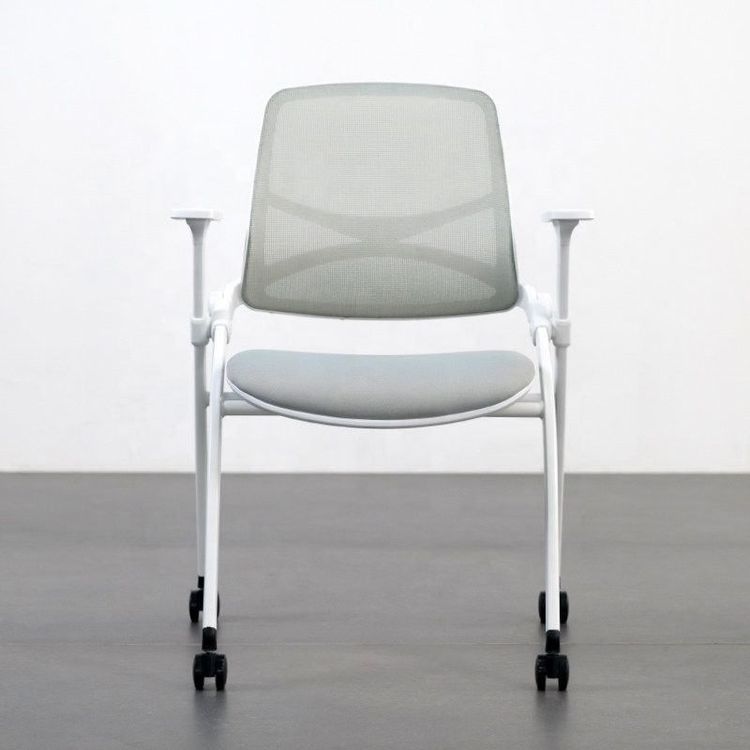
Office Chair Too Flexible
If the hydraulic rod of an office chair rotates too flexibly, it can be resolved by adjusting the height of the chair legs, adding gaskets, applying lubricating oil, etc. Different methods can be combined, and attention should be paid to the adjustment force and regular maintenance.

Adjust the height of the chair legs
The rotational flexibility of a chair with a hydraulic rod is closely related to the contact stability between the bottom of the chair legs and the ground. When the height of the chair legs is insufficient, the contact area between the chair and the ground decreases, reducing support stability and increasing rotational flexibility. In this case, the height of the chair legs can be increased by adding gaskets (such as rubber pads or anti-slip pads) to the bottom of the chair legs or directly adjusting the lifting function of the hydraulic rod. When adjusting, ensure that the heights of the four chair legs are even to avoid chair tilting or wobbling due to height differences on one side, which can affect safety during use.Add gaskets
If the friction between the chair legs and the ground is insufficient, even if the height of the chair legs is appropriate, the chair may still rotate flexibly due to excessive sliding. In this case, anti-slip gaskets (such as silicone pads or PVC pads) can be attached to the bottom of the chair legs to increase the roughness of the contact surface and enhance friction, thereby reducing sliding. The gasket material should be wear-resistant and corrosion-resistant, with an appropriate thickness (usually 2-5mm) to avoid instability in the chair's center of gravity due to excessive thickness.Apply lubricating oil
The rotational flexibility of the hydraulic rod may also be related to the friction at the rod's interface. If the interface lacks lubrication, direct friction between metal parts may cause rotational resistance or abnormal noises; however, insufficient lubrication or dried-up lubricating oil may also exacerbate rotational flexibility due to uneven friction. In this case, use a clean cloth to apply an appropriate amount of lubricating oil (such as WD-40 or sewing machine oil) and evenly wipe the connection points between the hydraulic rod and the chair seat and chair legs to reduce friction and improve rotational stability. Be careful to avoid dripping lubricating oil onto the ground or chair surface, causing contamination.
Precautions: Do not apply excessive force during adjustment to avoid damaging the hydraulic rod or chair leg structure; during regular maintenance, apply an appropriate amount of anti-rust lubricating oil every 3-6 months to extend the chair's service life and maintain stability. If the problem persists, it is recommended to contact a professional repair technician to check whether the internal parts of the hydraulic rod are worn or damaged.