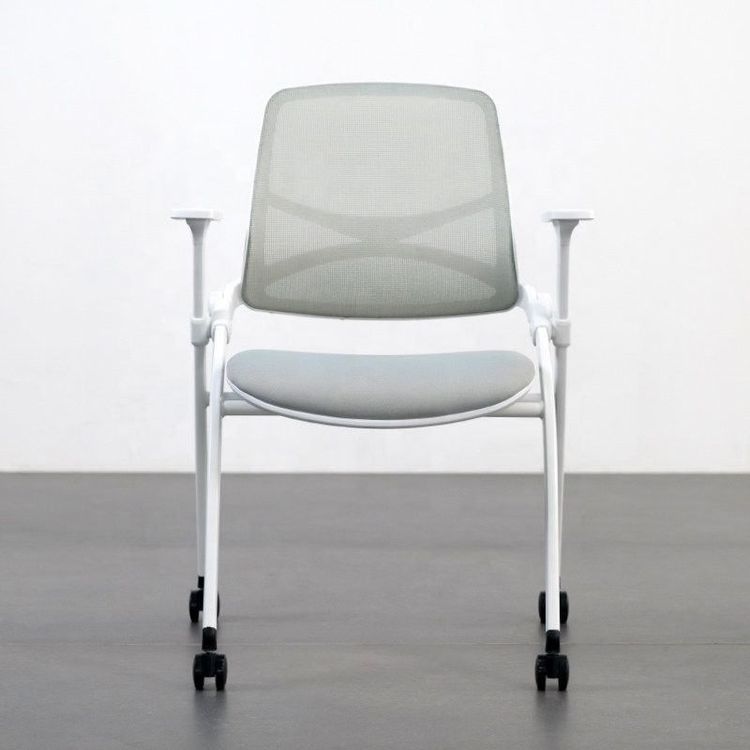
Office Chair Three-Seating Comparison
Three office chairs suitable for a "three-seating" comparison experience are Qingxian OC1Pro, Sihoo H300Pro, and Hbada T8Max. Their functional features and applicable scenarios are as follows:

Qingxian OC1Pro
The core advantage of this office chair lies in its dynamic lumbar and back support system. The support rod allows for up-and-down movement of the tilt angle, and users can adjust the support point position via the armrest buttons to precisely locate the "sweet spot" on the lumbar and back according to their height and sitting posture. It is particularly suitable for users who need to maintain a standard sitting posture for extended periods. However, its design has certain limitations: there is play in the backrest when leaning forward, and the support point may deviate from the ideal position; the backrest floats slightly when reclining, which may not be friendly enough for users seeking absolute stability. Therefore, this model is more suitable for office scenarios where the sitting posture is relatively fixed and high precision in lumbar and back support is required.
Sihoo H300Pro
The innovation of this chair lies in its "dual-dimension support rod" design. The movement trajectory of its electric support rod is similar to that of the Qingxian OC1Pro, but an additional manual lever is included to enable approximate front-to-back adjustment, forming a dual adjustment mechanism that combines electric and manual operations. The electric rod handles both force and support point adjustments, while the manual rod further refines the adjustment range, providing a superior overall experience. However, the躺倒 (reclining) linkage is not smooth enough, and there may be a sense of stuttering during deep reclinations. Therefore, this model is more suitable for users who need to frequently adjust their sitting posture and have high requirements for support flexibility but do not have strong demands for the reclining function.
Hbada T8Max
The notable feature of this chair is flexibility first. It allows for flexible side-to-side swaying when seated, making it suitable for users who need to frequently change their sitting posture or engage in slight movements. However, the adjustment of the lumbar support position is limited, and even after repeated adjustments, it may not achieve precise support effects, which may result in a poor experience for users with high lumbar support requirements. Therefore, this model is more suitable for users with lower lumbar support needs who prioritize seat flexibility and comfort, such as creative workers or those needing short breaks.
The three chairs offer differentiated competition in terms of support methods, adjustment dimensions, and applicable scenarios, allowing users to choose the most matching model based on their own needs.